




Selection of Sanitary Electromagnetic Flowmeter in Food and Beverage Industry: A GMP-compliant Solution
2025-12-23 10:21:21
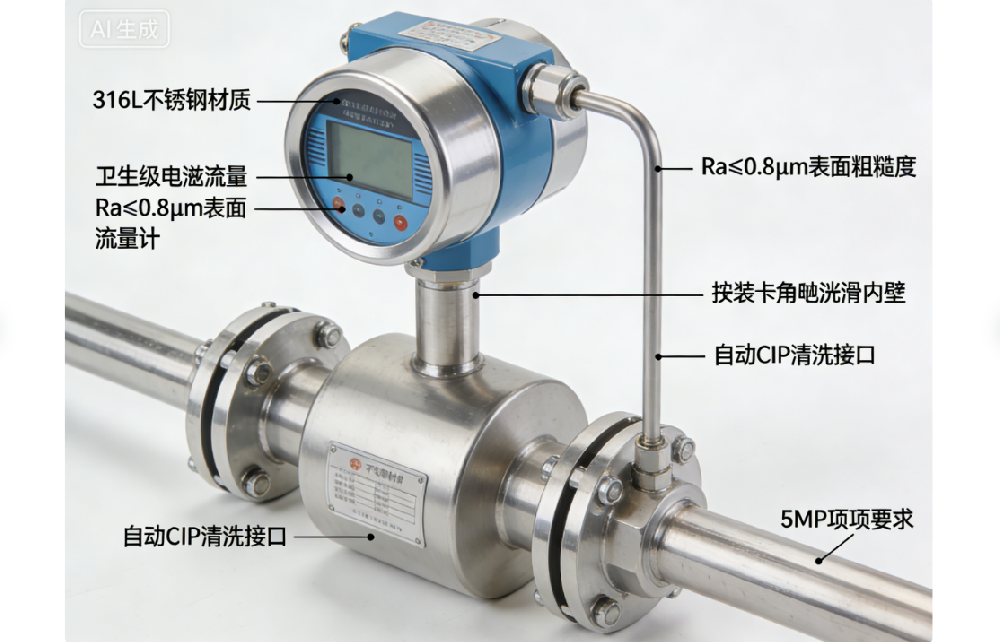
In food and beverage manufacturing, accurate measurement of fluid flow is critical to formulation precision, production efficiency, and product quality and safety. Especially under the stringent requirements of GMP (Good Manufacturing Practice) standards, flow measurement devices must not only meet high-precision measurement demands but also exhibit superior hygienic performance to prevent material contamination and ensure compliance with cleaning validation. With the advantages of non-contact measurement, no dead volume and easy cleaning, the sanitary electromagnetic flowmeter has become the core equipment of fluid measurement in the food and beverage industry. This paper focuses on the GMP compliance requirements of the food and beverage industry, from the material selection, structural design, health certification, working condition adaptation of the four core dimensions, gives the scientific selection of sanitary electromagnetic flowmeter, for the industry production compliance and measurement accuracy to provide technical support.
1. Food and Beverage Industry Pain Points and GMP Core Requirements for Metering Equipment
The fluid metering scene in the food and beverage industry has remarkable particularity. The main pain points include: the materials are mostly acidic, viscous fluids containing sugar or protein (such as fruit juice, dairy products and syrup), which are easy to adhere to the inner wall of the equipment and breed bacteria; The production process needs frequent cleaning and disinfection (CIP in-situ cleaning and SIP online sterilization), and the equipment needs to withstand high temperature, high pressure and chemical cleaning agent erosion; different production processes (batching, filling, conveying) have different requirements for measurement accuracy, and the measurement data needs to be traced back throughout the process.
GMP standard puts forward clear restrictions on sanitary metering equipment. The core requirements include: ① material compliance, food-grade non-toxic and corrosion-resistant materials shall be used for the parts in contact with materials, and have good biocompatibility; ② Structural hygiene, no dead corners and retention areas inside the equipment, avoiding the breeding of microorganisms from material residues; ③ Cleaning verification adaptation, can cooperate with CIP/SIP system to complete cleaning and sterilization, and the cleaning effect can be verified; ④ Data traceability, with accurate measurement data recording and transmission functions to meet the traceability requirements of the production process; ⑤ No risk of secondary pollution, excellent equipment sealing performance, to avoid external impurities mixed into materials or material leakage.
2. Core Selection Dimension 1: Material Compliance-Avoid Pollution Risk from Source
The core of material selection for sanitary electromagnetic flowmeter is "full food-grade adaptation for parts in contact with materials". The materials of measuring pipes, linings, electrodes and seals need to be strictly screened to ensure compliance with GB 4806 series food contact material safety standards and GMP requirements.
1. Measuring tube material: both health and structural strength
As the conduit through which materials flow, the measuring tube must meet three core requirements—non-toxicity, corrosion resistance, and ease of cleaning—and 316L stainless steel is the preferred material. 316L stainless steel molybdenum content is high, corrosion resistance is better than ordinary stainless steel, can withstand juice, dairy products and other acidic materials and CIP cleaning with acid and alkali cleaning agent erosion, and the surface is not easy to adhere to the material, in line with food-grade health requirements. For highly corrosive materials (such as concentrated fruit juices and acetic acid beverages), Hastelloy C- 276 can be selected; it offers superior corrosion resistance and is likewise certified for food contact safety.
Special attention should be paid to: the surface roughness of the measuring tube should be controlled at Ra≤ 0.8 μm, the material adhesion point should be reduced by polishing treatment, the risk of bacterial growth should be reduced, and the cleaning verification should be facilitated. It is strictly prohibited to use materials containing harmful impurities such as lead and mercury, and the material supplier shall provide a food contact safety certification report to ensure that the material compliance can be traced.
2. Lining material: suitable for material characteristics and cleaning conditions
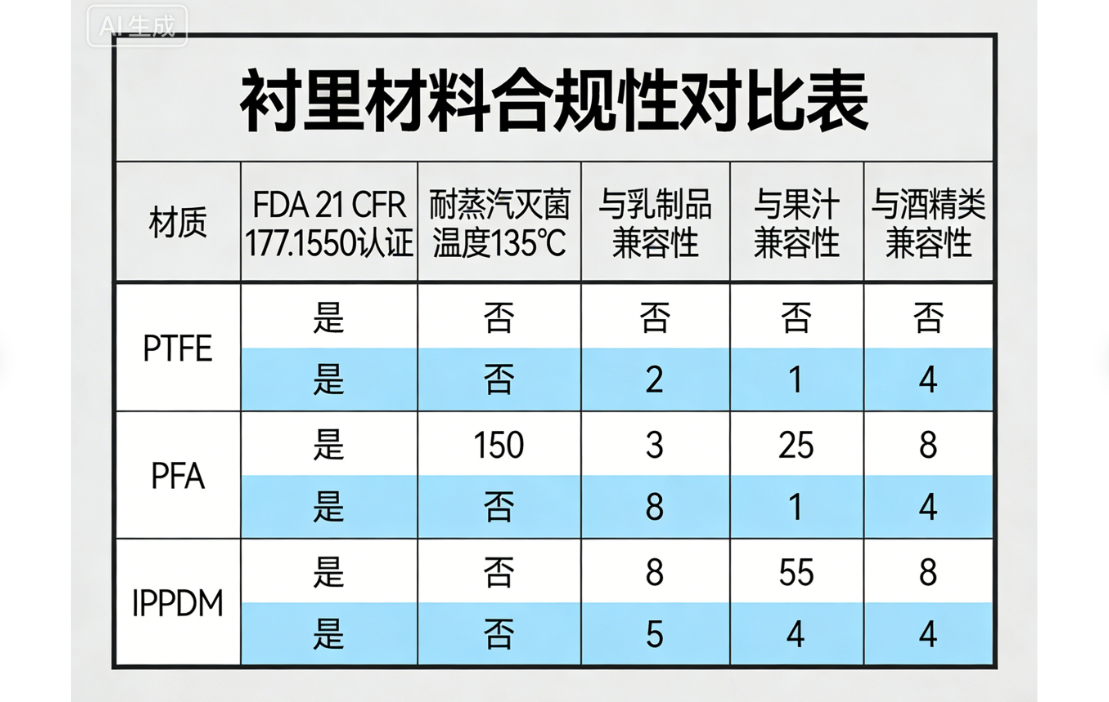
The lining is in direct contact with the material and must have the characteristics of non-toxicity, wear resistance, temperature resistance, chemical corrosion resistance and easy cleaning. The commonly used food-grade lining materials and adaptation scenarios are as follows:
(1) Polytetrafluoroethylene (PTFE): It is suitable for most food and beverage materials, including acidic fruit juice, dairy products, syrup, wine, etc., and can withstand the acid and alkali cleaning agents used for CIP cleaning (such as nitric acid, sodium hydroxide solution) and SIP sterilization high temperature (≤ 180 ℃). PTFE material is inert, does not react with the material, and the surface is smooth without adsorption, is the preferred lining material in the food and beverage industry, in full compliance with GMP cleaning verification requirements.
(2) Perfluoroether rubber (FFKM): Suitable for high temperature, highly corrosive materials and harsh cleaning conditions, such as high temperature sterilized dairy products and alcoholic beverages. Its temperature range is less than or equal to 200 ℃, can withstand a variety of chemical cleaning agents, excellent sealing performance, to avoid the cleaning process cleaning agent into the equipment caused by internal pollution.
(3) Silicone rubber: suitable for normal temperature, neutral materials (such as pure water, mineral water), with good elasticity and sealing, low cleaning difficulty, but limited temperature resistance and corrosion resistance, not suitable for high temperature sterilization or acid material scenes.
3. Material of electrodes and seals: details to ensure health and safety
The electrode material is preferably 316L stainless steel or Hastelloy C- 276 to ensure non-toxic and no chemical reaction in contact with the material. For materials containing chloride ions (such as pickled food juice), titanium alloy electrodes can be used to avoid chloride ion corrosion. The electrode surface shall be polished with roughness Ra≤ 0.8 μm to reduce material residue.
As a risk point of easy pollution, the seal should use food grade silicone rubber or perfluoroether rubber, and it is strictly prohibited to use ordinary rubber materials. Seals need to have good high temperature resistance, chemical corrosion resistance, can cooperate with CIP/SIP repeated cleaning and sterilization, and no aging, dissolved material risk, to ensure that the long-term use of the process will not pollute the material.
2. Core Selection Dimension 2: Structural Design-Adaptation to Hygiene Cleaning and GMP Verification
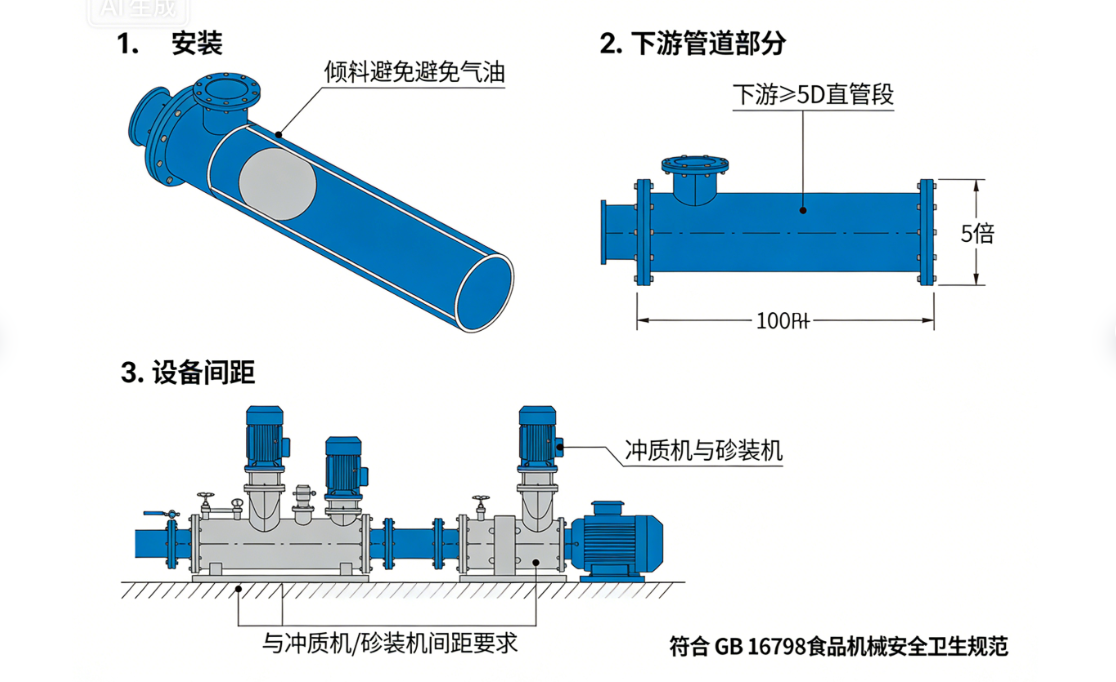
The structural design of the sanitary electromagnetic flowmeter should focus on "no dead angle, easy cleaning and verifiable" to ensure compliance with GMP cleaning verification requirements and avoid cross-contamination caused by material residues.
1. No dead volume structure: eliminate material residue
The interior of the equipment shall be designed with full bore, no step and no depression, and the smooth transition shall be adopted at the connection between the measuring tube and the flange to avoid the formation of dead volume. The electrode adopts embedded design, which is flush with the inner wall of the measuring tube without protruding parts to prevent the material from staying around the electrode. At the same time, there are no screws, welds and other structures that are easy to hide dirt inside the equipment. The welds need to adopt automatic welding technology and surface polishing treatment to ensure that the cleaning liquid can completely cover all surfaces inside the equipment and there is no cleaning blind area.
2. CIP/SIP Compatibility Design: Adaptable to Production Cleaning Processes
When selecting equipment, ensure it features CIP (clean-in-place) and SIP (sterilization-in-place) capabilities, and that its maximum temperature and pressure ratings are compatible with the cleaning and sterilization parameters of the production process. For example, in SIP sterilization applications, the equipment must withstand high-temperature, high-pressure steam at 121°C and 0.1 MPa, with no performance degradation after 30 minutes of continuous sterilization.
Equipment interfaces shall use sanitary quick‑connect flanges (e.g., in accordance with ISO 2852) to facilitate rapid disassembly and installation, thereby reducing the difficulty of dismantling and reassembling during cleaning. In addition, the interfaces must provide excellent sealing to prevent leakage of cleaning fluids or steam. Some high-end equipment can be equipped with cleaning validation interfaces, facilitating the integration of temperature and pressure sensors to monitor cleaning process parameters in real time, thereby providing data support for GMP cleaning validation.
3. Housing and Protection Design: Prevent External Contamination
The equipment enclosure shall be made of stainless steel with a polished finish, ensuring easy cleaning and corrosion resistance. The protection rating must meet IP67 or higher to prevent moisture and dust from the production environment from entering the device, which could impair circuit performance or contaminate materials. For humid, dust-prone production workshops, equipment with an IP68 protection rating can be selected to ensure long-term stable operation.
3. Core Selection Dimension 3: Sanitary Certification and Data Traceability – Ensuring GMP Compliance
When selecting equipment, prioritize products with recognized sanitary certifications, and ensure the devices have comprehensive data recording and transmission capabilities to meet GMP requirements for production process traceability.
1. Authoritative Health Certification: An Important Guarantee of Compliance
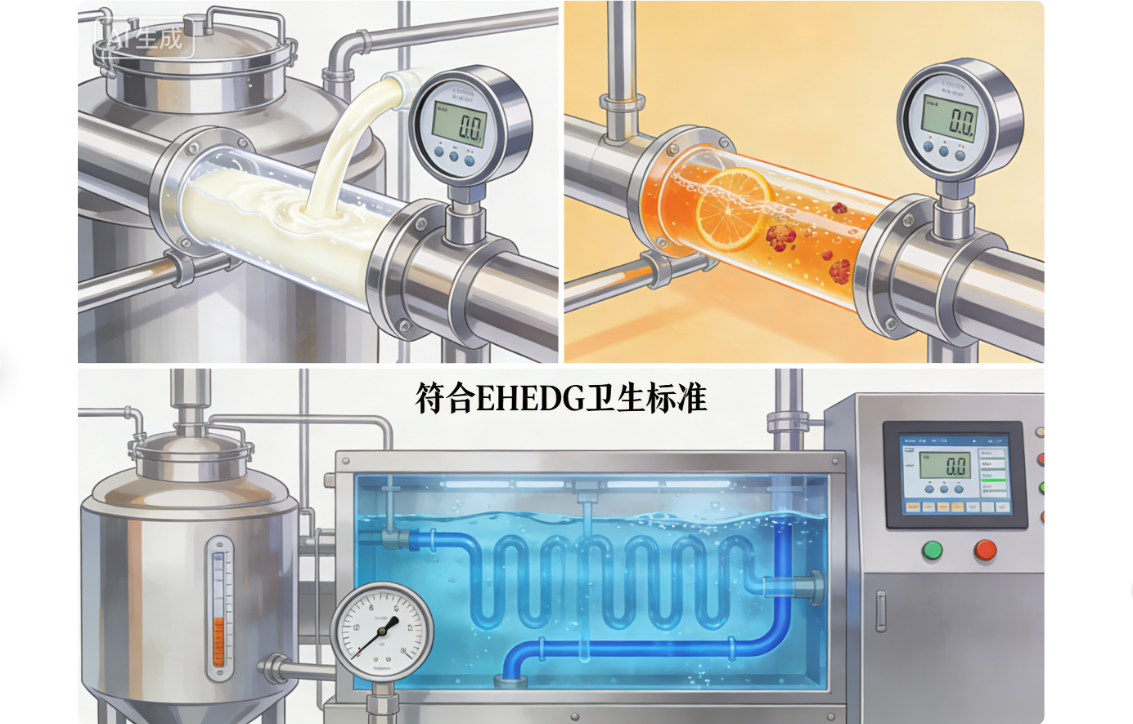
Hygienic electromagnetic flowmeters designed for the food and beverage industry must hold relevant authoritative certifications, including: ① 3A Sanitation Certification, a hygiene and safety certification for food processing equipment that is an internationally recognized standard for food-grade equipment; ② EHEDG (European Hygienic Engineering & Design Group) Certification, which focuses on the design and performance of hygienic food equipment to ensure compliance with the highest hygiene standards; and ③ China’s Food Contact Product Safety Certification (GB 4806), which ensures that the materials used in the equipment meet Chinese food hygiene standards.
When selecting equipment, it is necessary to require suppliers to provide complete certification documents that cover all components in contact with the material, thereby avoiding GMP non‑compliance risks arising from the lack of certification for certain parts.
2. Data traceability function: meets production process control requirements
The equipment must feature precise measurement data logging, capable of collecting and storing production parameters such as flow rate, temperature, and pressure in real time for a retention period of no less than one year, thereby meeting GMP requirements for production data traceability. Additionally, it must support signal outputs such as 4–20 mA and RS-485, enabling integration with a Manufacturing Execution System (MES) to achieve real-time upload of measurement data and remote monitoring.
Some high-end equipment can be equipped with data encryption to prevent data tampering; it also features self-diagnostic capabilities that monitor operating conditions in real time. When issues such as metering deviations or seal failures occur, the system promptly issues alarm signals, ensuring that the production process remains under control.
4. Core Selection Dimension 4: Operating Condition Adaptation – Balancing Accuracy and Production Stability
Operating conditions vary significantly across different production stages in the food and beverage industry. Therefore, equipment specifications must be precisely matched to material characteristics, flow rate ranges, temperature, pressure, and other parameters to ensure measurement accuracy and production stability.
1. Material Property Matching
For viscous materials (such as syrups, jams, and dairy products), equipment with large-diameter pipes and low flow rates should be selected to prevent pipeline blockages or metering errors caused by excessive flow velocity. Additionally, the equipment must feature anti-adhesion capabilities; this can be achieved by optimizing liner materials and surface roughness to minimize material adhesion. For materials containing fine particles (such as fruit pulp in juice or fruit bits in beverages), wear-resistant linings (e.g., PTFE) and embedded electrodes should be used to prevent equipment wear or signal distortion caused by particle impact.
For materials with low conductivity (such as high-purity drinking water and alcoholic beverages), a highly sensitive sanitary electromagnetic flowmeter should be selected, employing square-wave alternating excitation technology to enhance the acquisition efficiency of weak signals and ensure measurement accuracy is maintained within ±0.5%, thereby meeting the precision requirements of the batching process in the food and beverage industry.
2. Flow Rate and Temperature-Pressure Matching
The pipe diameter should be selected according to the principle that the typical flow rate falls within 20%–80% of the device’s full-scale range, thereby preventing weak signals caused by excessively low flow velocities or excessive material shear caused by excessively high flow velocities. For example, if the typical flow rate in the batching stage is 5 m³/h, equipment with a DN50 nominal diameter can be selected to ensure the flow velocity remains within the optimal range of 1–5 m/s.
Temperature and pressure parameters must match the production conditions: for ambient-temperature processes (e.g., beverage filling), standard hygienic equipment can be used; for high-temperature sterilization steps (e.g., conveying dairy products after UHT sterilization), equipment rated for temperatures of ≥150°C is required; and for high-pressure conveying stages (e.g., transporting material after high-pressure homogenization), equipment with a pressure rating of ≥1.6MPa is necessary.
5. Typical Application Scenario Selection Cases
1. Ingredient handling in the dairy industry: Materials include milk and yogurt, requiring CIP cleaning and SIP sterilization at 121°C and 0.1 MPa. Selection proposal: measuring tube made of 316L stainless steel, PTFE lining, electrodes of 316L stainless steel, hygienic quick‑connect flanges, certified to 3A and EHEDG standards, accuracy ±0.2%, and support for MES system integration.
2. Conveying in the fruit juice beverage industry: The material is concentrated fruit juice (acidic, containing fruit pulp particles), conveyed at ambient temperature, with a typical flow rate of 10 m³/h. Selection scheme: measuring tube made of 316L stainless steel, PTFE lining, Hastelloy C- 276 electrodes, dead-volume-free design, IP67 protection rating, accuracy ±0.5%.
3. Pure water production stage: The material is high-purity drinking water (low conductivity), conveyed at ambient temperature and under high pressure. Selection scheme: measuring tube made of 316L stainless steel, PTFE lining, high-sensitivity electrodes, square-wave alternating excitation technology, data traceability support, accuracy ±0.2%.
6. Conclusion
The core principle for selecting sanitary electromagnetic flowmeters in the food and beverage industry is “GMP compliance first, with metrological accuracy and operating condition suitability taken into account.” By precisely matching materials (food-grade, corrosion-resistant), optimizing structural design (no dead corners, CIP/SIP compatible), selecting authoritative hygiene certifications, and adapting to specific production conditions, material contamination risks can be effectively mitigated, production process compliance ensured, and metering accuracy improved. In the future, as GMP standards continue to be upgraded and industrial intelligence advances, hygienic electromagnetic flowmeters will evolve toward being “more hygienic, more precise, and smarter.” By integrating edge computing, AI monitoring, and other technologies, they will further enhance control over production processes, providing more reliable metrological support for the high-quality development of the food and beverage industry.
Hot News
- Buy flowmeter, first look at the site conditions! 2026 Depth Comparison of Domestic and Imported Brands of Electromagnetic Flowmeter Manufacturers
- 2026 domestic electromagnetic flow manufacturers recommended: top ten brands of intelligent flow meter recommended reasons
- How to choose imported flat electromagnetic flowmeter? How to choose micro-caliber, conventional flange and plug-in electromagnetic? Recommended by domestic high-quality manufacturers
- Four major brands of electromagnetic flowmeter hard core PK: Herbalife Water, Cloud Meter, E H, Cologne, who is more worthy of choice?
- November 2026 Top Ten Brands of Electromagnetic Flowmeter at Home and Abroad Ranking
- Recommended Top Ten Brands of Electromagnetic Flowmeter in 2026: Reference for Project Selection of Water Treatment, Sewage and Conductive Liquid
- TOP5 Manufacturer's Selection Guide for Food Sanitary Electromagnetic Flowmeter: Material and Connection Mode Check before Purchase
- Cost-effective chemical oxygen demand water quality online monitor manufacturers contact information
- How to choose the integrated electromagnetic water meter? Domestic high-quality manufacturers recommendation and selection guide
- Selection of Electromagnetic Flowmeter for Small Diameter Ultra-high Temperature Medium Metering Engineering



