




Low Power Consumption Design of Electromagnetic Flowmeter: A New Energy Saving Choice for Industrial Metrology in the Era of Internet of Things
2025-12-23 10:14:51
As IoT technology increasingly permeates the industrial sector, industrial metrology equipment is evolving toward “wireless connectivity, long‑term operation, and intelligent control.” As a core device for industrial fluid measurement, electromagnetic flowmeters traditionally focus on measurement accuracy and adaptability to operating conditions, while power consumption is often overlooked. In IoT deployment scenarios, many metering nodes rely on battery or solar power, and high-power devices face challenges such as frequent battery replacements and high maintenance costs. Low-power design has become a core competitive advantage for electromagnetic flowmeters in the IoT era. Through optimization of the excitation system, upgrades to the circuit architecture, and intelligent power management, power consumption can be reduced by more than 50%, offering industrial metering a new, energy-efficient, long-lasting solution and driving the transition of industrial energy management toward greater precision and lower carbon emissions.
1. The IoT era is driving demand for low-power electromagnetic flowmeters
The widespread adoption of IoT technologies has ushered industrial metrology into a new phase characterized by “omni‑contextual sensing and full data interconnectivity.” Consequently, the application scope of electromagnetic flowmeters has expanded beyond traditional fixed pipeline networks to encompass diverse scenarios such as monitoring in remote areas, metering on mobile equipment, and surveillance of temporary pipelines—each of which imposes stringent requirements on device power consumption.
Traditional electromagnetic flowmeters use AC excitation or continuous DC excitation, typically consuming tens of watts and requiring a stable mains power supply, making them difficult to deploy in remote areas without grid access—such as wellhead fluid measurement in oilfields or water‑resource monitoring in mountainous regions. In the era of the Internet of Things, industrial metrology networks often comprise hundreds or even thousands of measurement nodes. If conventional high‑power devices are used, this not only results in enormous electricity consumption but also requires significant labor costs for regular battery replacement and maintenance. According to industry data, the annual maintenance cost of traditional electromagnetic flowmeters in remote settings is 1.5 times the equipment purchase price, with 80% of that cost attributable to power‑related maintenance.
Meanwhile, the demand for industrial energy efficiency under the dual-carbon goals is further driving the development of low-power technologies. Although the long-term operational energy consumption of metering devices accounts for a small share of total industrial energy use, the cumulative energy consumption of a vast number of such devices cannot be ignored. The widespread adoption of low-power electromagnetic flowmeters can save more than 300 kWh of electricity per device annually. Based on the nationwide stock of tens of millions of metering devices in the industrial sector, this could result in annual electricity savings exceeding 3 billion kWh, providing crucial support for the low-carbon transformation of industry. Furthermore, low-power design enhances the device’s environmental adaptability; when paired with clean energy sources such as solar power and lithium batteries, it enables long-term, unattended operation, perfectly meeting the deployment requirements of IoT across all scenarios.

2. Core technical approaches to low-power design: full-link optimization from the energy consumption source to the management end
The power consumption of electromagnetic flowmeters primarily stems from the excitation system, signal-processing circuitry, and power-conversion modules. To achieve low-power design, it is essential to address energy use at its source by optimizing excitation strategies, upgrading circuit architectures, and implementing intelligent power management—three core approaches that enable end-to-end energy consumption control.
1. Excitation system optimization: reducing core energy consumption at the source
The excitation system is the primary energy-consuming component of electromagnetic flowmeters; conventional sinusoidal alternating excitation requires continuous output of a stable magnetic field, accounting for over 60% of the total energy consumption. The core of low-power design lies in optimizing the excitation strategy to minimize excitation energy consumption while ensuring measurement accuracy.
The use of intermittent excitation technology is one of the mainstream solutions. By precisely controlling the excitation cycle, excitation is activated only during the periods when signal acquisition is required, while the system remains in sleep mode otherwise. For example, in industrial pipe networks with stable flow, setting the excitation cycle to 5 seconds per cycle and the excitation duration to 0.2 seconds per cycle can reduce the excitation system’s energy consumption by more than 80%. Meanwhile, by incorporating square-wave excitation technology and replacing the sinusoidal magnetic field with a square wave of constant amplitude, energy losses due to the periodic variation of magnetic field strength are reduced. Furthermore, square-wave excitation offers higher signal acquisition efficiency, enabling shorter excitation times and lower energy consumption.
Adaptive excitation technology has been developed to address complex operating conditions such as low flow velocity and small flow rates. The device can automatically adjust the excitation intensity and period based on the fluid flow rate: when the flow rate is stable, it uses low-intensity, long-period excitation; when the flow rate fluctuates significantly, it automatically increases the excitation frequency to ensure measurement accuracy. An adaptive excitation, low-power electromagnetic flowmeter developed by a certain company consumes only 0.8W under low-flow conditions, a 65% reduction compared with conventional devices, while maintaining a measurement error within ±0.5%.
2. Low-Power Circuit Architecture Upgrade: Enhancing Energy Efficiency
Energy consumption optimization of signal processing circuits is a key aspect of low-power design. Traditional circuits use general-purpose chips and discrete components, resulting in low energy efficiency and high standby power consumption. Low-power design achieves a significant reduction in circuit energy consumption by employing dedicated low-power chips and optimizing the circuit topology.
For chip selection, a microcontroller based on the ARM Cortex-M0+ core was chosen. Its standby current is only 0.5 μA, and its operating current drops as low as 50 μA/MHz, reducing power consumption by more than 70% compared with conventional microcontrollers. Meanwhile, an integrated signal-processing chip is employed, integrating amplification, filtering, A/D conversion, and other functions into a single chip to reduce energy losses associated with discrete components. For example, by using a highly integrated differential amplifier chip with a supply current of only 10 μA and a common-mode rejection ratio of up to 140 dB, precise amplification of weak signals is ensured while maintaining low power consumption.
The circuit topology is optimized by replacing conventional switching regulators with low-dropout linear regulators (LDOs) to reduce energy losses during power conversion. A power management unit (PMU) is introduced to provide independent power control for different circuit modules; when a particular module is not in use (e.g., the wireless transmission module), the PMU can disconnect its power supply, thereby avoiding unnecessary power consumption. Through these optimizations, the power consumption of the signal-processing circuit can be reduced to below 10 mW, just one-fifth of that of conventional circuits.
3. Intelligent Power Management: Adapts to Diverse Power Supply Scenarios
Intelligent power management technology is a critical enabler for low-power electromagnetic flowmeters in IoT applications, ensuring long-term, stable device operation through precise power monitoring, dynamic power consumption adjustment, and versatile power supply compatibility.
A lithium-battery–solar complementary power supply solution is adopted, suitable for remote scenarios without grid power coverage. The device features a built-in high-capacity lithium thionyl chloride battery with an energy density of up to 600 Wh/kg, enabling continuous operation for 5–8 years. It is also equipped with a compact solar panel that allows for sustained battery charging in areas with ample sunlight, further extending the device’s service life. The power management system continuously monitors battery voltage and state of charge. When the battery level falls below a threshold, it automatically reduces the device’s operating frequency to prioritize core metering functions, sacrificing non-essential features such as real-time data transmission. Full functionality is restored once the battery level recovers.
By incorporating energy-harvesting technology, ambient energy sources such as vibration and temperature differences in industrial settings are converted into electrical power to supplement device power supplies. For example, in scenarios where pipelines experience frequent vibrations, a piezoelectric ceramic power-generation module can convert vibrational energy into electrical energy. After rectification and energy storage, this electricity powers low-power circuits, extending battery life by 2–3 years. In addition, the power management system features protection functions that effectively prevent overcharging, over-discharging, and short circuits, thereby enhancing power supply reliability.

3. IoT Adaptation and Application Value of Low-Power Electromagnetic Flowmeters
Low-power design not only achieves energy savings and reduced consumption but also fosters the deep integration of electromagnetic flowmeters with IoT technologies, expanding their applicability across diverse industrial scenarios and delivering significant economic and social benefits.
1. IoT Deployment Across All Scenarios: Overcoming Power Supply Limitations
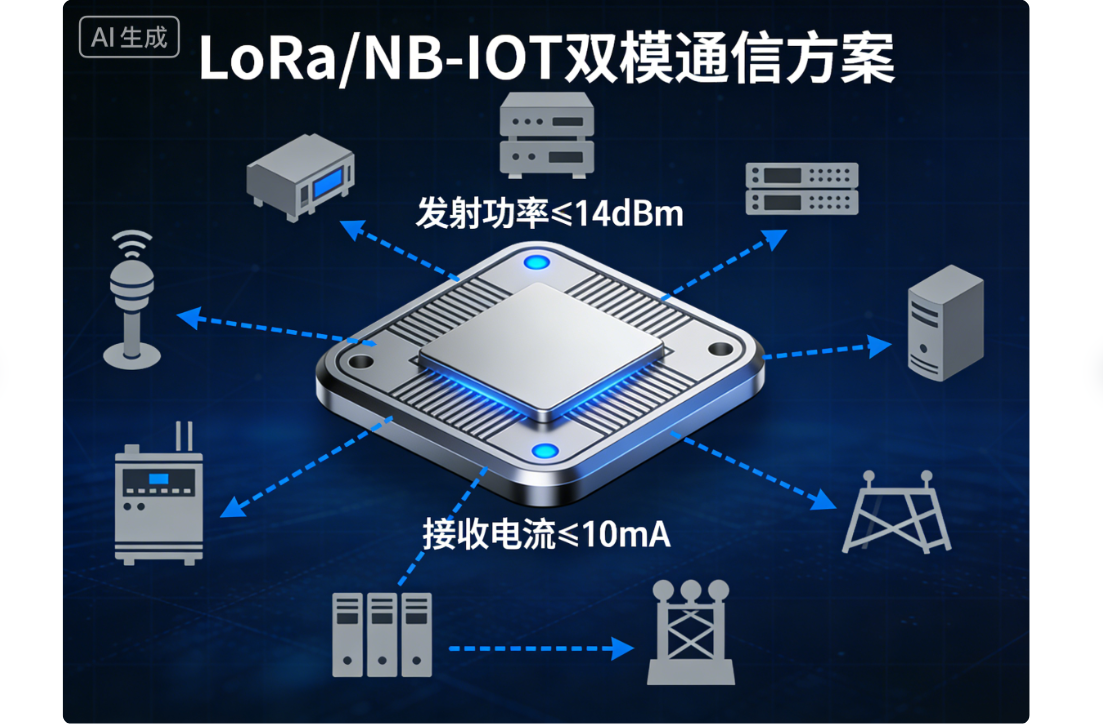
Low-power electromagnetic flowmeters, when paired with wireless communication modules (such as LoRa or NB-IoT), enable IoT deployments across all scenarios. At remote oilfield wellheads, devices are powered by solar energy and lithium batteries and use the NB-IoT network to upload crude oil flow data to a cloud-based management platform in real time, eliminating the need for cable and pipeline installation and reducing deployment costs by more than 40%. In mountainous water‑conservation monitoring scenarios, the devices can continuously track flow variations in streams and reservoirs, providing precise data for water resource management and addressing the challenge of traditional equipment being unable to operate long-term due to power supply limitations.
In urban pipeline leakage control projects, low-power electromagnetic flowmeters can serve as distributed monitoring nodes, deployed in large numbers at various points along the pipeline network, with data aggregated and transmitted via LoRa gateways. Thanks to their low power consumption and the elimination of frequent battery replacements, these devices can significantly reduce project maintenance costs. After a southern city deployed a network of low-power electromagnetic flow meters for pipeline monitoring, its annual maintenance expenses fell by 60%, and its leakage rate declined by 3.5 percentage points.
2. Economic and Energy-Saving Benefits Are Becoming Increasingly Prominent: Dual Gains from Cost Reduction and Efficiency Improvement
Low-power electromagnetic flowmeters offer significant energy-saving benefits; a single unit consumes only one-fifth the annual electricity of conventional equipment. Based on an industrial electricity rate of 0.8 yuan per kWh, each meter can save more than 200 yuan in electricity costs annually. For large industrial enterprises operating tens of thousands of measuring devices, this translates into annual electricity cost savings exceeding 2 million yuan. At the same time, long-term operational reliability significantly reduces maintenance costs, decreases the workload associated with manual battery swapping and servicing, and enhances management efficiency.
In the new energy sector, the application of low-power electromagnetic flowmeters has further advanced the industry’s transition toward energy efficiency. A photovoltaic power plant uses low-power electromagnetic flow meters to monitor the cooling system’s flow rate. Powered by solar energy, the equipment consumes no additional electricity. Integrated with an intelligent control system, it enables precise regulation of the cooling system, improving the plant’s overall energy efficiency by 2%. In the wind power industry, low-power flow meters are used to monitor lubricant oil flow. By transmitting data wirelessly, they enable real-time monitoring of equipment operating conditions, helping to prevent energy waste caused by equipment failures.
4. Future Development Directions: Coordinated Upgrades of Low Power Consumption, High Precision, and Intelligence
In the future, low-power electromagnetic flowmeters will evolve toward “lower power consumption, higher accuracy, and greater intelligence.” In terms of power consumption optimization, we will further refine excitation strategies and circuit designs, incorporating more advanced low-power chips and energy-harvesting technologies, with the goal of enabling maintenance-free operation for over ten years. To enhance accuracy, we will leverage optimized artificial intelligence algorithms to address signal-to-noise ratio challenges under low-power excitation, ensuring measurement precision under low-velocity and small-flow conditions. Regarding intelligence, we will integrate edge-computing capabilities to enable local data processing and anomaly alerts, reducing unnecessary data transmission and further lowering power consumption.
Meanwhile, the industry will advance the standardization of low-power electromagnetic flowmeters by establishing uniform specifications for low-power performance metrics, testing methods, and IoT communication protocols, thereby facilitating interoperability among products from different manufacturers. As the dual-carbon goals are further advanced and IoT technologies continue to evolve, low-power electromagnetic flowmeters will become the mainstream choice for industrial measurement, providing more reliable technical support for industrial energy conservation, consumption reduction, and intelligent transformation.
Conclusion
In the era of the Internet of Things, industrial metrology places higher demands on energy conservation and long-term operational reliability, making low-power design a core development direction for electromagnetic flowmeters. Through end-to-end technological innovation—optimizing the excitation system, upgrading the circuit architecture, and implementing intelligent power management—the low-power electromagnetic flowmeter has achieved dual breakthroughs in energy efficiency and IoT compatibility, expanding its application scope to diverse scenarios such as remote environments and distributed monitoring. It not only reduces operating and maintenance costs for enterprises but also helps the industrial sector achieve a low-carbon transition, demonstrating significant economic and social benefits. In the future, as technology continues to advance, low-power electromagnetic flowmeters will play an increasingly important role in industrial metrology, driving the sector toward greater energy efficiency, intelligence, and reliability in the era of the Internet of Things.
Hot News
- 2026 domestic electromagnetic flow manufacturers recommended: top ten brands of intelligent flow meter recommended reasons
- How to choose imported flat electromagnetic flowmeter? How to choose micro-caliber, conventional flange and plug-in electromagnetic? Recommended by domestic high-quality manufacturers
- Four major brands of electromagnetic flowmeter hard core PK: Herbalife Water, Cloud Meter, E H, Cologne, who is more worthy of choice?
- November 2026 Top Ten Brands of Electromagnetic Flowmeter at Home and Abroad Ranking
- Recommended Top Ten Brands of Electromagnetic Flowmeter in 2026: Reference for Project Selection of Water Treatment, Sewage and Conductive Liquid
- TOP5 Manufacturer's Selection Guide for Food Sanitary Electromagnetic Flowmeter: Material and Connection Mode Check before Purchase
- Cost-effective chemical oxygen demand water quality online monitor manufacturers contact information
- How to choose the integrated electromagnetic water meter? Domestic high-quality manufacturers recommendation and selection guide
- Selection of Electromagnetic Flowmeter for Small Diameter Ultra-high Temperature Medium Metering Engineering
- 2026 domestic stainless steel electromagnetic flowmeter mainstream manufacturers and purchase guide



