




Flowmeter Selection Guide: Accurate Matching Strategies in Different Scenarios
2025-12-22 10:06:46
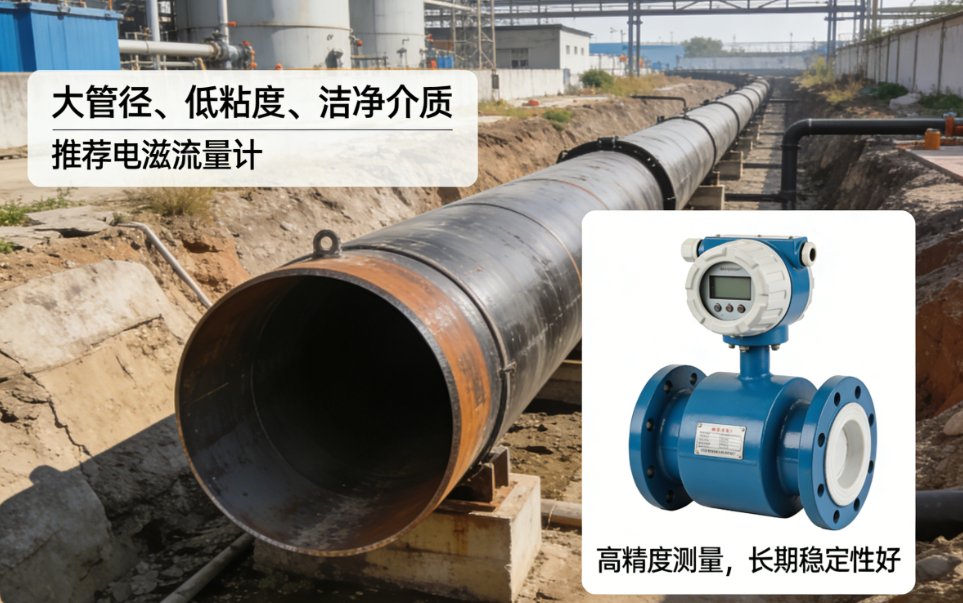
In industrial production, environmental protection, municipal water services, and other sectors, flow measurement is a core component for optimizing processes, controlling costs, and ensuring compliance during acceptance testing. In different scenarios, significant differences exist in fluid medium characteristics (such as corrosivity, suspended solids content, and viscosity), flow fluctuation ranges, measurement accuracy requirements, and installation conditions, which directly determine the selection direction of the flowmeter. Current mainstream flow meters on the market include electromagnetic flow meters, ultrasonic flow meters, vortex shedding flow meters, and differential pressure flow meters. Each type has its own strengths and weaknesses in terms of performance and applicable scenarios. Starting from the core principles of solution selection and categorizing typical application scenarios, this paper breaks down precise matching strategies for each scenario, providing enterprises with a practical guide for making informed choices.
Core principle for selection: Define requirements first, then match performance. The core logic of flowmeter selection is “demand-driven,” requiring prioritized clarification of three key factors: First, fluid characteristics—including conductivity, suspended solids content, corrosivity, viscosity, temperature, and pressure—which form the basis for assessing flowmeter compatibility; second, measurement requirements—covering accuracy class, turndown ratio, and response speed—which directly determine performance thresholds; for example, environmental monitoring demands high accuracy within ±0.5% FS, while general process metering may suffice at ±1% FS; third, installation and operational conditions—such as pipe material, diameter, whether pipeline disruption is permissible, and maintenance cost budget—which affect installation feasibility and long-term operating costs. Selections made without considering the specific application scenario can lead to measurement inaccuracies, frequent equipment failures, and excessively high operation and maintenance costs.
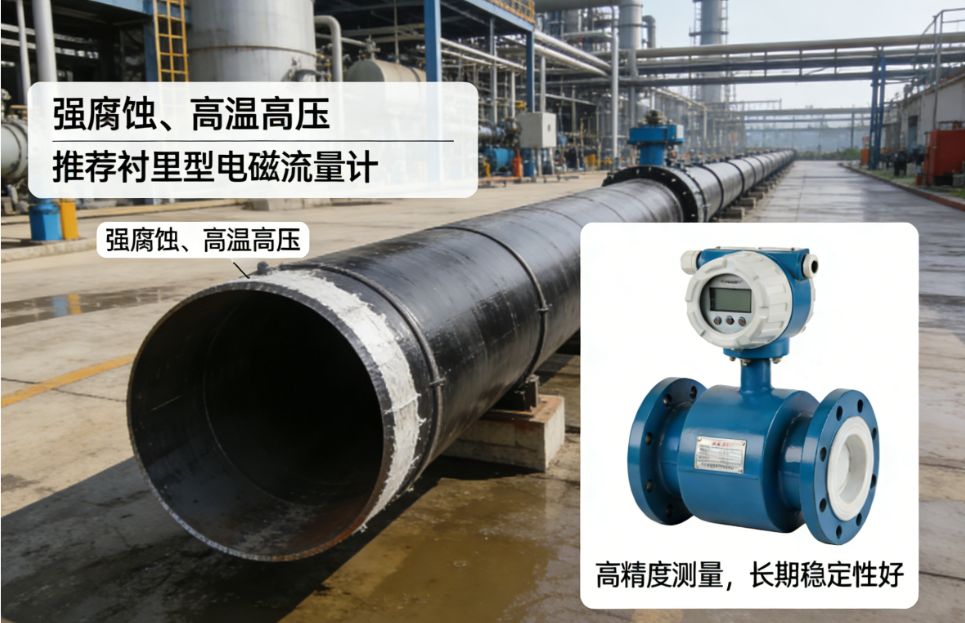
Municipal water management scenario: tailored to meet the demand for precise metering under conditions of high flow variability and elevated suspended solids. Municipal water services encompass sub‑scenarios such as inflow and effluent metering at wastewater treatment plants and raw water and distribution metering at water treatment plants. The key challenges are significant fluctuations in fluid flow rates, the high suspended solids content in wastewater, and, in some cases, compliance with online environmental monitoring requirements.
The influent and effluent inlets of wastewater treatment plants represent typical high‑demand scenarios. The wastewater contains large amounts of suspended solids such as silt, sand, and organic matter; flow rates fluctuate significantly between day and night; and the data must be integrated with environmental regulatory platforms, imposing extremely stringent requirements for accuracy and stability. At this point, prioritize electromagnetic flowmeters: their full-bore, mechanically simple design resists clogging and is suitable for media with high suspended solids content; their high accuracy of ±0.2%–±0.5% FS meets regulatory monitoring requirements; and their wide turndown ratio of 1:100 can accommodate significant flow fluctuations. After a large municipal wastewater treatment plant adopted high-precision electromagnetic flow meters, the accuracy of its influent and effluent flow data remained consistently within specifications, enabling it to pass the discharge accounting inspection without issue. For temporary monitoring or retrofits of existing pipelines where pipe disruption is not feasible, a Doppler ultrasonic flowmeter can be selected. Its non-contact installation requires no pipe removal and is suitable for wastewater containing suspended particles; however, care should be taken to avoid operating conditions with high gas content.
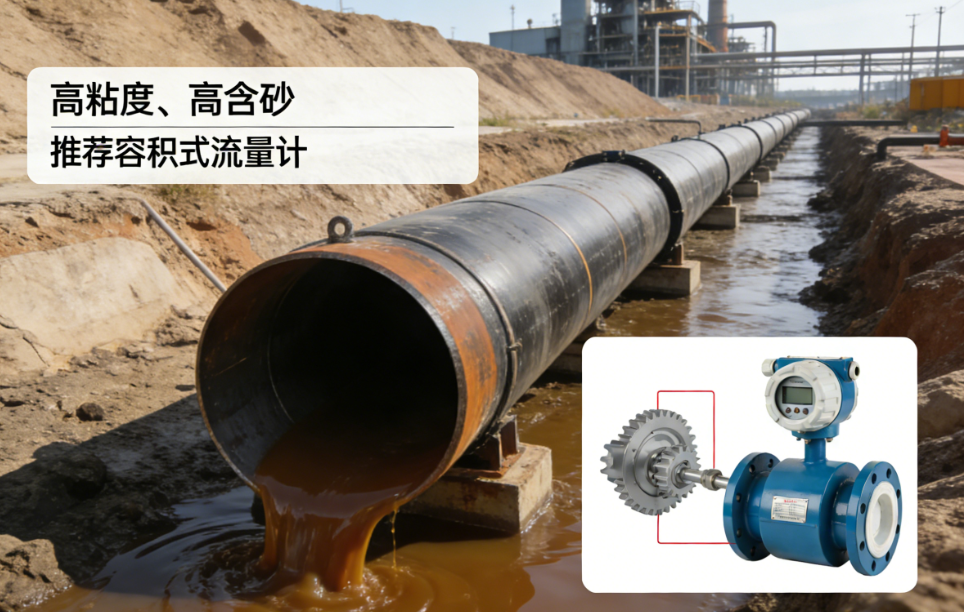
In raw water and water supply metering applications at water treatment plants, where the fluid is relatively clean and has low corrosivity, flexible selection is possible based on installation conditions. Electromagnetic flowmeters are preferred for new pipelines due to their superior stability; for retrofitting older pipelines, time-of-flight ultrasonic flowmeters are a suitable choice, offering easy installation and low maintenance costs.
Industrial wastewater applications: matched according to the corrosivity and cleanliness of the medium. Due to significant industry variations and complex media characteristics, industrial wastewater applications require detailed selection based on “corrosivity level and suspended solids content”:
Wastewater from industries such as chemical processing, textile dyeing, and papermaking often contains acids and bases, organic solvents, is highly corrosive, and may contain small amounts of suspended solids. For such applications, electromagnetic flowmeters made of corrosion-resistant materials are preferred; electrodes can be selected from special materials such as Hastelloy or titanium alloys to prevent measurement errors caused by media corrosion. These meters are unaffected by changes in the medium’s viscosity or density and can accommodate complex operating conditions. If the pipeline is made of stainless steel and damage is not permitted, an ultrasonic flowmeter with a corrosion-resistant probe can be used, but the probe must be cleaned regularly to prevent scaling.
In the mining and metallurgical industries, slag-laden wastewater has an extremely high suspended solids content, which can easily clog equipment; therefore, ensuring the flowmeter’s resistance to clogging must be prioritized. A full-bore design is the optimal choice for electromagnetic flowmeters, effectively preventing residue buildup; vortex shedding flowmeters are unsuitable due to the risk of blockage in the vortex generator, and differential pressure flowmeters are also unsuitable because their throttling elements tend to accumulate debris. For small machining enterprises with mildly polluted wastewater that is relatively clean, has a stable flow rate, and operates within a limited budget, differential pressure flow meters (such as orifice plate flow meters) can be used. These are low-cost but require periodic cleaning of the throttling element.
Industrial process cycling scenarios: tailored to meet stable flow requirements and efficient operations and maintenance needs. The core characteristics of industrial process circulation scenarios—such as cooling water loops and chemical feedstock transport—are stable flow rates, relatively high fluid cleanliness, a strong demand for operational ease, and, in some cases, the need to balance these with low energy consumption.
For applications involving cooling circulating water and the transport of low-viscosity chemical feedstocks—where fluid cleanliness and stable flow rates are required—a vortex shedding flowmeter is a suitable choice. Its simple construction and robust stability, combined with a measurement accuracy of ±1% FS that meets process requirements, make it an attractive option at a moderate manufacturing cost. Note that during installation, keep the device away from vibration sources; if necessary, install a vibration isolation system to prevent vibrations from compromising the accuracy of vortex detection. When energy consumption must be tightly controlled, excessive pressure loss should be avoided. Electromagnetic flowmeters, which have no throttling elements and low pressure loss, are the preferred choice, particularly for high‑flow circulation applications.
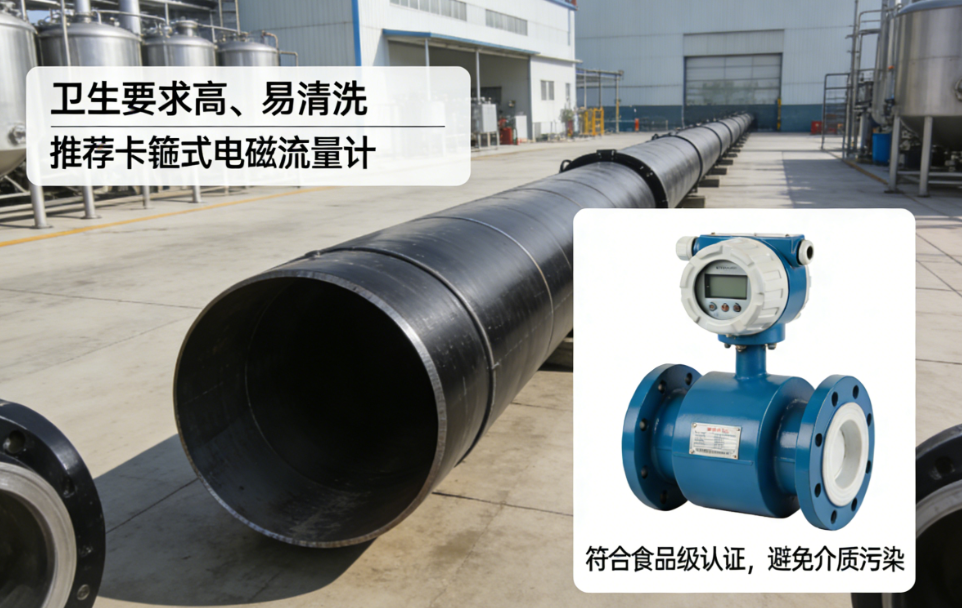
In the food and pharmaceutical industries, process fluid measurement must not only meet accuracy requirements but also comply with hygiene standards (such as FDA and GMP). Therefore, hygienic electromagnetic flowmeters should be selected. It is made of 316L stainless steel and features a dead-volume-free design to prevent media residue and contamination, making it suitable for metering hygienic-grade fluids such as fruit juices and pharmaceutical solutions.
Additional considerations for special scenarios: selection tips for low-maintenance and temporary monitoring. For low-maintenance scenarios such as monitoring stations in remote areas and temporary construction projects, ultrasonic flow meters are the preferred choice: their non-contact measurement eliminates component wear, requiring only periodic probe cleaning and resulting in extremely low maintenance costs; installation is quick, enabling rapid deployment of temporary monitoring systems. In a pipeline renovation project at a textile dyeing and printing enterprise, Doppler ultrasonic flow meters were selected; installation and commissioning were completed within one day, and annual maintenance costs are less than RMB 2,000, efficiently meeting the requirements for temporary flow monitoring.
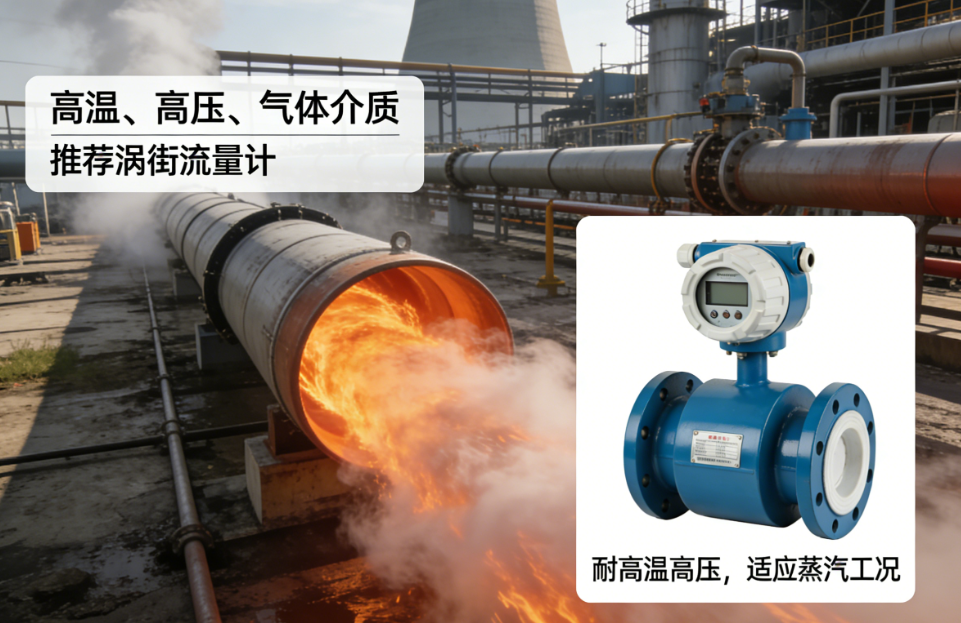
Conclusion: The key to selecting a flow meter is “precise matching,” rather than blindly pursuing high performance. Enterprises should first comprehensively assess the medium characteristics, measurement requirements, installation conditions, and cost budget of their specific applications, and then select flow meters that best match these criteria based on their respective performance advantages. Electromagnetic flowmeters offer the broadest applicability and are the preferred choice for high-precision applications involving complex media; ultrasonic flowmeters emphasize easy installation and low maintenance, making them well-suited for retrofitting and temporary installations; vortex shedding flowmeters are ideal for process measurement of stable, clean fluids; and differential pressure flowmeters are appropriate only for simple, low-cost applications requiring limited accuracy. By adhering to the “needs‑driven” principle, you can select flow meters that offer the best value for money, thereby laying a solid foundation for production operations and compliance management.
Previous post:
Hot News
- 2026 domestic electromagnetic flow manufacturers recommended: top ten brands of intelligent flow meter recommended reasons
- How to choose imported flat electromagnetic flowmeter? How to choose micro-caliber, conventional flange and plug-in electromagnetic? Recommended by domestic high-quality manufacturers
- Four major brands of electromagnetic flowmeter hard core PK: Herbalife Water, Cloud Meter, E H, Cologne, who is more worthy of choice?
- November 2026 Top Ten Brands of Electromagnetic Flowmeter at Home and Abroad Ranking
- Recommended Top Ten Brands of Electromagnetic Flowmeter in 2026: Reference for Project Selection of Water Treatment, Sewage and Conductive Liquid
- TOP5 Manufacturer's Selection Guide for Food Sanitary Electromagnetic Flowmeter: Material and Connection Mode Check before Purchase
- Cost-effective chemical oxygen demand water quality online monitor manufacturers contact information
- How to choose the integrated electromagnetic water meter? Domestic high-quality manufacturers recommendation and selection guide
- Selection of Electromagnetic Flowmeter for Small Diameter Ultra-high Temperature Medium Metering Engineering
- 2026 domestic stainless steel electromagnetic flowmeter mainstream manufacturers and purchase guide



