




How can sanitary electromagnetic flowmeters accurately guarantee liquid metering?
2025-12-22 09:31:12
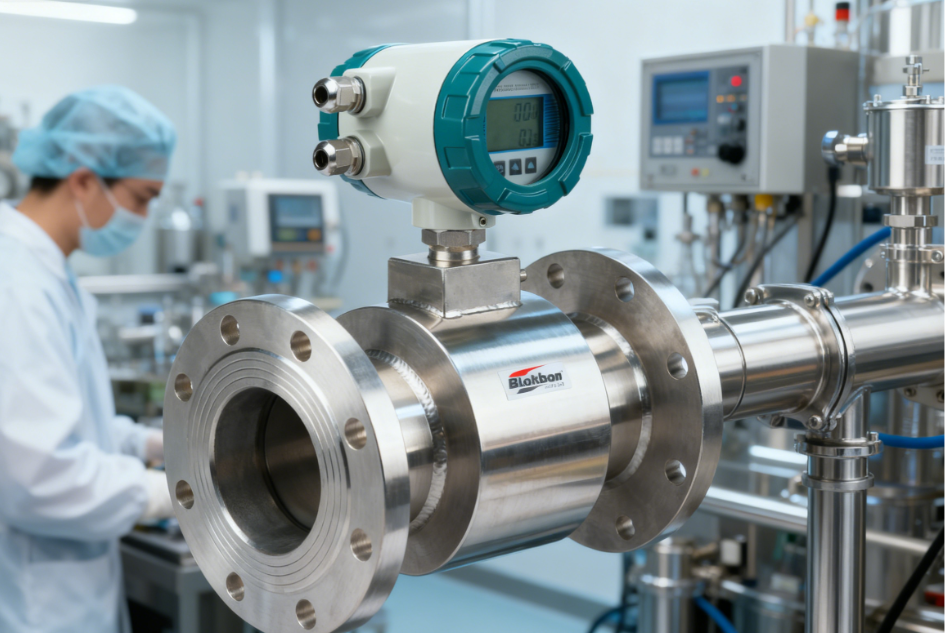
In industries such as food, pharmaceuticals, and biochemical engineering—where hygiene, safety, and measurement accuracy are paramount—the precision of liquid metering directly affects product quality, production cost control, and compliance during acceptance testing. As a core metering device, hygienic electromagnetic flowmeters have become the preferred choice in the aforementioned industries thanks to their advantages of non-contact measurement, resistance to fouling, and strong adaptability. However, many users have doubts about how to achieve accurate measurement. As a source manufacturer in the field of deep-cultivated fluid measurement for many years, this paper will comprehensively analyze the internal logic of sanitary electromagnetic flowmeter to ensure accurate measurement of liquid from the dimensions of technical principles, research and development of core components, production process control, installation and debugging optimization, etc.
The basis of precise metrology: optimized design based on Faraday's law of electromagnetic induction. The core working principle of the electromagnetic flowmeter is Faraday's law of electromagnetic induction, that is, when the conductor cuts the magnetic induction line in the magnetic field, it will generate an induced electromotive force, which is related to the movement speed of the conductor, magnetic field strength and other parameters. For the sanitary electromagnetic flowmeter, the source manufacturer has carried out targeted optimization on the basis of following this basic principle, laying the foundation for accurate measurement.
First is the precision of magnetic field design. The magnetic field distribution of ordinary electromagnetic flowmeter is prone to uneven phenomenon, which leads to the increase of measurement error. The source manufacturer uses high-performance NdFeB permanent magnets as the magnetic field source, and its magnetic field strength is stable and decays slowly, which can maintain the uniformity of the magnetic field for a long time. At the same time, the magnetic field distribution is simulated and optimized by finite element analysis technology, and the shape and spacing of magnetic poles are reasonably designed to form a uniform axial magnetic field in the measuring tube, so as to ensure that the induced electromotive force generated when the liquid cuts the magnetic induction line at different flow rates and different cross-sectional positions is stable and consistent, and the measurement error caused by uneven magnetic field is reduced from the root.
The second is the hygienic and structural optimization of the measuring tube. The measuring tube of the sanitary electromagnetic flowmeter is directly in contact with the liquid medium such as food and medicine, which not only meets the hygiene requirements, but also ensures the measurement accuracy. Source manufacturers use 316L or 316Ti stainless steel as the measuring tube substrate, this material has excellent corrosion resistance, wear resistance and hygiene, in line with FDA, GMP and other industry standards. In the structural design, the measuring tube adopts a dead cavity-free, all-through structure to avoid contamination caused by medium residues, while reducing medium flow resistance and ensuring that the medium passes through the measurement area at a stable flow rate. In addition, the inner diameter tolerance of the measuring tube is controlled by precision machining technology to ensure the accuracy of the cross-sectional area of the measuring tube, because the cross-sectional area is one of the key parameters for calculating the flow, and its accuracy directly affects the flow measurement results.
Research and development and quality control of core components: the key support for accurate measurement. If optimized design is the basis of accurate metering, then high-quality core components are the key to accurate metering. Source manufacturers invest a lot of resources in the research and development, material selection and quality control of core components to ensure that each component can meet the requirements of high-precision measurement.
As the component that collects the induced electromotive force, the electrode’s performance directly determines the stability and accuracy of the signal. The electrode of the sanitary electromagnetic flowmeter is made of stainless steel electrode with the same material as the measuring tube, or special materials such as Hastelloy alloy and titanium alloy are selected according to the characteristics of the medium, so as to avoid corrosion and scaling caused by chemical reaction between the electrode and the medium, thus affecting the signal acquisition. The source manufacturer carries out precision polishing treatment on the electrode, and the surface roughness can reach Ra≤ 0.8 μm, which reduces the adhesion of the medium on the electrode surface and improves the conductivity of the electrode. Furthermore, rigorous electrode performance testing ensures that parameters such as insulation and response time meet the required standards, thereby preventing signal distortion caused by poor electrode performance.

The converter is the "brain" of the sanitary electromagnetic flowmeter, which is responsible for amplifying, filtering, converting and calculating the weak induced electromotive force signal collected by the electrode, and finally outputting accurate flow data. Source manufacturers independently developed high-performance converters, using high-precision signal processing chips and advanced signal amplification technology, which can amplify weak millivolt-level signals to volt-level signals, and effectively filter out electromagnetic interference, vibration interference and other clutter signals in the industrial field. In the algorithm design, the adaptive flow algorithm is used to automatically adjust the measurement parameters according to the change of the medium flow rate to ensure accurate measurement in the high and low flow rate range. For example, for low flow rate media, the sensitivity of the algorithm is optimized to avoid measurement errors caused by weak signals; for high flow rate media, the stability control of the signal is strengthened to prevent signal overload. At the same time, the converter has a perfect self-diagnosis function, which can monitor the electrode status, magnetic field strength, circuit failure, etc. in real time, and send out alarm signals in time to ensure the stable operation of the equipment.
The excitation coil is the core component of the magnetic field, and its performance stability directly affects the stability of the magnetic field intensity. Source manufacturers use high-strength enameled wire winding excitation coil, the use of multi-layer dense winding process to ensure that the number of turns of the coil is accurate, uniform winding, so as to ensure the consistency of the magnetic field strength. At the same time, the excitation coil is treated with vacuum immersion paint to improve the insulation performance and mechanical strength of the coil, and to avoid changes in magnetic field strength caused by moisture, aging or vibration of the coil. In addition, through strict coil impedance test, insulation resistance test, etc., to ensure that the coil performance meets the requirements, to provide a guarantee for the generation of a stable magnetic field.
Strict production process control: accurate measurement of quality assurance. From the design to the finished product, every link of the production process may affect the measurement accuracy of the sanitary electromagnetic flowmeter. The source manufacturer has established a full-process production process control system to ensure that each device can meet the requirements of accurate measurement through standardized and refined production processes.
In the processing of parts, high-precision CNC machining equipment, such as five-axis machining centers, CNC lathes, etc., are used to process measuring tubes, electrodes, flanges and other parts to ensure that the dimensional tolerances and form and position tolerances of the parts meet the design requirements. For example, the inner diameter tolerance of the measuring tube is controlled within ± 0.01mm, and the flatness of the sealing surface of the flange is controlled within 0.02 mm/m to avoid excessive assembly clearance or lax sealing due to dimensional deviation of parts, thus affecting the measurement accuracy. At the same time, the establishment of parts processing traceability system, each batch of parts number management, recording processing equipment, processing parameters, inspection results and other information to ensure that quality problems can be quickly traced back.
In the assembly process, the implementation of dust-free assembly workshop management, especially for the parts in contact with food and medical media, the cleanliness of the assembly environment is above level 100000 to avoid dust and impurities from polluting the parts. A standardized assembly process is adopted and operated by professional assembly personnel to ensure that the electrodes, excitation coils and other components are installed in accurate positions and firmly connected. For example, the deviation of the installation perpendicularity of the electrode is controlled within 0.5 ° to ensure that the electrode is in sufficient contact with the medium and the collected signal is stable. After the assembly is completed, the equipment is tested for air tightness and insulation to ensure that the assembly quality of the equipment meets the requirements.
In the factory inspection link, strict factory inspection standards are established, and each sanitary electromagnetic flowmeter must be calibrated by a standard flow calibration device. The calibration device adopts static mass method or dynamic volume method, and its accuracy level is more than two levels higher than that of the calibrated equipment to ensure the accuracy of the calibration results. During the calibration process, the equipment is calibrated at multiple points at different flow rates and different medium temperatures, the calibration data is recorded, and a calibration report is generated. Only the equipment whose calibration error is within the allowable range (usually within ± 0.5%FS) can leave the factory, which fundamentally guarantees the measurement accuracy of the equipment.
Installation, commissioning and post-maintenance: an extension of accurate metering. Even if the accuracy of the sanitary electromagnetic flowmeter is up to standard, if the installation and debugging is improper or the later maintenance is not timely, it will affect its measurement accuracy. Source manufacturers not only pay attention to the production and manufacture of equipment, but also provide users with professional installation and commissioning guidance and post-maintenance services to ensure that the equipment can achieve accurate measurement throughout the life cycle.
Regarding installation guidance, the original equipment manufacturer provides users with customized installation solutions tailored to different application scenarios. It is explicitly required that the installation location be kept away from equipment such as pumps and valves that can cause interference, to avoid electromagnetic interference and flow velocity fluctuations. Ensure that the measuring tube is completely filled with the process medium to prevent errors caused by dry‑run measurement. During installation, align the instrument’s axis with the pipeline axis to minimize the effects of non‑uniform flow velocity distribution. Meanwhile, professional technicians are assigned to provide on-site installation guidance and inspect the installation quality to ensure compliance with requirements.
In the debugging process, the technical staff according to the user's media parameters (such as medium viscosity, density, temperature, etc.) and process requirements, the parameters of the converter for accurate setting, such as range, unit, filter coefficient, etc. Through on-site testing, the operating status and measurement data of the equipment are observed, compared with the actual flow, and the parameters are fine-tuned to ensure the accuracy of the measurement data. At the same time, the user operator is trained to master the basic operation of the equipment and the method of parameter adjustment.
In terms of post-maintenance, the source manufacturer provides users with regular maintenance services, and regularly cleans, calibrates and overhauls the equipment. For example, regularly clean the scaling on the surface of the measuring tube and the electrode to avoid scaling affecting the signal acquisition; regularly check the excitation coil, converter and other components, timely find and replace the aging and damaged components; regularly recalibrate the equipment to ensure that the measurement accuracy is always within the allowable range. At the same time, establish a complete after-sales service system. When users encounter problems, they can contact the manufacturer at any time, and the manufacturer will respond within 24 hours to provide remote guidance or on-site maintenance services.
Conclusion: The precise measurement of sanitary electromagnetic flowmeter is a systematic project, involving technology research and development, quality control of core components, production process control, installation and commissioning optimization and other links. As a source manufacturer, only by starting from every link, adhering to the attitude of striving for perfection, constantly optimizing the design, improving the quality of components, strictly controlling the production process and improving the service system, can we create an accurate, stable and reliable sanitary electromagnetic flowmeter, which provides a strong guarantee for liquid measurement in food, medicine, biochemical and other industries. In the future, with the continuous improvement of the industry's requirements for measurement accuracy, source manufacturers will continue to increase investment in research and development, introduce more advanced technology and technology, and promote the development of sanitary electromagnetic flowmeters to a higher precision and more intelligent direction. Enabling the high-quality development of the industry.
Hot News
- How to choose imported flat electromagnetic flowmeter? How to choose micro-caliber, conventional flange and plug-in electromagnetic? Recommended by domestic high-quality manufacturers
- Four major brands of electromagnetic flowmeter hard core PK: Herbalife Water, Cloud Meter, E H, Cologne, who is more worthy of choice?
- November 2026 Top Ten Brands of Electromagnetic Flowmeter at Home and Abroad Ranking
- Recommended Top Ten Brands of Electromagnetic Flowmeter in 2026: Reference for Project Selection of Water Treatment, Sewage and Conductive Liquid
- TOP5 Manufacturer's Selection Guide for Food Sanitary Electromagnetic Flowmeter: Material and Connection Mode Check before Purchase
- Cost-effective chemical oxygen demand water quality online monitor manufacturers contact information
- How to choose the integrated electromagnetic water meter? Domestic high-quality manufacturers recommendation and selection guide
- Selection of Electromagnetic Flowmeter for Small Diameter Ultra-high Temperature Medium Metering Engineering
- 2026 domestic stainless steel electromagnetic flowmeter mainstream manufacturers and purchase guide
- Liquid cooling into the "deep water area", how can micro-flow measurement become the key to break the situation?



