




Analysis of Comparison Function Accuracy and Maintenance Cost of Integrated Electromagnetic Flowmeter
2025-12-10 10:26:49

In the field of industrial automation flow measurement, flow meters serve as core instrumentation, and their performance directly impacts production efficiency, product quality, and operational costs. Thanks to its compact design and ease of installation, integrated electromagnetic flowmeters have seen increasingly widespread use in recent years across industries such as chemical processing, water treatment, and metallurgy. This paper will take the integrated electromagnetic flowmeter as the core, from the three key dimensions of functional characteristics, measurement accuracy and maintenance cost, and compare and analyze with the mainstream types such as separated electromagnetic flowmeter, vortex flowmeter and differential pressure flowmeter, so as to provide reference for the equipment selection of industrial users.
The comparison of functional characteristics is the basis of selection, and there are significant differences in the functional adaptation scenarios of different types of flowmeters. The integrated electromagnetic flowmeter adopts the integrated design of sensor and converter. Its core function revolves around the flow measurement of conductive medium. It has basic functions such as real-time flow display, local data storage, and various signal outputs (4-20mA, RS485). Some high-end models also support temperature and pressure compensation functions, which can adapt to the flow correction requirements under complex working conditions. Its outstanding advantage lies in its compact structure, no need to separately arrange the converter installation space, especially suitable for installation in narrow sites, while the integrated design reduces signal transmission links, has stronger anti-interference ability, and has better stability in the industrial environment with multiple electromagnetic interference.
Compared with the integrated electromagnetic flowmeter, although the separated electromagnetic flowmeter also has the measurement capability of conductive medium, the sensor and the converter are installed separately, and the function expansibility is stronger. More complex data processing and remote control can be realized by replacing different types of converters, but the installation and debugging process is more complicated, and the space requirement for the installation environment is higher. Vortex flowmeter is suitable for gas, liquid, steam and other media, the function is more focused on multi-media versatility, but the medium viscosity, flow rate range is strictly limited, in high viscosity medium measurement prone to signal distortion. The differential pressure flowmeter relies on the throttling device to generate a pressure difference to realize measurement. It has a simple structure and low cost, but it has a single function. It can only realize basic flow measurement, and has high requirements for medium cleanliness and is easily affected by impurity blockage.
Measurement accuracy is a core performance indicator of flow meters, directly determining the reliability of measurement data. The measurement accuracy of integrated electromagnetic flowmeter can usually reach ± 0.5 FS, and some high-precision models can reach ± 0.2 FS. Its accuracy advantage stems from the principle of electromagnetic induction measurement, is not affected by physical parameters such as medium density, viscosity and temperature, and only has the minimum requirement for medium conductivity (generally ≥ 5 μS/cm), and has excellent accuracy stability in measurement of conductive medium such as sewage and acid-base solution. In the comparison of actual working conditions, when the measuring medium is industrial wastewater containing impurities, the accuracy fluctuation range of the integrated electromagnetic flowmeter is only +/-0.3, while the accuracy fluctuation of the vortex flowmeter can reach +/-1.5 due to impurities hitting the vortex generating body, and the accuracy deviation of the differential pressure flowmeter even exceeds +/-2% due to blockage of the orifice.
It should be noted that the accuracy performance of the integrated electromagnetic flowmeter is less affected by the installation conditions. As long as the front and rear straight pipe sections meet the requirements (generally the front 10D and the rear 5D), the accuracy advantage can be stably exerted. However, due to the increase of signal transmission distance, if the wiring is not standardized, it is easy to cause the accuracy to decrease, and additional signal shielding measures are usually required. In small flow measurement scenarios, the advantages of the integrated electromagnetic flowmeter are more obvious. The minimum measurable flow rate of the integrated electromagnetic flowmeter is as low as 0.1 m/s, while the minimum measurable flow rate of the vortex flowmeter is usually not less than 0.5 m/s. The differential pressure flowmeter is prone to measurement blind spots under small flow conditions.
Maintenance cost is a key factor to be considered in the long-term operation of industrial users, including maintenance labor cost, replacement cost of wearing parts, downtime loss and so on. The maintenance cost advantage of the integrated electromagnetic flowmeter is significant. It has no mechanical moving parts and simple internal structure. It only needs to clean the sensor electrode scaling regularly. The maintenance cycle can generally reach 1-2 years. Taking the water treatment industry as an example, the average annual maintenance cost of an integrated electromagnetic flowmeter is about 500-800 yuan, mainly for manual cleaning. However, differential pressure flowmeters need to replace throttling devices and seals regularly, with an average annual maintenance cost of 2,000-3,000 yuan. The vortex generating body of vortex flowmeter is easy to wear and the sensor is easy to corrode by medium, with an average annual maintenance cost of about 1500-2500 yuan.
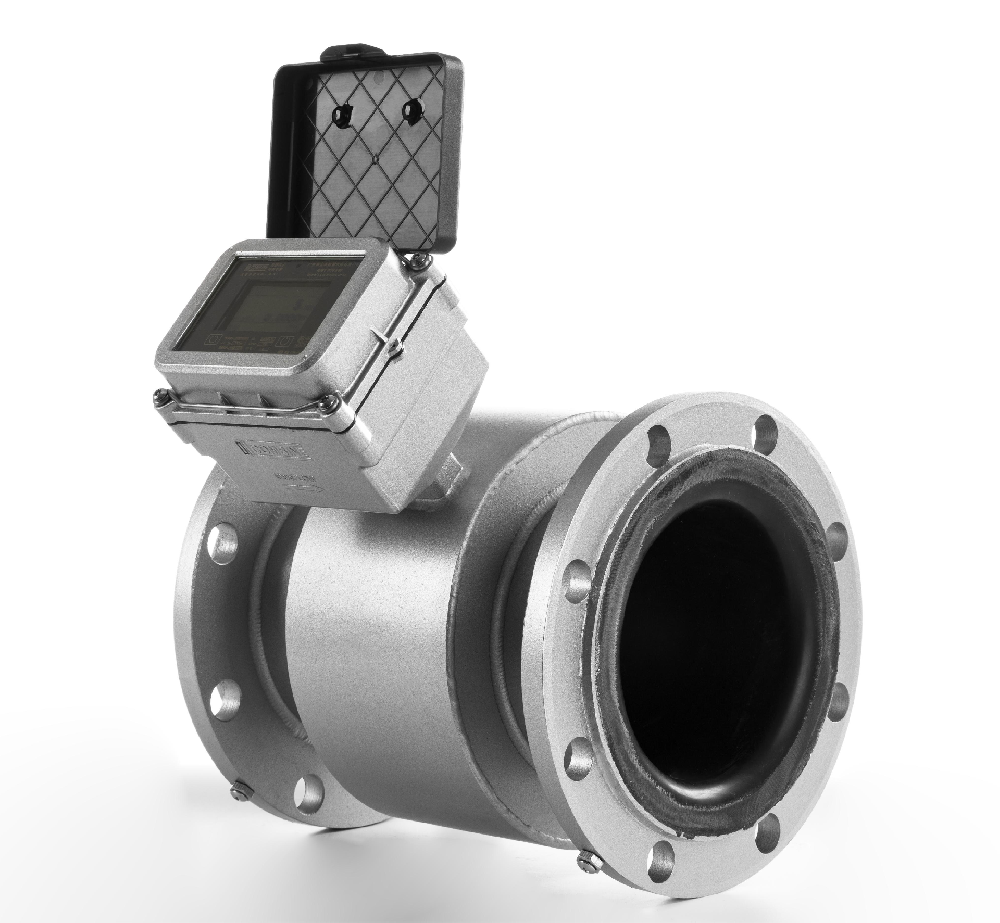
From the perspective of maintenance convenience, the integrated structure of the integrated electromagnetic flowmeter is convenient for on-site maintenance, and a single person can complete the maintenance operation without disassembling complicated connecting pipelines, with an average maintenance time of not more than 1 hour. The separate electromagnetic flowmeter needs to check two parts of equipment separately during maintenance because the sensor and the converter are installed separately, and the signal calibration process is complicated, and the maintenance time usually takes 2-3 hours. In addition, the service life of integrated electromagnetic flowmeters is generally long, up to 10-15 years under normal working conditions, while the service life of vortex flowmeters and differential pressure flowmeters is generally 5-8 years, which is further reduced in the long run. The user's equipment replacement cost.
On the whole, the integrated electromagnetic flowmeter shows significant advantages in functional adaptability, measurement accuracy stability, long-term maintenance cost, etc., and is especially suitable for flow measurement scenarios in conductive media, narrow installation space, and complex interference environments. However, it should be noted that its scope of application is limited to conductive media, unable to measure gas, steam and high insulation liquid, which needs to be considered in the selection. For industrial users, the type of flowmeter should be reasonably selected according to their own measurement medium characteristics, installation conditions, accuracy requirements and budget: if conductive media such as sewage and acid-base solution need to be measured, and high precision and low maintenance cost are pursued, integrated electromagnetic flowmeter is the best choice; If gas or steam medium needs to be measured, vortex flowmeter should be given priority. If the budget is limited and the measurement accuracy requirement is not high, differential pressure flow meters are available as transitional options. In the future, with the development of sensing technology and intelligent technology, the integrated electromagnetic flowmeter will be further improved in terms of functional integration and intelligent data analysis, bringing more efficient and reliable solutions to the field of industrial automation measurement.

Hot News
- How to choose imported flat electromagnetic flowmeter? How to choose micro-caliber, conventional flange and plug-in electromagnetic? Recommended by domestic high-quality manufacturers
- Four major brands of electromagnetic flowmeter hard core PK: Herbalife Water, Cloud Meter, E H, Cologne, who is more worthy of choice?
- November 2026 Top Ten Brands of Electromagnetic Flowmeter at Home and Abroad Ranking
- Recommended Top Ten Brands of Electromagnetic Flowmeter in 2026: Reference for Project Selection of Water Treatment, Sewage and Conductive Liquid
- TOP5 Manufacturer's Selection Guide for Food Sanitary Electromagnetic Flowmeter: Material and Connection Mode Check before Purchase
- Cost-effective chemical oxygen demand water quality online monitor manufacturers contact information
- How to choose the integrated electromagnetic water meter? Domestic high-quality manufacturers recommendation and selection guide
- Selection of Electromagnetic Flowmeter for Small Diameter Ultra-high Temperature Medium Metering Engineering
- 2026 domestic stainless steel electromagnetic flowmeter mainstream manufacturers and purchase guide
- Liquid cooling into the "deep water area", how can micro-flow measurement become the key to break the situation?



