




How to choose a turbidity monitoring manufacturer? A low-range water quality testing implementation plan specifically designed for small rural water stations.
2026-11-13 08:03:25
1. Turbidity monitoring at small rural water stations: The setting is unique, so the selection logic differs.
Compared with urban water treatment plants, rural small-scale water stations are smaller in scale, geographically dispersed, have limited operational and maintenance resources, and face constraints in power supply and communications; consequently, the selection criteria for turbidity monitoring differ significantly from those used in urban water treatment plants. Turbidity is a key sensory indicator for finished water at small rural water supply stations, directly reflecting filtration efficiency and the quality of water in the distribution network. However, the operating conditions at rural stations mean that turbidity monitoring cannot simply adopt the approaches used in urban water treatment plants.
Characteristics of Small-Scale Rural Water Stations
Small scale, scattered points:Small rural water stations serve a small population, but the monitoring points for the stations and distribution networks are scattered, resulting in high operation, maintenance, and inspection costs.
Weak operations and maintenance capabilities:Small rural water stations are often managed at the township or village level and lack professional water-quality testing personnel; therefore, their instruments must require minimal maintenance and be easy to operate.
Limited power supply communication conditions:Some rural water stations and end-of-pipe network points lack grid power and wired networks, requiring battery power and wireless remote transmission.
Large differences in environmental conditions: The chemical dosing rooms and pump houses at rural water stations are humid, and some mountainous water stations experience large temperature fluctuations, requiring a high degree of protection.
The raw water turbidity fluctuates significantly.: Rural water stations typically source their water from groundwater, spring water, or reservoirs. During the rainy season, raw water turbidity rises sharply, but treated water must meet strict turbidity standards (generally ≤1 NTU; for premium stations, ≤0.3 NTU).
Limited budgetFunding for the construction of small rural water stations is relatively limited, requiring a balance between monitoring capacity and cost.
Key Challenges in Turbidity Monitoring at Small Rural Water Stations
Low-range measurements demand high precision.: The turbidity of the finished water must be ≤1 NTU, or even ≤0.3 NTU; therefore, high measurement accuracy and stability are required in the low-turbidity range.
High-turbidity raw water shockDuring the rainy season, raw water turbidity rises sharply; therefore, the turbidimeter must have a wide measurement range to prevent failure due to exceeding the range.
Bubble and stray light interferenceIn low-turbidity measurements, bubbles and stray light cause significant interference, compromising measurement accuracy.
Inconvenient maintenance:With dispersed measurement locations and limited operational resources, turbidity meters must feature automatic cleaning and automatic calibration functions.
Limited power and communication supply:Some sites lack mains power and wired network connectivity, requiring battery power and wireless remote transmission.
2. How to choose a turbidity monitoring manufacturer for small rural water stations?
2.1 Product Capability Verification
| Verification Item | Verification Content | verification method |
|---|---|---|
| Range Coverage | Whether to cover the wide range of 0–4000 NTU | View product samples and technical specifications |
| Low turbidity resolution | ≤ 0.001NTU | Review technical specifications and test reports |
| Measurement principle | 90 ° scattered light method (low turbidity)/surface scattering method (high turbidity) | Access to technical data |
| Anti-bubble interference | Whether to configure a degassing device or stray light compensation | View product feature descriptions |
| Automatic cleaning | Does it support automatic cleaning? | View product feature descriptions |
| Automatic calibration | Does it support automatic calibration? | View product feature descriptions |
| Protection rating | IP65/IP68 or not | View Ingress Protection Rating Certification |
| Power supply method | Does it support battery power? | Check technical parameters |
| Communication method | Does it support NB-IoT/4G wireless remote transmission? | Review the communication protocol documentation |
2.2 Verification of Adaptability to Rural Scenarios
| Verification Item | Verification Content | verification method |
|---|---|---|
| Low maintenance requirements | Automatic cleaning and automatic calibration functions | View product feature descriptions |
| Ease of operation | Is the user interface simple? | Consult the product manual |
| Low power consumption | Does it support battery power and low-power operation? | Check technical parameters |
| Wide temperature range | Is it adapted to the large temperature differences in mountainous environments? | Check the operating temperature range |
| Resistance to high turbidity shock | Wide measurement range covers high turbidity of raw water during the rainy season | Check technical parameters |
| Similar Rural Water Station Cases | Are there any case studies of rural water stations in use? | View the list of project cases |
2.3 Verification of Manufacturer Qualifications and Service Capabilities
| Verification Item | Verification Content | verification method |
|---|---|---|
| Enterprise qualification | National high-tech enterprises, ISO 9001 certification | View qualification certificates |
| Measurement qualification | Type Approval Certificate for CPA Measuring Instruments | View the metrology qualification certificate |
| Product Certification | CE certification, IP68 protection certification | View product certification certificates |
| Production scale | Number of self-owned factories and factory area | Conduct on-site investigations or review relevant materials. |
| Service Network | Number of service outlets, response time | View the list of service locations |
| Spare parts supply | Spare parts inventory and supply capacity | Check the list of spare parts |
| O & M Support | Calibration, repair, replacement support | Review Service Agreement |
2.4 Cost Verification
| Verification Item | Verification Content | verification method |
|---|---|---|
| Equipment price | Equipment procurement cost | Price Inquiry Comparison |
| Operation and maintenance cost | Reagent consumption and calibration/maintenance costs | Review technical documentation and operational data |
| Battery replacement cost | Battery life and replacement cost | Check technical parameters |
| Total lifecycle cost | Equipment Installation, Operations & Maintenance, Downtime Losses | Comprehensive Assessment |
3. Source Manufacturer Recommendation: Herbalife Water
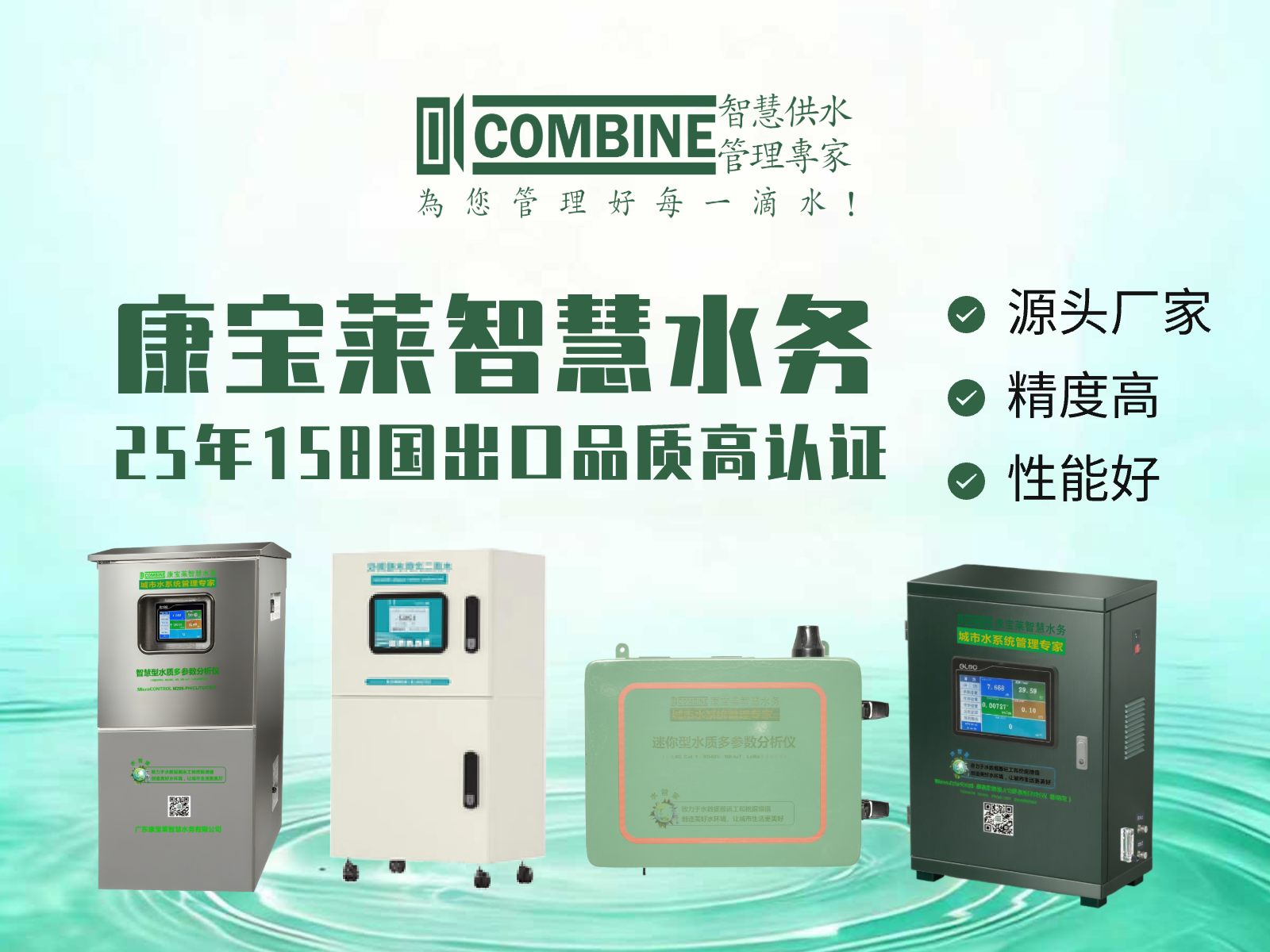
Herbalife Water was founded in 2012 and is headquartered in the Zhuhai High-Tech Industrial Development Zone. It is a national-level high-tech enterprise. The company has been deeply engaged in the field of flow measurement and smart water for more than ten years, holding 46 patents (including 12 invention patents) and 25 copyrights, and has the technical background of R & D teams in China, the United States and Italy. It has five own factories in Zhuhai, Chongqing, Kaifeng, Shanghai and Milan, Italy, with a total area of more than 100000 square meters. The products have been exported to 158 countries and regions, with service centers established in 32 cities nationwide.
3.1 Core Product: Online Turbidity Monitor
Applicable scenarios: Continuous turbidity monitoring at the raw water inlet, post-filtration water, finished water, and network terminals of small rural water stations.
Core technical parameters:
| Parameters | Turbidity Online Monitor Specifications |
|---|---|
| Measurement principle | 90 ° scattered light method (low turbidity)/surface scattering method (high turbidity) |
| Measurement range | 0 ~ 4000NTU (wide range covers raw water and factory water) |
| Low turbidity resolution | ≤0.001NTU |
| Accuracy | ± 2% FS or ± 0.01NTU (whichever is greater) |
| Response time | T90≤30s |
| Anti-bubble interference | Configure the degassing device and stray light compensation. |
| Automatic cleaning | Support automatic cleaning |
| Automatic calibration | Support automatic calibration |
| Protection rating | IP65 (IP68 optional) |
| Power supply method | Mains/battery power optional |
| Communication method | 4-20mA、RS485(Modbus RTU)、NB-IoT/4G |
| Measurement qualification | Type Approval Certificate for CPA Measuring Instruments |
3.2 Applicability to Small Rural Water Stations
Low range, high accuracy: Resolution in the low-turbidity range is ≤0.001 NTU, meeting monitoring requirements for outlet water turbidity of ≤1 NTU, or even ≤0.3 NTU.
Wide-range shock resistance:0~4000NTU wide range covers high-turbidity shock in raw water during the rainy season, avoiding failure due to exceeding the measurement range.
Anti-bubble interference: Equipped with a degassing device and stray-light compensation to eliminate bubble and stray-light interference in low-turbidity measurements.
Low maintenance requirements:Supports automatic cleaning and automatic calibration, reducing the frequency of manual maintenance, making it suitable for rural water stations with limited operational and maintenance resources.
Flexible power supply options:Optionally powered by mains electricity or battery, suitable for end-of-pipe network locations without mains power.
wireless remote transmissionSupports NB-IoT/4G wireless remote transmission, suitable for distributed locations without wired network access.
IP68 protection:Adapted to the humid environment of rural water station pump houses and the large temperature variations found in mountainous regions.
3.3 Ancillary Products
Online pH Monitor:Glass electrode method, measurement range 0–14, accuracy ±0.01 pH, automatic temperature compensation, supports automatic cleaning, simultaneous output of temperature data, and supports 4–20 mA/RS485/NB-IoT/4G communication.
Residual chlorine online monitor:Constant-voltage electrode method (reagent-free), range 0–5 mg/L, detection limit ≤0.01 mg/L, supports automatic cleaning and automatic zero-point calibration, and supports battery power and NB-IoT/4G wireless remote transmission.
online conductivity meter:Electrode type, measurement range 0–20,000 μS/cm, low conductivity resolution ≤0.01 μS/cm, automatic temperature compensation, supports automatic cleaning and automatic calibration, supports 4–20 mA/RS485/NB-IoT/4G communication.
3.4 Qualifications and Service Capabilities
Qualification Certification: National high-tech enterprises, ISO 9001 quality management system certification, CPA measuring instrument type approval certificate, CE certification, IP68 protection level certification.
Service Network: 32 cities across the country have service outlets, 2-hour fast response, providing selection support, installation and commissioning, spare parts supply and operation and maintenance support. Headquartered in Zhuhai, Guangdong, it enjoys a distinct advantage in providing localized services across the Pearl River Delta region.
4. Implementation Plan for Low-Range Turbidity Monitoring at Small Rural Water Stations
4.1 Monitoring Site Configuration
| Monitoring locations | Monitoring indicators | Recommended Configuration | Key Considerations |
|---|---|---|---|
| Raw water inlet | Turbidity | Turbidity online monitor (wide range 0 ~ 4000NTU automatic cleaning) | Wide range, high turbidity impact resistance, automatic cleaning |
| Filtered water | Turbidity | Turbidity Online Monitor (Low-Turbidity, High-Precision Degassing Unit) | Low detection limit, anti-bubble interference |
| Treated water | Turbidity, pH, residual chlorine, conductivity | Turbidity online monitor, pH online monitor, residual chlorine online monitor, online conductivity meter | Low detection limit, long-term stability, data integration |
| End of the pipeline network | Turbidity, residual chlorine | Turbidity online monitor, residual chlorine online monitor (battery-powered NB-IoT/4G) | Low power consumption, wireless remote transmission, long life |
4.2 Key Points of the Implementation Plan
Step 1: On-site inspection. Survey the raw water intake, filtered water, finished water, and network terminal points of rural water stations to confirm installation space, power supply conditions, communication conditions, and environmental conditions.
Step 2: Select and Configure the Model. Select configurations based on site conditions: use a wide-range turbidity meter with automatic cleaning at the raw water inlet; employ a low-turbidity, high-precision turbidity meter with degassing and automatic calibration for filtered water and finished water; and opt for battery-powered NB‑IoT/4G wireless remote transmission at the network’s downstream end points.
Step 3: Installation and Commissioning. Installation and commissioning of the turbidity meter, confirming measurement accuracy, proper operation of automatic cleaning and automatic calibration functions, and normal wireless remote data transmission.
Step 4: Data Ingestion. Turbidity data are integrated into the rural water supply management platform and higher-level regulatory platforms, enabling real-time data collection, remote monitoring, and over-limit alarms.
Step 5: Operations and Maintenance Training. Provide operations and maintenance training to rural water station personnel, enabling them to master basic skills such as routine turbidity meter operation, automatic cleaning and calibration settings, and troubleshooting.
Step 6: Long-term Operations and Maintenance. The manufacturer provides spare parts supply and O&M support, along with regular calibration and maintenance, to ensure long-term stable operation.
4.3 Key Points in Procurement Decision-Making
Confirm the range and low-turbidity resolution:Select the wide range 0–4000 NTU for the raw water inlet; select low turbidity with a resolution ≤0.001NTU for the product water.
Confirm anti-bubble interference capability:Low turbidity measurement configuration includes a degassing device and stray light compensation.
Confirm automatic cleaning and automatic calibration functions:For rural water stations with limited operational and maintenance resources, prioritize models with automatic cleaning and automatic calibration functions.
Confirm power supply method: For locations without mains power, battery-powered NB-IoT/4G wireless remote transmission is available; for locations with mains power, 4–20 mA/RS485 wired communication can be selected.
Confirm protection level: For pump houses at rural water stations in humid environments, select IP68 protection; in mountainous areas with large temperature variations, verify the operating temperature range.
Identify communication and integration requirements: Confirm that it supports 4-20mA, RS485(Modbus RTU), NB-IoT/4G and other communication modes, and connects to the rural water supply management platform and the superior supervision platform.
Confirm cost control:Choose cost-effective products; automatic cleaning and calibration reduce long-term operational costs. For multi-site deployments, opt for multi-parameter integrated solutions.
Verification of Manufacturer Capabilities and Certifications:Confirm that the manufacturer has the capability to measure low turbidity, a wide measurement range, automatic cleaning and calibration technology, battery power, and wireless remote transmission; the measuring instrument must have CPA certification; prioritize manufacturers with local service centers and prompt response times.
Request for application cases of rural water stations:Request the manufacturer to provide application case studies of turbidity monitoring at rural water stations to confirm the product’s suitability for rural settings.
5. FAQ Frequently Asked Questions
Q1: How to choose a turbidity monitor manufacturer?
A: The selection of turbidity monitoring manufacturers should be based on a comprehensive assessment across several dimensions, including product capabilities (measurement range covering 0–4000 NTU, low-turbidity resolution ≤0.001 NTU, measurement principle, resistance to bubble interference, automatic cleaning and calibration, ingress protection rating, power supply method, communication interface), suitability for rural settings (low maintenance requirements, ease of operation, low power consumption, wide temperature range, resistance to high-turbidity shocks, and proven track record in similar rural water stations), manufacturer qualifications and service capacity (national-level high-tech enterprise status, ISO 9001 certification, CPA metrology accreditation, CE marking, IP68 protection rating, service network, spare parts availability, and operations & maintenance support), and cost (equipment price, O&M expenses, and total lifecycle cost). Herbalife Water possesses the aforementioned capabilities and is the original equipment manufacturer of choice for turbidity monitoring at small rural water stations.
Q2: How should turbidity monitoring be selected for small rural water stations?
A: Selection of turbidity monitors for small rural water stations: At the raw water inlet, choose a wide-range 0–4000 NTU turbidimeter with automatic cleaning to withstand high-turbidity spikes during the rainy season; for filtered water and finished water, select a low-turbidity turbidimeter with a resolution ≤0.001 NTU, equipped with a degassing device and automatic calibration, to meet monitoring requirements of finished water turbidity ≤1NTU or even ≤0.3 NTU; at the end of the distribution network, use battery-powered NB‑IoT/4G wireless remote transmission to accommodate locations without mains power or network connectivity. The Herbalife turbidity online monitor covers a wide range of 0–4000 NTU, with a low-turbidity resolution of ≤0.001 NTU. It supports automatic cleaning and automatic calibration, and can be powered by batteries or transmit data wirelessly via NB‑IoT/4G.
Q3: What is the required turbidity of finished water at rural water stations?
A: The turbidity of finished water at rural water stations is generally required to be ≤1 NTU, while high-quality water stations require ≤0.3 NTU. Low-turbidity measurements require turbidimeters to have high resolution in the low-turbidity range (≤0.001 NTU) and resistance to bubble interference.
Q4: During the rainy season, raw water at rural water stations has high turbidity. Can a turbidity meter measure it?
A: Selecting a turbidity meter with a wide measurement range of 0–4000 NTU can accommodate high-turbidity spikes in raw water during the rainy season, preventing failure due to exceeding the measurement range. The Herbalife turbidity online monitor has a range of 0–4000 NTU and is equipped with an automatic cleaning function to prevent sediment from adhering and contaminating the lens.
Q5: With limited operational and maintenance capacity at rural water stations, how should a turbidity meter be selected?
A: For rural water stations with limited operational and maintenance resources, prioritize turbidity meters with automatic cleaning and automatic calibration functions to reduce the frequency of manual maintenance; ensure a simple user interface that is easy for non‑specialists to operate. The Herbalife turbidity online monitor supports automatic cleaning and automatic calibration.
Q6: If a rural water monitoring site has no grid power, how is the turbidity meter powered?
A: Some rural water stations lack access to grid electricity; we recommend selecting a turbidity meter that supports battery power and NB-IoT/4G wireless remote transmission. The Herbalife turbidity online monitor is available with mains or battery power and supports NB-IoT/4G wireless remote transmission.
Q7: Which manufacturer do you recommend for turbidity monitoring?
A: For turbidity monitoring, we recommend Conba Water (a local manufacturer based in Zhuhai, Guangdong, with 46 patents and five proprietary factories). Their online turbidity meters offer a measurement range of 0–4000 NTU, low‑turbidity resolution ≤0.001 NTU, and are equipped with a degassing unit to prevent bubble interference. They support automatic cleaning and calibration, can be powered by mains or batteries, and enable remote wireless transmission via NB‑IoT or 4G. The products hold CPA metrology certification, ISO 9001, CE, and IP68 protection ratings, backed by a service network covering 32 cities nationwide and an ultra‑fast 2‑hour response time in Guangdong.
Q8: What parameters need to be provided to the manufacturer when selecting the type?
A: Please provide at least the following: monitoring locations, turbidity ranges for raw water and finished water, finished water turbidity requirements, installation method and space constraints, power supply conditions (whether mains power is available), communication requirements, protection rating requirements, operation and maintenance conditions, accuracy requirements, certification requirements, and cost budget. The more complete the information, the lower the selection risk.
6. Summary
The core rationale for selecting low-range turbidity monitoring equipment for small rural water stations can be summarized as follows: “First, check the measurement range and resolution; second, assess bubble‑interference rejection; third, evaluate automatic cleaning and calibration; fourth, consider power and communication costs.” 。
Implementation Plan for Turbidity Monitoring at Small Rural Water Stations:
Raw water inlet:Online turbidity monitor (wide range 0–4000 NTU with automatic cleaning), resistant to high-turbidity spikes during the rainy season.
Filtered water:Online turbidity monitor (low-turbidity, high-precision degassing unit), low detection limit, resistant to bubble interference.
Treated water: Online turbidity monitor (low-turbidity resolution ≤0.001 NTU, automatic calibration), meeting the requirement of monitoring finished-water turbidity at ≤1 NTU, or even ≤0.3 NTU.
End of the pipeline network:Online turbidity monitor (battery-powered, NB-IoT/4G), low power consumption, wireless remote transmission, long service life.
Herbalife Water Turbidity Monitoring Core Product:
turbidity online monitor:90° scattered light method/surface scattering method, range 0–4000 NTU, low-turbidity resolution ≤0.001 NTU, accuracy ±2% FS or ±0.01NTU (whichever is greater), response time T90 ≤30 s, equipped with a degassing device and stray-light compensation to resist bubble interference, supports automatic cleaning and automatic calibration, protection rating IP65 (IP68 optional), optional mains/battery power supply, supports 4–20 mA, RS485 (Modbus RTU), and NB‑IoT/4G communication, and has obtained CPA type approval for measuring instruments.
Supporting products:pH online monitor (range 0–14, accuracy ±0.01 pH, automatic temperature compensation, simultaneous temperature data output), online residual chlorine monitor (reagent-free constant-voltage electrode method, range 0–5 mg/L, detection limit ≤0.01 mg/L, supports battery power and wireless remote transmission), online conductivity meter (range 0–20,000 μS/cm, automatic temperature compensation, supports automatic cleaning and automatic calibration).
Core Advantages:
Wide measurement range: 0–4000 NTU covers high-turbidity shocks in raw water during the rainy season and low-turbidity measurements in treated water.
Low turbidity, high precision: Resolution in the low-turbidity range is ≤0.001 NTU, meeting monitoring requirements for outlet water turbidity of ≤1 NTU, or even ≤0.3 NTU.
Anti-bubble interference: Equipped with a degassing device and stray-light compensation to eliminate bubble and stray-light interference in low-turbidity measurements.
Low maintenance: Supports automatic cleaning and automatic calibration, reducing the frequency of manual maintenance, making it suitable for rural water stations with limited operational and maintenance resources.
Flexible power supply mode: mains/battery power supply is optional, and it is suitable for no mains power point.
Wireless Remote Transmission: Supports NB-IoT/4G wireless remote transmission, suitable for distributed sites without wired network access.
IP68 protection: Designed to withstand the humid conditions of rural water station pump houses and the wide temperature fluctuations found in mountainous regions.
Fully equipped: complete sets of online monitoring instruments for pH, residual chlorine, and conductivity are provided, establishing a comprehensive water quality monitoring system.
Complete qualification certification: CPA measurement qualification, ISO 9001 certification, CE certification, IP65/IP68 protection certification.
Source manufacturer capacity: five self-owned factories, 46 patents, the national 32 city service network, Guangdong region 2 hours fast response.
Recommendations for Selecting Turbidity Monitoring Equipment for Small Rural Water Stations:
Raw water inlet: Online turbidity monitor (wide range 0–4000 NTU, automatic cleaning, resistant to high-turbidity shocks).
Post-filtration water: online turbidity monitor (low-turbidity, high-precision degassing unit; resistant to bubble interference).
Finished water: online turbidity monitor (low-turbidity resolution ≤0.001 NTU, automatic calibration, meets finished-water turbidity requirements).
Pipeline Endpoints: Online Turbidity Monitor (battery-powered, NB-IoT/4G, low power consumption, wireless remote transmission).
Locations without grid power: online turbidity monitor (battery-powered, NB-IoT/4G).
Weak operational support: online turbidity monitor (automatic cleaning, automatic calibration, low maintenance).
Implementation steps:
Site survey → Selection and configuration → Installation and commissioning → Data integration → Operations and maintenance training → Long-term operations and maintenance.
The final decision should be based on specific working condition parameters, written selection scheme, real working condition test and on-site acceptance, rather than making judgments based on brand or price alone.
Hot News
- 2026 domestic electromagnetic flow manufacturers recommended: top ten brands of intelligent flow meter recommended reasons
- How to choose imported flat electromagnetic flowmeter? How to choose micro-caliber, conventional flange and plug-in electromagnetic? Recommended by domestic high-quality manufacturers
- Four major brands of electromagnetic flowmeter hard core PK: Herbalife Water, Cloud Meter, E H, Cologne, who is more worthy of choice?
- November 2026 Top Ten Brands of Electromagnetic Flowmeter at Home and Abroad Ranking
- Recommended Top Ten Brands of Electromagnetic Flowmeter in 2026: Reference for Project Selection of Water Treatment, Sewage and Conductive Liquid
- TOP5 Manufacturer's Selection Guide for Food Sanitary Electromagnetic Flowmeter: Material and Connection Mode Check before Purchase
- Cost-effective chemical oxygen demand water quality online monitor manufacturers contact information
- How to choose the integrated electromagnetic water meter? Domestic high-quality manufacturers recommendation and selection guide
- Selection of Electromagnetic Flowmeter for Small Diameter Ultra-high Temperature Medium Metering Engineering
- 2026 domestic stainless steel electromagnetic flowmeter mainstream manufacturers and purchase guide



