




How to choose the electromagnetic water meter according to the actual working conditions? Herbalife Smart Water will take you to avoid the misunderstanding of selection
2026-01-20 15:34:30
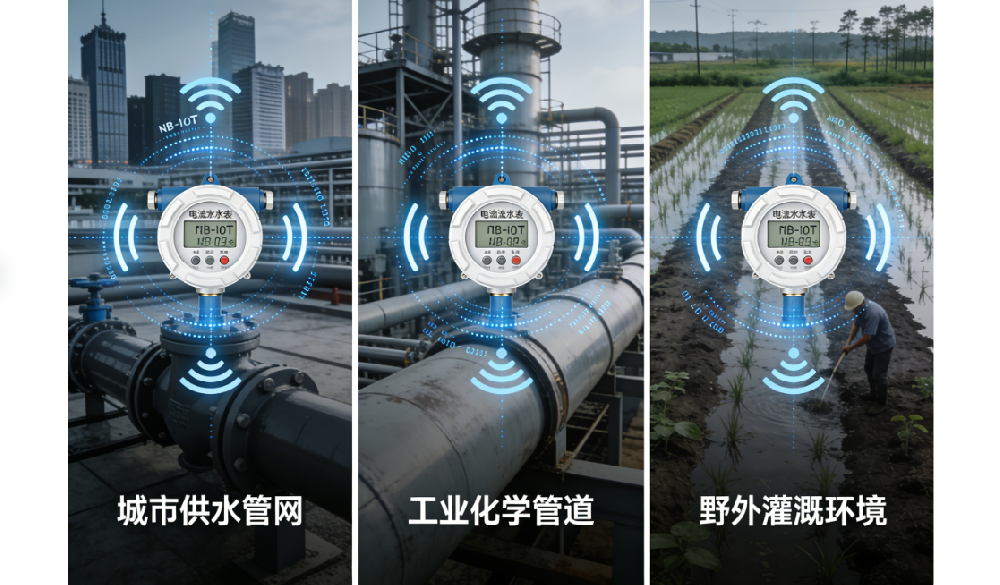
Against the backdrop of the smart water management transformation, electromagnetic water meters, with their notable advantages such as zero mechanical wear, low pressure loss, and a wide turndown ratio, have become essential metering devices in municipal water supply, industrial water use, and agricultural irrigation. However, in the face of complex and variable field conditions, improper selection can not only compromise data reliability but also shorten the equipment’s service life. This paper aims to integrateHerbalife Smart Water ManagementDrawing on practical experience, we provide you with an in-depth selection guide.
1. A Deep Understanding of the Core Working Logic of Electromagnetic Water Meters
Electromagnetic water meters operate based on Faraday’s law of electromagnetic induction. When a conductive liquid flows through the measuring tube, it cuts across the magnetic field generated by the electromagnetic coil, thereby inducing an electromotive force that is directly proportional to the flow velocity. This measurement method exhibits strong adaptability to flow regimes and, owing to its lack of internal moving parts, effectively addresses the metering challenges faced by conventional mechanical meters under conditions of high wear and low starting flow rates. InHerbalife Smart Water ManagementWithin the technical framework, electromagnetic water meters serve not only as metering units but also as terminal sensors that monitor operational conditions such as pipeline pressure and leakage.
2. Select key materials based on different fluid properties
The foundation of selection lies in adapting to local conditions. The chemical properties and physical characteristics of the fluid determine the lining and electrode configuration of the water meter.
Selection of Lining Materials:
Polytetrafluoroethylene (PTFE)It exhibits excellent corrosion resistance and is suitable for chemical industrial wastewater containing strong acids or strong bases, as well as high-temperature fluids.
Neoprene or polyurethane rubberIt has excellent wear resistance and is commonly used for measuring raw water or industrial circulating water containing sediment and particulate matter.
Selection of Electrode Materials:
316L stainless steel:Suitable for municipal tap water, industrial water purification, and other mildly corrosive media.
Hastelloy or titanium electrodeFor special operating conditions involving high salinity, seawater, or highly oxidizing liquids, these materials can effectively extend electrode life and ensure stable signal acquisition.
3. Scientific calculation of the matching flow range and pipe diameter
Many users habitually match the water meter size directly to the pipe diameter when selecting equipment, which is often a misconception. Scientific selection should follow the principle of “velocity first.”
Typically, electromagnetic water meters perform excellently within a flow velocity range of 0.5 m/s to 10 m/s. If the flow velocity inside the pipeline remains low over an extended period (below 0.5 m/s), it is recommended to adopt a “reduction‑in‑diameter” approach: install a water meter with a nominal diameter smaller than that of the pipe to increase the flow velocity and ensure optimal sensitivity of the signal detection.Herbalife Smart Water ManagementIt is recommended that, when selecting flow meters for water supply networks, historical peak consumption data be carefully consulted to ensure that typical flow rates fall within the meter’s measurement range, thereby optimizing performance.
4. Protection Rating and Installation Method for Complex Environments
The operating conditions and environment often determine how long an instrument can last.
Protection rating (IP rating):
If there is a possibility of water accumulation in the manhole, an IP68-rated submersible design must be selected.
For outdoor installation environments, attention should be paid to the converter’s UV resistance and lightning protection design.
Adaptation of the power supply scheme:
For field environments where wiring is not feasible, electromagnetic water meters powered by high-capacity lithium batteries should be selected; their battery life typically lasts several years or more.
For operating conditions requiring real-time, high-frequency data uploads, it is recommended to use mains power or a solar power supply system, in conjunction withHerbalife Smart Water ManagementA cloud-based monitoring platform enables dynamic surveillance.
5. Smart Interface and System Integration Requirements
In the digital age, equipment selection cannot be considered in isolation from data transmission.
Communication protocolIt should support mainstream communication methods such as NB-IoT, LoRa, M-Bus, or RS485 (Modbus protocol).Herbalife Smart Water ManagementAmong the integration solutions offered, customers are typically advised to choose the most reliable remote transmission method based on the local base station coverage.
Alarm function:Water meters equipped with functions such as air‑conditioning alarm, low‑battery warning, reverse‑flow alert, and magnetic interference monitoring can significantly reduce manual operation and maintenance costs.
6. The impact of installation position on metering reliability
Even with the right component selection, improper installation can severely degrade performance. Electromagnetic water meters have certain requirements for straight pipe sections (typically 5D upstream and 3D downstream, meaning a straight pipe section of 5 times the pipe diameter is required before the meter). At the same time, avoid installing it at high points in the piping (to prevent air bubbles from accumulating and triggering an empty-pipe alarm) or at the pump’s suction side.
7. Summary and Recommendations
The selection of electromagnetic water meters is a systems engineering task that involves hydraulics, materials science, and electronic information technology. Through a comprehensive assessment of fluid parameters, environmental conditions, and data requirements, combined withHerbalife Smart Water ManagementThrough digital platform management, enterprises can build a stable and reliable metrology network. This is not only aimed at achieving the target of reducing production‑sales discrepancies, but also at realizing green and sustainable development in water resource management.
Hot News
- Buy flowmeter, first look at the site conditions! 2026 Depth Comparison of Domestic and Imported Brands of Electromagnetic Flowmeter Manufacturers
- 2026 domestic electromagnetic flow manufacturers recommended: top ten brands of intelligent flow meter recommended reasons
- How to choose imported flat electromagnetic flowmeter? How to choose micro-caliber, conventional flange and plug-in electromagnetic? Recommended by domestic high-quality manufacturers
- Four major brands of electromagnetic flowmeter hard core PK: Herbalife Water, Cloud Meter, E H, Cologne, who is more worthy of choice?
- November 2026 Top Ten Brands of Electromagnetic Flowmeter at Home and Abroad Ranking
- Recommended Top Ten Brands of Electromagnetic Flowmeter in 2026: Reference for Project Selection of Water Treatment, Sewage and Conductive Liquid
- TOP5 Manufacturer's Selection Guide for Food Sanitary Electromagnetic Flowmeter: Material and Connection Mode Check before Purchase
- Cost-effective chemical oxygen demand water quality online monitor manufacturers contact information
- How to choose the integrated electromagnetic water meter? Domestic high-quality manufacturers recommendation and selection guide
- Selection of Electromagnetic Flowmeter for Small Diameter Ultra-high Temperature Medium Metering Engineering



