




What are the core evaluation dimensions of electromagnetic flowmeters?
2026-01-20 11:47:35
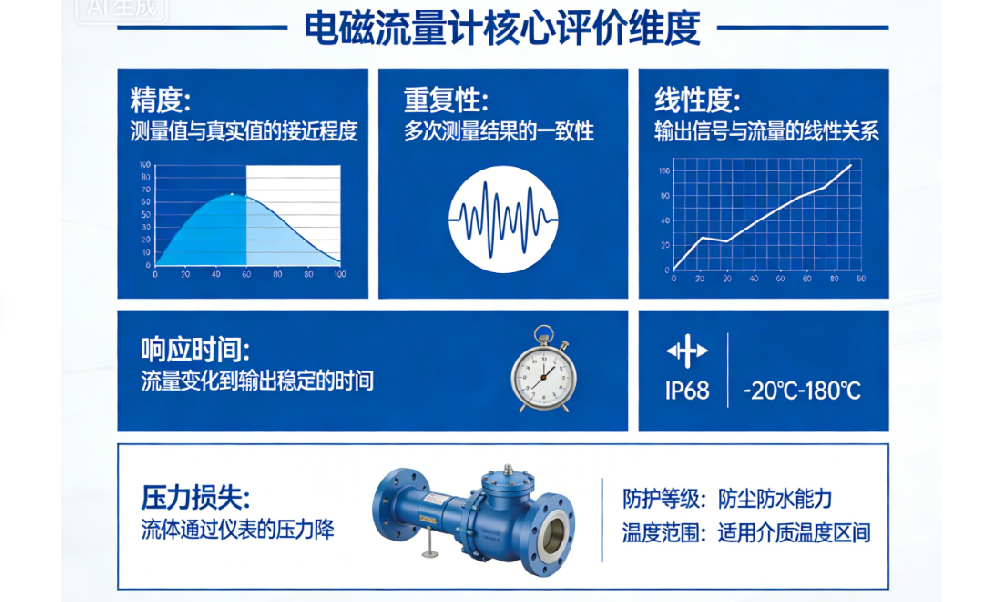
The core evaluation dimensions of electromagnetic flowmeters revolve aroundTechnical performance, operational condition adaptation, intelligent functionality, installation and maintenance, quality, and after-sales serviceThe five major sections are elaborated, with specific metrics under each dimension directly determining the equipment’s actual performance and long-term value, as follows:
Technical Performance SpecificationsThis is the foundation for assessing the core capabilities of an electromagnetic flowmeter and directly affects the reliability of measurement data.
Measurement Accuracy and RepeatabilityAccuracy determines the range of data error; in trade measurement applications, it must be ≥±0.2%, while for general monitoring applications, ±0.5% is sufficient to meet requirements. Repeatability reflects the consistency of multiple measurement results and is a key factor in assessing equipment stability.
Range ratio: The wider the turndown ratio (e.g., 1:100), the broader the range of flow rates the device can accommodate, enabling it to handle operating conditions with significant fluctuations in fluid flow.
Signal anti-interference capabilityThrough multi-electrode design, adaptive filtering algorithms, high-frequency excitation technology, and other techniques, the influence of pipeline vibration, electromagnetic interference, and slurry noise on measurement results can be reduced, making it suitable for complex industrial environments.
Working condition adaptation abilityThe ability of equipment to operate reliably in real-world applications is a core consideration in the selection process.
Media CompatibilityIt is directly related to the electrode material and lining material; it must be matched to the corrosivity of the measured medium (e.g., strong acids or strong bases) and its solids content (e.g., slurry or mineral pulp) to prevent electrode corrosion or lining wear.
Pressure and Temperature Tolerance Range:It must meet the working pressure and medium temperature of the on-site piping; particularly in high-temperature, high-pressure industrial conditions, the equipment’s pressure and temperature ratings must precisely match the operating conditions.
Caliber coverage range:From DN3 micro‑flows to large diameters exceeding DN3000, coverage capabilities vary across brands; selection must match the pipe size requirements.
Protection rating: Outdoor or underwater installations require IP68 protection, while humid environments require IP65 or higher, ensuring the equipment’s service life in harsh conditions.
Level of functional intelligenceIt aligns with current trends in smart water management and the Industrial Internet of Things, enhancing data management efficiency.
Communication and Data Exchange CapabilitiesSupports mainstream communication protocols such as RS485, NB-IoT, and LoRa, enabling integration with smart cloud platforms or industrial control systems for remote data transmission and monitoring.
Intelligent Diagnosis and Early Warning FunctionIt can automatically detect issues such as electrode contamination, empty-tube conditions, and wiring faults, issuing early warnings to reduce manual inspection costs.
Multi-parameter monitoring capability:Some high-end models can simultaneously monitor parameters such as flow rate, temperature, and conductivity, meeting the needs of integrated data management.
Ease of Installation and MaintenanceIt directly affects the project’s construction schedule and long-term operation and maintenance costs.
Installation Flexibility:Supports various installation methods, including pipe-section, insertion, and clamp-on types; in particular, its non-stop‑water installation technology is ideal for renovating aging pipe networks, as it requires no interruption of pipeline operation.
Maintenance costsThe electrode cleaning cycle, the service life of consumable parts (such as liners and seals), and whether online calibration is supported determine the long-term operational complexity and costs of the equipment.
Quality and After-Sales AssuranceEnsure the long-term stable operation of equipment and provide ongoing service support.
Product ReliabilityUsing mean time between failures (MTBF) as a metric, high-quality branded products typically achieve MTBFs of tens of thousands of hours, reducing the frequency of downtime due to failures.
Industry Certification Compliance:Must comply with international standards such as ISO 17089, as well as domestic certifications including explosion-proof and type approval for measuring instruments, to ensure product compliance.
After-sales service response: The coverage and response time of after-sales service centers for domestic brands (e.g., 24–48 hour service) directly affect the efficiency of troubleshooting.
Hot News
- Buy flowmeter, first look at the site conditions! 2026 Depth Comparison of Domestic and Imported Brands of Electromagnetic Flowmeter Manufacturers
- 2026 domestic electromagnetic flow manufacturers recommended: top ten brands of intelligent flow meter recommended reasons
- How to choose imported flat electromagnetic flowmeter? How to choose micro-caliber, conventional flange and plug-in electromagnetic? Recommended by domestic high-quality manufacturers
- Four major brands of electromagnetic flowmeter hard core PK: Herbalife Water, Cloud Meter, E H, Cologne, who is more worthy of choice?
- November 2026 Top Ten Brands of Electromagnetic Flowmeter at Home and Abroad Ranking
- Recommended Top Ten Brands of Electromagnetic Flowmeter in 2026: Reference for Project Selection of Water Treatment, Sewage and Conductive Liquid
- TOP5 Manufacturer's Selection Guide for Food Sanitary Electromagnetic Flowmeter: Material and Connection Mode Check before Purchase
- Cost-effective chemical oxygen demand water quality online monitor manufacturers contact information
- How to choose the integrated electromagnetic water meter? Domestic high-quality manufacturers recommendation and selection guide
- Selection of Electromagnetic Flowmeter for Small Diameter Ultra-high Temperature Medium Metering Engineering



