




Industry standard and certification system of water quality analyzer
2025-12-26 11:15:52
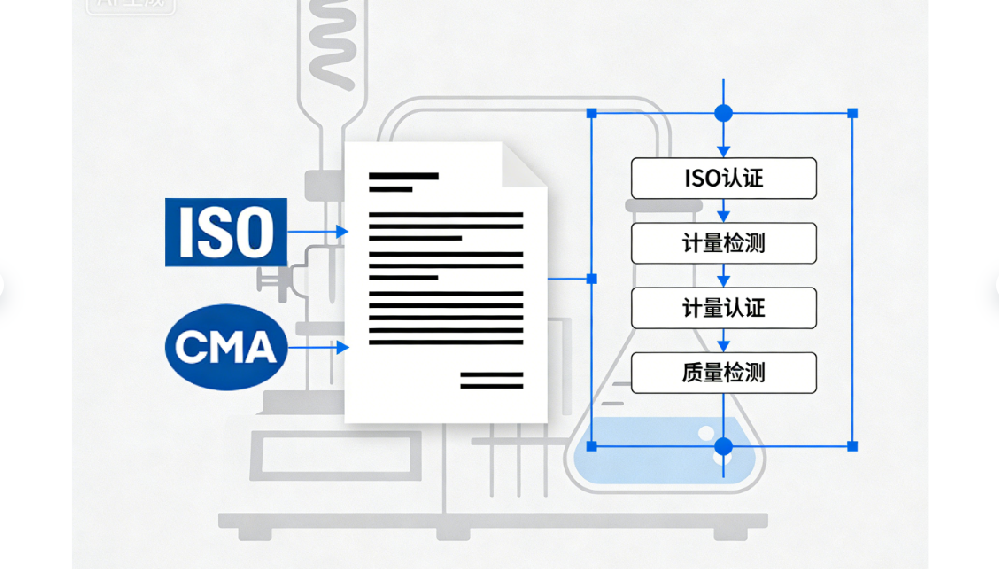
1 Comparison of international standards and domestic standards
The standard system of water quality analyzer industry shows the characteristics of internationalization and localization. In terms of international standards,ISO(International Organization for Standardization) has developed a series of standards related to water quality testing, such ISO 7888:1985Water Quality-Determination of NitriteISO 15681-2:2003Water Quality Flow Analysis (FIAand CFA) Method No. 2 Section: Continuous flow analysis (CFA), etc. These standards provide a unified technical specification for global water quality testing and promote international trade and technical exchange.
United StatesEPAThe standards developed by the (Environmental Protection Agency) have important influence internationally, especially in the field of online monitoring of water quality.EPACertification is a necessary condition for water quality analysis instruments to enter the US market, requiring equipment to pass strict performance tests and comparison tests. For example,EPAMethod 410.4 stipulated CODThe standard test method,EPAMethod 350.1 The detection method of ammonia nitrogen is specified.
The European Union's water quality standards system is known for its strictness, especially in terms of drinking water safety. EU Drinking Water Directive (Directive 98/83/EC) The water quality standard of drinking water is stipulated, and there are strict limit requirements for various parameters. At the same time, the EU RoHSInstruction (2011/65/EU4) The hazardous substances in electrical and electronic equipment are restricted, and the water quality analyzer must meet the relevant requirements.
In China, the national standards and industry standards related to water quality analyzers are becoming more and more perfect. In terms of product standards, Water Quality Determination of chemical oxygen demand Dichromate Method (GB 11914-89) is CODNational standards for detection; Determination of ammonia nitrogen in water quality Nessleler reagent spectrophotometry (HJ 535-2009) is the industry standard for ammonia nitrogen detection; Technical Specification for Installation of Online Monitoring System for Water Pollution Sources (HJ 353-20193) The installation requirements of the online monitoring system are specified.。
In terms of method standards, China has formulated a series of standard methods for water quality testing, covering physical, chemical, biological and other aspects. These standard methods provide a basis for the calibration and validation of water quality analyzers. At the same time, China has also formulated verification regulations for water quality analyzers, such as "Verification Regulations for Water Quality Analyzers" (JJG 631-2004), etc., providing technical support for product quality control.
In terms of standard comparison, international standards and domestic standards are basically the same in technical requirements, but there may be differences in specific operational details. For example, inCODdetection methods, Chinese standards and American EPAThe standard uses potassium dichromate method, but the digestion conditions and reagent dosage are different. In practical application, it is necessary to select the corresponding standard according to the requirements of the target market.
2 Certification Systems and Compliance Requirements
The certification system of water quality analyzer is an important guarantee to ensure product quality and market access. In China, compulsory product certification (CCCCertification) is a basic requirement for market entry and applies to products sold in the People's Republic of China. As an electronic and electrical product, the water quality analyzer needs to meet CCCCertification requirements, including safety, electromagnetic compatibility and other aspects of the test.
Type approval and certification of measuring instruments (CPACertification) is a necessary condition for water quality analyzers to enter the measuring instrument market. According to the "the People's Republic of China Metrology Law", measuring instruments used for trade settlement, safety protection, medical and health, environmental monitoring, etc. must be approved by type. As an environmental monitoring device, water quality analyzers usually need to obtain CPAAuthentication.
In terms of environmental protection certification, China's environmental labeling product certification (ten ring certification) is the authoritative certification of environmental protection products. The certified products meet the requirements of environmental protection in the process of production, use and treatment, and have the environmental advantages of low toxicity, less harm and resource saving compared with similar products. This certification is of great significance for the application of water quality analyzers in government procurement and environmental protection projects.
International certification,CECertification is a necessary condition for entering the EU market, covering product safety, health, environmental protection and other aspects.ULCertification is an Underwriters Laboratories certification that focuses on product safety.RoHSCertification restricts the use of hazardous substances in electrical and electronic products and is a mandatory requirement for entering the EU market.
In terms of industry-specific certifications, water quality analyzers for the pharmaceutical industry need to complyGMPCertification requirements.GMPCertification not only requires product quality, but also has strict requirements on the production process and quality management system. The equipment must have a complete audit trail function, and the data must be traceable to meet regulatory review requirements.。
Special environmental certification is also an important consideration. For example, water quality analyzers used in explosion-proof environments require explosion-proof certification (Excertification); equipment used in the marine environment needs to be certified by a classification society, etc. These special certifications ensure the safe and reliable operation of the equipment in specific environments.
3 Testing method standards and technical specifications
The test method standard of water quality analyzer is the basis to ensure the accuracy and comparability of test results. In terms of chemical parameter detection, different standard methods are used for different parameters.CODPotassium dichromate method is usually used for detection. Under strong acidic conditions, potassium dichromate is used to oxidize the reducing substances in water samples. Excessive potassium dichromate is used as an indicator to test ferrous spirit, and ammonium ferrous sulfate solution is used to drop back, which is calculated according to the dosage. CODvalue。
Ammonia nitrogen detection mainly uses Nesslelian reagent colorimetric method, under alkaline conditions, ammonia and Nesslelian reagent reaction to generate yellow-brown complex, in420nmThe absorbance was measured at the wavelength, and the ammonia nitrogen content was calculated according to the absorbance. The detection range is usually 0.02-50mg/LSuitable for the determination of ammonia nitrogen in surface water, groundwater, domestic sewage and industrial wastewater。
Total phosphorus was detected by ammonium molybdate spectrophotometry. Under acidic conditions, orthophosphate reacted with ammonium molybdate and antimony potassium tartrate to generate phosphomolybdate heteropoly acid, which was reduced to blue phosphomolybdate blue by ascorbic acid.700nmDetermination of absorbance at wavelength. Total nitrogen detection using alkaline potassium persulfate digestion - ultraviolet spectrophotometry, in 120-124℃Under the alkaline potassium persulfate solution, the nitrogen-containing compounds in the water sample are oxidized to nitrates, and then in the ultraviolet region. 220nmand 275nmAbsorbance at wavelength respectively。
In terms of physical parameter detection,pHThe glass electrode method is used for detection, with the glass electrode as the indicator electrode and the saturated calomel electrode as the reference electrode. 25℃under the conditions,pHValue change 1 Units, potential change 59.16mV. Dissolved oxygen detection using electrochemical method or optical method, electrochemical method including polarographic method and primary cell method, optical method is mainly fluorescence method.
Turbidity detection uses the scattered light method to measure the scattered light intensity at an appropriate angle. 90 Degree scattering method and front scattering method. Conductivity detection using the electrode method, by measuring the conductivity of the solution to determine the conductivity value, commonly used electrodes have two-electrode type, four-electrode type and so on.
In terms of technical specifications, the design, manufacture, installation, commissioning and operation of water quality analyzers have corresponding technical requirements. For example, in the installation technical specification, the installation position of the equipment is required to avoid the influence of vibration, electromagnetic interference, temperature fluctuation, etc.; in the operation technical specification, the calibration cycle, maintenance frequency and data recording of the equipment are required to meet the relevant requirements.
4 Industry access threshold and development trend
The entry threshold of the water quality analyzer industry is constantly improving, which is mainly reflected in the technical requirements, quality standards, certification requirements and other aspects. In terms of technical requirements, with the continuous improvement of environmental protection standards, the requirements for the accuracy, stability, response speed and other technical indicators of the water quality analyzer are becoming more and more stringent. For example, the requirements for turbidity in drinking water testing have been changed from the original1NTURaise 0.1NTUThis puts forward higher requirements for detection technology.
In terms of quality standards, the continuous improvement of industry standards and technical specifications has raised the technical threshold for market access. Enterprises must have the corresponding research and development capabilities, production capacity, quality control capabilities, etc., in order to meet market requirements. At the same time, with the improvement of consumers' requirements for product quality, brand and reputation have become important competitive factors.
In terms of certification requirements, the increase in mandatory certification and industry certification has increased the cost and time cost of certification for enterprises. Enterprises not only need to obtain basic product certification, but also need to obtain industry-specific certification, environmental certification, etc., these certifications require enterprises to have a sound quality management system and technical capabilities.
Changes in the market competition pattern are also affecting the industry access threshold. With the progress of technology and the maturity of the market, the competitive advantage of large enterprises is becoming more and more obvious, and small and medium-sized enterprises are facing greater competitive pressure. At the same time, the entry of international brands has intensified market competition and put forward higher requirements for the technical level and management ability of domestic enterprises.
From the development trend, the water quality analyzer industry is developing in the direction of standardization, standardization and intelligence. The government has paid more and more attention to environmental protection, and the improvement of relevant policies and regulations has provided a good external environment for the development of the industry. At the same time, technological innovation provides an internal driving force for the development of the industry, and the application of new materials, new technologies and new processes promotes the upgrading of products.
In terms of market demand, with the improvement of environmental awareness and the strengthening of regulatory requirements, the demand for water quality monitoring is growing. Especially in the fields of drinking water safety, industrial wastewater treatment, environmental monitoring, etc., the need for water quality analyzers
Previous post:
Hot News
- Buy flowmeter, first look at the site conditions! 2026 Depth Comparison of Domestic and Imported Brands of Electromagnetic Flowmeter Manufacturers
- 2026 domestic electromagnetic flow manufacturers recommended: top ten brands of intelligent flow meter recommended reasons
- How to choose imported flat electromagnetic flowmeter? How to choose micro-caliber, conventional flange and plug-in electromagnetic? Recommended by domestic high-quality manufacturers
- Four major brands of electromagnetic flowmeter hard core PK: Herbalife Water, Cloud Meter, E H, Cologne, who is more worthy of choice?
- November 2026 Top Ten Brands of Electromagnetic Flowmeter at Home and Abroad Ranking
- Recommended Top Ten Brands of Electromagnetic Flowmeter in 2026: Reference for Project Selection of Water Treatment, Sewage and Conductive Liquid
- TOP5 Manufacturer's Selection Guide for Food Sanitary Electromagnetic Flowmeter: Material and Connection Mode Check before Purchase
- Cost-effective chemical oxygen demand water quality online monitor manufacturers contact information
- How to choose the integrated electromagnetic water meter? Domestic high-quality manufacturers recommendation and selection guide
- Selection of Electromagnetic Flowmeter for Small Diameter Ultra-high Temperature Medium Metering Engineering



