




Floor-type multi-parameter online water quality monitor: intelligent guardian of large-scale water treatment scene
2025-12-26 10:14:00
1 Analysis of the Product’s Technical Architecture and Core Specifications
As a flagship product in the field of water quality analysis, the floor-standing multi-parameter online water quality monitor employs a highly integrated technical architecture and can simultaneously measure residual chlorine, total chlorine, turbidity,pH、ORP, electrical conductivity, temperature, and several other core parameters. The design philosophy behind these devices stems from a deep understanding of the complexities inherent in large-scale water treatment applications. Through an integrated design, they deliver intelligent features such as automatic recovery upon restoration of water and power supply, as well as leak detection and alarm functionality.
From a technical-specifications perspective, mainstream floor-standing multi-parameter online water-quality monitors demonstrate outstanding performance metrics. In terms of measurement accuracy, residual chlorine / The accuracy of total chlorine reaches ±5% or ±0.03 mg/L(Take the larger value), the turbidity accuracy is ±2% or ±0.01 NTU(take the larger value),pHPrecision controlled within ±0.02 Within the range, the conductivity accuracy is ±0.8% F.S., temperature accuracy reaches ±0.4°C. The achievement of these high-precision metrics relies on advanced detection technologies: residual chlorine. / Total chlorine is determined using N,N -Diethyl - 1,4 - Phenylenediamine spectrophotometric method (DPDlaw), turbidity detection application 90 turbidimetric scattering method and around the incident light beam 360 collect scattered light,pH/ORP/Electrical conductivity is measured using an electrochemical method, and temperature is measured using NTC30KThermistor.
In terms of response time, electrochemical electrodes (pHelectrode /ORP electrode / of the conductivity electrode) T90Response time is less than 3 minutes, while the entire system T90The response time (calculated from the moment the water sample enters the instrument) is less than 10 minutes. This rapid response capability ensures that the equipment can promptly detect changes in water quality, providing real-time data to support adjustments to the water treatment process. Configurability of the measurement interval is also an important feature, residual chlorine / The total chlorine measurement interval can be set to continuous mode,5 minutes,10 minutes,15 minutes,20 minutes,30 flexibly choose between minutes, while turbidity /pH/ORP/Electrical conductivity / The temperature is measured continuously.
The floor-standing multi-parameter online water quality monitor has strong environmental adaptability, with an operating temperature range of0°Cto 45°C, the sample temperature requirement is 4°Cto 40°C, the storage temperature range is -20°C to 55°C(instrument) and -15°C to 55°C(electrode), the relative humidity is allowed to be in 5% to 95%Fluctuates within the (no condensation) range. The power supply requirements are (220±20) VAC/50Hz(Factory default configuration) or (115±5) VAC/60Hz(Requires manual switching), with power consumption kept within a reasonable range.
2 In-Depth Application Solutions for Municipal Water Supply Systems
In municipal water supply systems, floor-standing multi-parameter online water quality monitors play a role in "Smart Guardian" Its role is applied throughout the entire water supply chain, from the source to the user’s tap. A water utility company in Nanchang, Jiangxi Province, uses Hach at its water supply network booster pump station. MS6100Success stories of multi-parameter water quality analyzers fully demonstrate the value of these devices. The system continuously monitors residual chlorine and turbidity in the pipeline network water online,pHand water temperature values, and uploads the monitoring data to the data center in real time via a wireless transmission module, thereby enabling end-to-end monitoring of water supply quality.
Source-water monitoring is the first line of defense for municipal water supply safety. The multi-parameter analyzer can be deployed at water sources such as rivers, lakes, and reservoirs for real-time monitoring.pHKey indicators such as value, turbidity, dissolved oxygen, ammonia nitrogen, and total phosphorus. Continuous monitoring of these data helps to detect changes in water quality at source areas in a timely manner, enabling rapid early warning, particularly during the rainy season or in the event of sudden pollution incidents. An application case from a water utility shows that deploying a multi-parameter monitoring system at the water source reduced the leakage rate by 18%, which fully demonstrates the economic value of preventive monitoring.
Monitoring of water treatment processes at municipal water plants is a core application scenario for floor-mounted equipment. Water treatment plants employ multiple processes, including coagulation, sedimentation, filtration, and disinfection. Multi-parameter analyzers can be integrated at various process stages to enable intelligent process control.. For example, monitoring turbidity at the outlet of a sedimentation tank can guide the dosage of coagulant; monitoring turbidity at the outlet of a filtration tank can assess the operational condition of the filter media; and monitoring residual chlorine in a disinfection contact tank can help control the dosage of disinfectant. ThroughSUNTEXWith real-time data feedback from the Shangtai online monitoring system, water treatment plants can promptly adjust their operations in response to sudden changes in source water quality—for example, quickly modifying the dosages of coagulants and disinfectants—to ensure that supplied water consistently meets quality standards.。
Monitoring at the end of the distribution network and secondary water supply is a critical component in ensuring the safety of water at the point of use. After being deployed at nodes such as residential water tanks and booster pump stations, the multi-parameter analyzer can monitor residual chlorine, microbiological indicators, and heavy metal concentrations in real time.. According to the "Hygienic Standard for Drinking Water" (GB5749-2006) stipulates that when chlorine gas or free chlorine compounds are used as disinfectants, the residual disinfectant level at the end of the distribution network shall not be less than 0.05 mg/L, turbidity shall not exceed 1 NTU(In special cases, not exceeding 5 NTU). The high-sensitivity detection capability of floor-standing equipment ensures strict compliance with these standards.
In the development of smart water management in Shanghai, wall-mounted multi-parameter water quality monitors (such asMPG-6199SType) has been deployed in multiple water supply scenarios due to its stable performance and high level of integration.. The device willpHSix key parameters, including residual chlorine, turbidity, and temperature, are integrated into 600mm×400mm×220mmIn its compact body, wall mounting saves operating space.pHAccuracy remains stable at ±0.10pH(Resolution 0.01pH), residual chlorine and turbidity monitoring fully meet GB 5749-2022National standard requirements。
3 Technological Advantages in the Field of Environmental Monitoring
In the field of environmental monitoring, floor-standing multi-parameter online water quality monitors demonstrate strong technical advantages and broad application prospects. As environmental monitoring networks continue to expand, extending from national monitoring stations to provincial, municipal, and even township levels, there is a growing demand for multi-parameter, high-precision water quality analyzers.. High-value products such as multi-parameter water quality monitors, online chemical oxygen demand analyzers, online total phosphorus and total nitrogen analyzers, and biotoxicity monitoring systems are in strong demand. The environmental monitoring sector has become the largest consumer of water quality analyzers, with purchasing priorities shifting from the equipment itself toward "Equipment + Operational Services" Transfer of the overall solution。
Surface water monitoring is a key area in environmental protection applications. For natural water bodies such as rivers and lakes, the equipment must be able to operate in complex outdoor environments.。WTWWater quality analyzers are used in surface water environmental monitoring. "Online Monitoring Station + Mobile Patrol Measurement" Composite mode: Deployed at key cross-sections within the watershed (e.g., river mouths, downstream of industrial areas) WTW IQ SensorNetOnline system, real-time monitoring DO、pHTurbidity,CODIndicators, data via 4G/5GTransmit to the regulatory platform, automatically triggering alerts when indicators exceed thresholds; meanwhile, staff carry Multi 3630 IDSPortable instruments conduct monthly routine monitoring, with supplementary measurements taken in tributaries and remote river reaches, focusing on verification of nutrient parameters such as total phosphorus and total nitrogen, thereby establishing "A combination of point and surface" monitoring network of。
The portable multi-parameter water quality analyzer performs excellently in on-site environmental monitoring, enabling rapid testing at sites such as rivers, lakes, and reservoirs.COD(Chemical Oxygen Demand), ammonia nitrogen, total phosphorus, dissolved oxygen,pHValue equals parameter. The technological advantages are reflected in 10 Synchronize and retrieve within minutes 5 Key metrics, with accuracy reaching ±2%, fully complies with the "Surface Water Environmental Quality Standard" (GB 3838-2002) Requirements. Using the heavy metal module (optional), indicators such as lead, cadmium, and chromium can be detected, with detection limits as low as0.01mg/L, combine GPSThe positioning function can mark pollution coordinates in real time and generate electronic reports.。
Online monitoring of pollution sources is an important tool for environmental law enforcement. Key polluting enterprises (such as chemical and textile dyeing facilities) are required to install online automatic monitoring devices at their discharge outlets.CEMSwater quality version), real-time uploading of heavy metals,CODData such as ammonia nitrogen levels are transmitted to the environmental protection department’s platform to prevent illegal and excessive discharges; data anomalies trigger automatic alerts.。2025 The share of demand in the environmental monitoring sector is expected to reach 18.7%It mainly benefits from the comprehensive management of watersheds, ecological compensation mechanism and the construction of intelligent environmental protection system.。
The surge in ecological monitoring demands within the Yangtze River Economic Belt has driven the rapid advancement of water quality analysis technologies. Demand for technological upgrades is emerging in tandem, with the adoption rates of hyphenated spectroscopic techniques and IoT-based water quality monitoring systems having increased by, respectively, 2020 annual increase 18 one and 24 percentage points, high precision CODThe online analyzer market has been growing at an annual rate of 19.7%,Three-year increase in procurement volume of multi-parameter integrated monitoring stations 3.2 x。
4 Customized Applications in the Chemical and Pharmaceutical Industries
The chemical industry’s demand for water quality analyzers is highly specialized and customized. Chemical enterprises need to monitor the cooling water of reaction vessels.pHparameters such as value, hardness, and chloride ion concentration, among which pHToo low a level can corrode cooling pipes; high hardness leads to scaling (reducing heat transfer efficiency and potentially causing pipe bursts); and chloride ions accelerate corrosion of stainless steel equipment.. To meet these specific requirements, the customized equipment uses corrosion-resistant materials (titanium alloy electrodes). + ceramic lining), combined with a high-temperature pre-treatment module (capable of heating to 120℃), maintained in acidic wastewater monitoring ±0.05NTUDetection accuracy and equipment lifespan are extended compared to conventional equipment. 3 x。
In petroleum refining wastewater treatment, the analyzer integrates conductivity, chloride ion, and dissolved oxygen sensors, through which4-20mAReal-time feedback of analog output to DCSThe system guides the dosing pump to precisely inject scale inhibitor, thereby improving the heat exchange efficiency of the circulating water system. 18%. In the event of a sudden pollution incident, portable devices can be used to 10 Within seconds, the extent of the pollution is delineated, providing critical data to support emergency response.。
The pharmaceutical industry has even stricter requirements for water quality analyzers, which must comply with the Purified Water standards of the Chinese Pharmacopoeia and meet stringent specifications for parameters such as microorganisms and endotoxins.。2025 The latest edition of the Chinese Pharmacopoeia further tightens the standards for pharmaceutical water, specifically for purified water (PW)、Water for Injection (WFIA specific limit is set for the conductivity of ), requiring enterprises to use high-precision monitoring equipment to achieve real-time control.. According toGMPRequirement: Purified water must meet the turbidity specification.≤1NTU(Ensure there are no visible suspended impurities to prevent a substrate for microbial growth),TOC≤0.5mg/LMandatory indicators for (controlling organic pollutants and preventing drug degradation or the formation of toxic substances), which must be achieved. "End-to-end monitoring, data traceability, and anomaly alerts" Compliance Management。
The quality standards for pharmaceutical water are extremely stringent, and the total plate count must be controlled to≤100CFU/mL(Reference USP<61>), total organic carbon (TOC) Requirements TOCvalue≤500ppb(Reference USP<643>), the conductivity must be controlled at≤1.3μS/cm@25°C(Reference USP<645>), the content of heavy metals (lead, cadmium, mercury, etc.) must≤0.1ppm(Reference USP<231>),pHThe value range is 5.0-7.0(Reference USP<791>), turbidity requires≤1NTU(Reference USP<631>)。
In terms of compliance, pharmaceutical‑industry‑specific analyzers fully meet the sector’s stringent standards. The device has built-in compliance withUSP、EP、CPComplies with the testing procedures required by the pharmacopeia and supports automated execution of system suitability tests (SST), regularly verify the accuracy and stability of instruments to ensure that the testing process fully complies with GMPStandardize. The instrument is equipped with a comprehensive audit trail function that meticulously records all operational steps, parameter settings, and modifications to test results. Data cannot be altered, enabling seamless compliance with on-site inspections and audits by regulatory authorities.。
Pharmaceutical companies typically use onlineTOCThe analyzer is connected to the factory control system so that when any potential… TOCStop production immediately when conductivity deviates to prevent potentially contaminated water from entering the valuable active pharmaceutical ingredient.. The online monitoring system can perform synchronous monitoring. 12 This metric supports GMPData traceability, steam qualification rate increased to 99.7%;Cloud-based data storage 20 year, satisfy GMPThe appendix on audit trail requirements, through FDA 21 CFR Part 11Authentication。
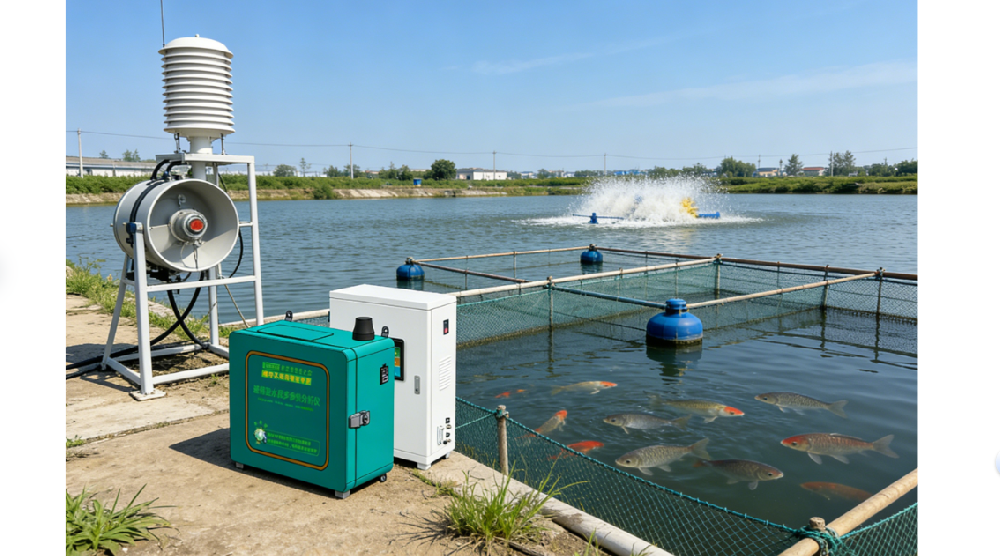
5 Intelligent Monitoring Solution for Aquaculture
The aquaculture industry’s demand for water quality monitoring is steadily increasing, particularly in high-density farming systems, where real-time monitoring of water quality parameters directly impacts farming profitability and disease prevention and control. Traditional testing relies on chemical reagents and color charts, which are cumbersome to operate and prone to large errors. In contrast, modern handheld water quality testers use electrochemical sensors and optical technology to display dissolved oxygen concentrations in real time (mg/L) and pHvalue, with an accuracy of ±0.1mg/Land ±0.02pHUnit。
In practical applications, farmers use handheld devices to monitor daily. 3 times, when dissolved oxygen is less 4mg/LWhen immediately start the aerator, so that the survival rate of crab seedlings from 70% Upgrade to 92%. Meanwhile, through monitoring pHValue (optimal range 7.8-8.6), promptly applying shell powder to adjust the pH effectively prevents soft-shell disease in crabs.. This precise water-quality management approach has significantly improved farming success rates and economic returns.
Modern water quality analyzers can simultaneously monitor dissolved oxygen,pHCore indicators such as COD, ammonia nitrogen, nitrite, and temperature; some devices also measure additional parameters like total phosphorus, total nitrogen, and electrical conductivity. At a crayfish farm in Yancheng, Jiangsu Province, after implementing this equipment and monitoring the correlation between ammonia-nitrogen levels and feed amounts in real time, farmers reduced feed waste. 30%, the survival rate increased 92%. WhenpHThe value remains below 6.5 At that time, the system issues a yellow warning prompting the addition of shell powder to adjust the pH; if the nitrite concentration exceeds 0.1mg/L, a red alert will mandate reduced feeding and activate recirculating water filtration。
The multi-parameter analyzer for aquaculture uses eight-band spectral colorimetry and can simultaneously measure dissolved oxygen, ammonia nitrogen, nitrite,pHCore parameters such as value and total alkalinity. In pond aquaculture, the equipment can monitor ammonia nitrogen (0.04-8.0mg/L) and nitrite (0.002-0.4mg/L) Concentration; automatically triggers an alarm when the measured value exceeds the threshold.. The equipment demonstrates strong adaptability to different aquaculture systems: in pond farming, it primarily monitors ammonia nitrogen and hydrogen sulfide produced by the decomposition of uneaten feed and feces; in cage culture within open waters, key parameters include dissolved oxygen and heavy metal concentrations; while in recirculating aquaculture systems, it focuses on water temperature, salinity,pHImplement millisecond-level control of parameters。
Disease early warning is an important function of water quality monitoring in aquaculture. By correlating historical defect data, when water quality indicators (such as ammonia nitrogen>0.5mg/L) When the conditions match those of a specific disease (such as black gill disease in shrimp), the system can proactively alert farmers to take preventive and control measures.. The intelligent monitoring system uses water quality sensors to monitor the water body in real time.pHKey indicators such as water temperature, dissolved oxygen, ammonia nitrogen, and nitrite are monitored. Combined with image recognition from underwater cameras to observe fish behavior and surface changes, a big data analytics platform integrates historical data and weather forecasts to calculate the probability of disease outbreaks.。
The system typically employs a three-tier warning mechanism: yellow indicates low risk and requires enhanced monitoring; orange indicates medium risk and recommends implementing preventive measures; red indicates high risk and mandates immediate action.. A certain mandarin fish farming system achieves this through this method.AIEarly warning technology can be used in advance 7 Day discovery risk, so that the success rate of breeding increased. 80%. The analyzer integrates dissolved oxygen,pHHigh-precision sensors for parameters such as ammonia nitrogen and nitrite, enabling measurements every minute 5 the data acquisition frequency, establishing a system from "Passive treatment" to "Proactive Defense" A new model for disease prevention and control。
Hot News
- Buy flowmeter, first look at the site conditions! 2026 Depth Comparison of Domestic and Imported Brands of Electromagnetic Flowmeter Manufacturers
- 2026 domestic electromagnetic flow manufacturers recommended: top ten brands of intelligent flow meter recommended reasons
- How to choose imported flat electromagnetic flowmeter? How to choose micro-caliber, conventional flange and plug-in electromagnetic? Recommended by domestic high-quality manufacturers
- Four major brands of electromagnetic flowmeter hard core PK: Herbalife Water, Cloud Meter, E H, Cologne, who is more worthy of choice?
- November 2026 Top Ten Brands of Electromagnetic Flowmeter at Home and Abroad Ranking
- Recommended Top Ten Brands of Electromagnetic Flowmeter in 2026: Reference for Project Selection of Water Treatment, Sewage and Conductive Liquid
- TOP5 Manufacturer's Selection Guide for Food Sanitary Electromagnetic Flowmeter: Material and Connection Mode Check before Purchase
- Cost-effective chemical oxygen demand water quality online monitor manufacturers contact information
- How to choose the integrated electromagnetic water meter? Domestic high-quality manufacturers recommendation and selection guide
- Selection of Electromagnetic Flowmeter for Small Diameter Ultra-high Temperature Medium Metering Engineering



