




Technical Upgrade and Development Trend of Plug-in Electromagnetic Flowmeter -- Intelligent, Precision and Green
2025-12-24 14:04:00
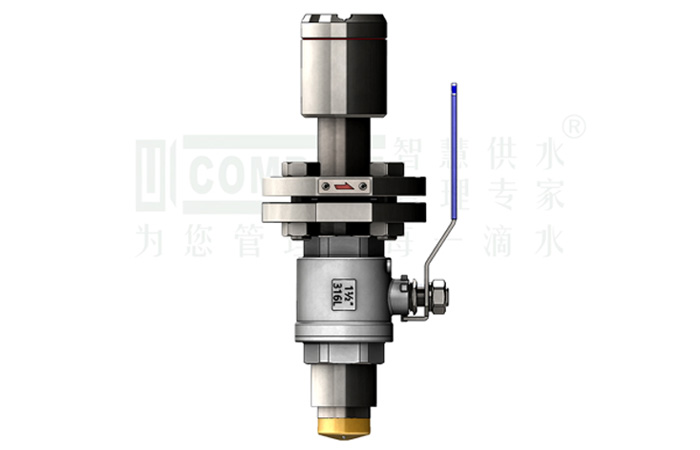
As industrial automation and intelligence continue to advance, and as industries increasingly demand greater accuracy, convenience, and energy efficiency in flow measurement, insertion-type electromagnetic flowmeters—key equipment for measuring large-diameter flows—are undergoing continuous technological upgrades and iterations. From traditional mechanical measurement to intelligent monitoring, and from single-function devices to multifunctional integration, insertion-type electromagnetic flowmeters are advancing toward greater intelligence, precision, and environmental sustainability. This paper provides a detailed analysis of the core technological upgrade directions, cutting-edge applications, and future development trends of insertion-type electromagnetic flowmeters, offering guidance for enterprises seeking to understand industry technology dynamics and select advanced equipment.
1. Core Technology Upgrade Direction: Enhancing Performance and Adaptability
1. Measurement Accuracy Upgrade: Breaking Traditional Limits to Meet High-Precision Requirements
The measurement accuracy of conventional insertion-type electromagnetic flowmeters is generally±1.0%, making it difficult to meet the demands of high-precision scenarios such as trade settlement. In recent years, thanks to upgrades in core technologies, the measurement accuracy of insertion-type electromagnetic flowmeters has steadily improved:
(1)Probe design optimization: adopts“Multipoint measurement”The probe design integrates multiple measurement electrodes, simultaneously acquiring flow velocity signals at different locations within the pipe. An algorithm then fits these signals to determine the medium’s average flow velocity, effectively enhancing measurement accuracy; high-precision models can achieve±0.5%, even approaching the accuracy level of pipeline electromagnetic flowmeters (±0.2%);
(2) Signal processing technology upgrade: An advanced digital signal processing chip is employed, and the signal filtering algorithm has been optimized to effectively suppress electromagnetic interference and noise, enhancing the detection capability for weak signals and ensuring more stable and accurate measurement data.
(3) Temperature and pressure compensation technology: Integrates temperature and pressure sensors to monitor real-time changes in the medium’s temperature and pressure, applying algorithms for flow compensation to prevent measurement deviations caused by temperature and pressure variations, thereby further enhancing measurement accuracy.
2. Intelligent Technology Upgrade: Achieving End-to-End Automated Management
Intelligence is the core upgrade direction for insertion-type electromagnetic flowmeters. By integrating smart chips and IoT technology, they enable automated operation, remote management, and fault prediction.
(1) Intelligent self-cleaning technology: Conventional insertion-type electromagnetic flowmeters require manual, periodic cleaning of the probe, resulting in high maintenance costs. The upgraded equipment integrates an ultrasonic self-cleaning module or a mechanical scraping device, which can automatically initiate a cleaning cycle based on a preset schedule or real-time monitoring of electrode fouling. High-frequency ultrasonic vibrations or mechanical scraping remove dirt, scale, and deposits from the probe surface without manual intervention, effectively reducing maintenance costs and ensuring long-term measurement accuracy and stability. Particularly in applications involving turbid media such as wastewater and slurry, this technology significantly enhances equipment versatility and ease of operation and maintenance.
(2)Remote Monitoring and Operations System: Based on the Internet of Things (IoT) Technology: the intelligent insertion-type electromagnetic flowmeter can4G/5G、Wi-Fi、LoRaWireless communication methods transmit traffic data, equipment operating status, fault information, and more to the cloud management platform in real time. Managers can use computers or mobile phones.APPRemotely view data reports, configure device parameters, and perform fault diagnosis to achieve“Unattended”Remote operations and maintenance. When the equipment experiences parameter anomalies, electrode malfunctions, flow rate exceedances, or other issues, the platform will automatically send SMS messages orAPPAlarm notification, help management personnel to respond quickly, timely processing, reduce downtime losses;
(3) Intelligent Fault Diagnosis and Self-Calibration: Using built-in intelligent diagnostic algorithms, the device can monitor in real time the operational status of key modules such as electrode insulation, excitation coil condition, signal transmission links, and power supply stability. It automatically identifies fault types and generates fault codes and diagnostic reports, providing maintenance personnel with precise guidance for repairs. Meanwhile, some high-end models feature intelligent self-calibration, which automatically corrects measurement deviations based on preset standard parameters or comparison data with standard metrology equipment, eliminating the need for on-site manual calibration and further enhancing the reliability of measurement accuracy.
(4) Data fusion and analysis capabilities: The smart plug-in electromagnetic flowmeter is no longer limited to collecting single-flow data; instead, it integrates multidimensional sensor data such as temperature, pressure, and liquid level. Using an edge computing module, it performs real-time data fusion and analysis, delivering more comprehensive operational condition assessment results. For example, in industrial recirculating water systems, heat exchange efficiency can be calculated using flow and temperature data, providing data support for system energy-saving optimization; in municipal pipe networks, linked analysis of flow and pressure data can enable leak early warning and hydraulic condition optimization.
3. Green Technology Upgrade: Embracing Energy-Saving and Low-Carbon Principles
Globally“double carbon”Guided by strategic objectives, green technology has become a key focus for upgrading insertion-type electromagnetic flowmeters, with the core efforts centered on low-power design, the use of environmentally friendly materials, and optimized energy-efficient operation.
(1) Low-Power Innovation: Employs a highly efficient, energy-saving excitation circuit design and a low-power microprocessor to significantly reduce the device’s operating power consumption. Some battery-powered plug-in electromagnetic flowmeters can achieve, under normal measurement conditions,3-5With its ultra-long battery life, it requires no external power source, making it especially suitable for water conservancy projects and agricultural irrigation in remote areas where electricity is unavailable, thereby reducing the environmental burden associated with cable installation and energy consumption.
(2) Eco-friendly materials and processes: High-quality, recyclable, low-pollution materials are selected, such as food-grade316LStainless steel, environmentally friendly PTFE linings, and similar materials replace traditional, highly polluting, and poorly degradable materials, thereby reducing the environmental impact of equipment production and end-of-life disposal. At the same time, we optimize production processes to reduce energy consumption, wastewater, and exhaust emissions during manufacturing, thereby putting the principles of green manufacturing into practice.
(3) Energy-saving operation optimization: By dynamically adjusting the excitation frequency and measurement cycle using intelligent algorithms, the device’s operating state is adaptively regulated in response to changes in fluid velocity, while ensuring measurement accuracy. For example, under low-flow conditions, the excitation power and data acquisition frequency are automatically reduced to further lower energy consumption; in scenarios with significant flow fluctuations, the measurement frequency is automatically increased to ensure data accuracy, thereby achieving“Precise Measurement and Energy-Efficient Operation”Balance.
2. Application of Cutting-Edge Technology in Insertion Electromagnetic Flow Meters
1. Artificial Intelligence (AI) and ML technology
AIThe integration of advanced technologies has endowed insertion-type electromagnetic flowmeters with enhanced data analysis and adaptive capabilities. By training ML algorithms on vast amounts of historical measurement and operating-condition data, the device can automatically learn signal characteristics under different media and flow conditions, optimize signal-filtering and data-fitting algorithms, and improve measurement accuracy in complex operating conditions. For example, in a non-uniform flow field containing bubbles and impurities,AIThe algorithm can automatically detect and discard invalid signals, accurately extracting valid flow velocity data. Meanwhile, by analyzing trends in equipment operating data, it enables predictive maintenance, allowing early identification of potential issues such as electrode aging and component wear, thereby reducing the incidence of failures.
2. Wireless Sensor Networks and the Industrial Internet (IIoT)Integration
With the help of an industrial Internet platform, plug-in electromagnetic flowmeters have achieved interconnected data exchange across multiple devices and nodes. In large industrial plants or municipal utility networks, multiple insertion-type electromagnetic flowmeters can form a wireless sensor network to collaboratively collect flow data from different pipelines. After aggregation and analysis at edge nodes, the data is uploaded to a cloud platform, enabling flow‑balance monitoring and global scheduling optimization across the entire network or production system. Furthermore, by integrating digital twin technology, flow data can be combined with 3D pipeline models and operational scenario simulations to build a virtual flow monitoring system. This enables visualized simulation of flow variations and prediction of future trends, providing a scientific basis for production scheduling and pipeline network planning.
3. Novel Sensing Materials and Miniaturized Design
The application of novel sensing materials has driven performance upgrades in insertion-type electromagnetic flowmeters. For example, applying a nano-coating to the electrode surface can enhance its wear resistance, corrosion resistance, and anti-fouling properties, thereby extending its service life; probes made from flexible sensing materials can conform to the inner walls of irregular pipelines, improving measurement adaptability. Meanwhile, the trend toward miniaturization is evident. By integrating a miniaturized excitation coil, signal-processing chip, and sensing electrodes, the probe’s size can be further reduced while maintaining measurement performance, thereby lowering installation space requirements—making it particularly well suited for complex scenarios with confined pipe spaces.
Future Development Trend of 3. Insertional Electromagnetic Flowmeter
1. Intelligent evolution to high-order
In the future, the plug-in electromagnetic flowmeter will be“Basic Intelligence”towards“high-order intelligence”Upgrade to achieve full-link intelligence from data collection and transmission to analysis and decision-making. Relying onAIWith big model and big data analysis technology, the equipment can not only complete independent operation and maintenance and accurate measurement, but also deeply integrate into the production management system of the enterprise, providing accurate data support and decision-making suggestions for production process optimization, energy consumption control and cost accounting. For example, in chemical production, flow data can be analyzed in conjunction with raw material consumption and product output data to optimize raw material ratio and production load; in municipal water supply systems, combined with water consumption forecast data, intelligent speed regulation and accurate water volume scheduling of water supply pump groups can be realized.
2. Precision extends to full working condition adaptation
For the measurement needs of extreme conditions, the plug-in electromagnetic flowmeter will continue to break through the accuracy limit. In the future, through the innovative design of the probe structure and the optimization of the multi-physics coupling compensation algorithm, the high temperature (≥200℃), high pressure (≥ 10MPa), high viscosity, low conductivity and other extreme conditions of accurate measurement, measurement accuracy is expected to reach.±0.2%, comparable to high-end pipeline electromagnetic flowmeter. At the same time, for complex flow fields such as multiphase flow and unsteady flow, special measurement algorithms and probe structures will be developed to expand the scope of application of the equipment and meet the measurement needs of more special industries.
3. Deep integration of green and energy saving
Driven by the low-carbon concept, the plug-in electromagnetic flowmeter will further improve energy-saving performance, develop more low-power, passive power supply (such as solar energy, hydropower) product models, and completely get rid of the dependence on traditional electricity. At the same time, the whole life cycle of green equipment will become a trend, from raw material procurement, manufacturing, to use, scrap recycling, the whole process will strictly follow environmental standards, to achieve the recycling of materials and minimize environmental impact. In addition, greening will also be reflected in the collaborative linkage with energy-saving systems, and traffic data will be used as the core parameters for energy-saving optimization to help enterprises build a more efficient energy management system.
4. Modular and customized parallel development
In order to meet the diverse needs of different industries and different scenarios, modular design will become the mainstream direction of plug-in electromagnetic flowmeters. By designing standardized probe modules, signal processing modules, and communication modules, companies can quickly customize products according to user needs, shorten R & D and production cycles, and reduce costs. At the same time, for the stringent requirements of special industries (such as nuclear power, semiconductors, biomedicine), customized solutions will be provided, including special materials, explosion-proof grades, measurement accuracy, communication protocols, etc., to meet personalized high-end measurement needs.
4. conclusion: technology-driven, enabling industrial upgrading
The technical upgrading and development of plug-in electromagnetic flowmeter has always been around the core needs of industrial automation, intelligence and greening. From the breakthrough of measurement accuracy to the realization of intelligent operation and maintenance, from the innovation of energy-saving technology to the integration of cutting-edge technology, the plug-in electromagnetic flowmeter is constantly breaking through the traditional restrictions, providing more efficient, accurate and environmentally friendly solutions for the field of large-diameter flow measurement.
We keep up with the development trend of industry technology, deeply cultivate the R & D and innovation of plug-in electromagnetic flowmeter, integrate cutting-edge technologies such as artificial intelligence, Internet of things, green energy saving and other cutting-edge technologies into product design, and create high-quality products with high precision, high intelligence and low energy consumption, which can be adapted to the complex working conditions of municipal, chemical, energy, water conservancy and other industries. If you need to know more about the parameters, application cases or customized solutions of technology upgrading products, please feel free to contact us. We will empower your industrial upgrading with professional technical strength.
Hot News
- Buy flowmeter, first look at the site conditions! 2026 Depth Comparison of Domestic and Imported Brands of Electromagnetic Flowmeter Manufacturers
- 2026 domestic electromagnetic flow manufacturers recommended: top ten brands of intelligent flow meter recommended reasons
- How to choose imported flat electromagnetic flowmeter? How to choose micro-caliber, conventional flange and plug-in electromagnetic? Recommended by domestic high-quality manufacturers
- Four major brands of electromagnetic flowmeter hard core PK: Herbalife Water, Cloud Meter, E H, Cologne, who is more worthy of choice?
- November 2026 Top Ten Brands of Electromagnetic Flowmeter at Home and Abroad Ranking
- Recommended Top Ten Brands of Electromagnetic Flowmeter in 2026: Reference for Project Selection of Water Treatment, Sewage and Conductive Liquid
- TOP5 Manufacturer's Selection Guide for Food Sanitary Electromagnetic Flowmeter: Material and Connection Mode Check before Purchase
- Cost-effective chemical oxygen demand water quality online monitor manufacturers contact information
- How to choose the integrated electromagnetic water meter? Domestic high-quality manufacturers recommendation and selection guide
- Selection of Electromagnetic Flowmeter for Small Diameter Ultra-high Temperature Medium Metering Engineering



