




The core element of accurate metering of flowmeter: the key control from principle to practical operation
2025-12-22 10:42:37
In industrial production, environmental protection, municipal water services, and other sectors, the accuracy of flow measurement directly determines the effectiveness of process optimization, the level of cost control, and the quality of compliance-based acceptance. Whether it is mainstream equipment such as electromagnetic flowmeters or ultrasonic flowmeters, achieving accurate measurement does not depend on meeting a single parameter; rather, it requires a comprehensive, end-to-end systems engineering approach that encompasses principle compatibility, core component performance, installation and commissioning standards, and robust operation and maintenance management. In practice, many companies overlook control at certain stages, leading to distorted measurement data and frequent equipment failures, which in turn affect production operations and increase compliance risks. This article conducts an in-depth analysis of the key factors for accurate flowmeter measurement across four core dimensions—operating principle and compatibility, core component quality, installation and commissioning standards, and operation and maintenance management—and provides a comprehensive guide to end-to-end control, covering both theoretical principles and practical implementation.
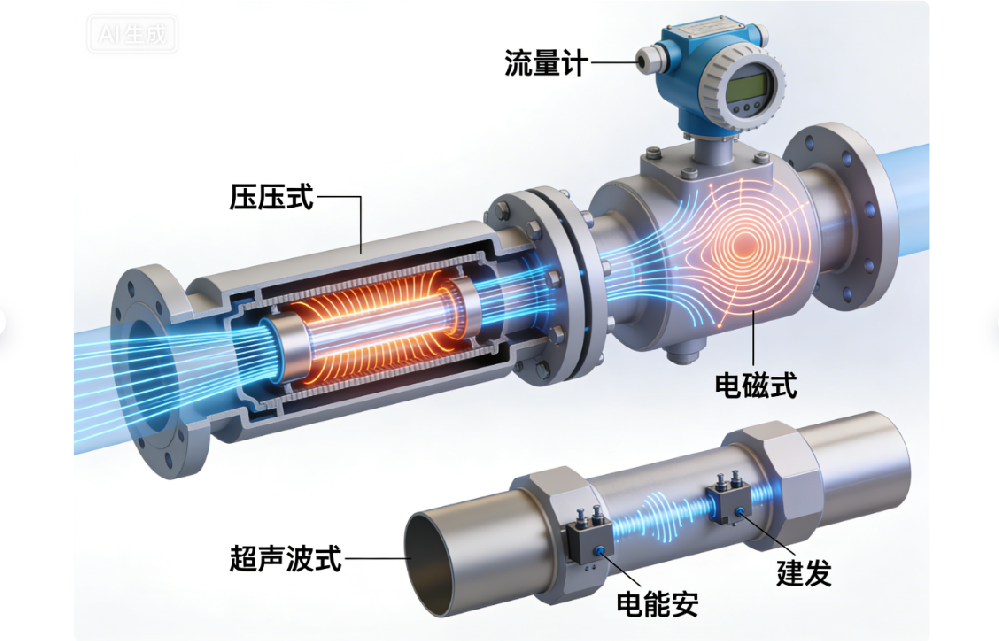
Principle compatibility: the fundamental prerequisite for accurate measurement. Different types of flow meters are designed based on distinct physical principles, and they have well-defined limits regarding the media characteristics and operating conditions they can accommodate. Mismatch between the underlying principle and the specific application is the primary cause of measurement偏差. Only by ensuring principle compatibility can we lay a solid foundation for accurate measurement.
Electromagnetic flowmeters operate on Faraday’s law of electromagnetic induction; their primary requirement is that the measured medium be electrically conductive, making them suitable for measuring fluids containing suspended solids and those with high corrosivity. If used with non-conductive media such as high-purity deionized water, it will fail to measure because no induced electromotive force can be generated. Ultrasonic flow meters, on the other hand, rely on the propagation characteristics of ultrasonic waves for measurement: Doppler-type meters require the medium to contain a certain amount of suspended particles to enable signal reflection, while time-difference-type meters require the medium to be relatively clean to ensure stable ultrasonic wave propagation. If a time-difference-type meter is applied to wastewater with high levels of suspended solids, signal scattering will cause a significant drop in accuracy.
During the selection phase, companies must first determine the fluid characteristics (conductivity, suspended solids content, corrosivity, viscosity) and operating conditions (flow rate fluctuation range, temperature and pressure), and then choose a flowmeter that matches the relevant measurement principle. For example, municipal wastewater contains suspended solids and is conductive, so an electromagnetic flowmeter should be preferred; when renovating old pipelines where pipe removal is not feasible, a non-contact ultrasonic flowmeter should be prioritized. The core of principle adaptation is to ensure that the flowmeter’s operating logic aligns positively with the fluid properties and process conditions, thereby preventing measurement deviations caused by inherent mismatches.
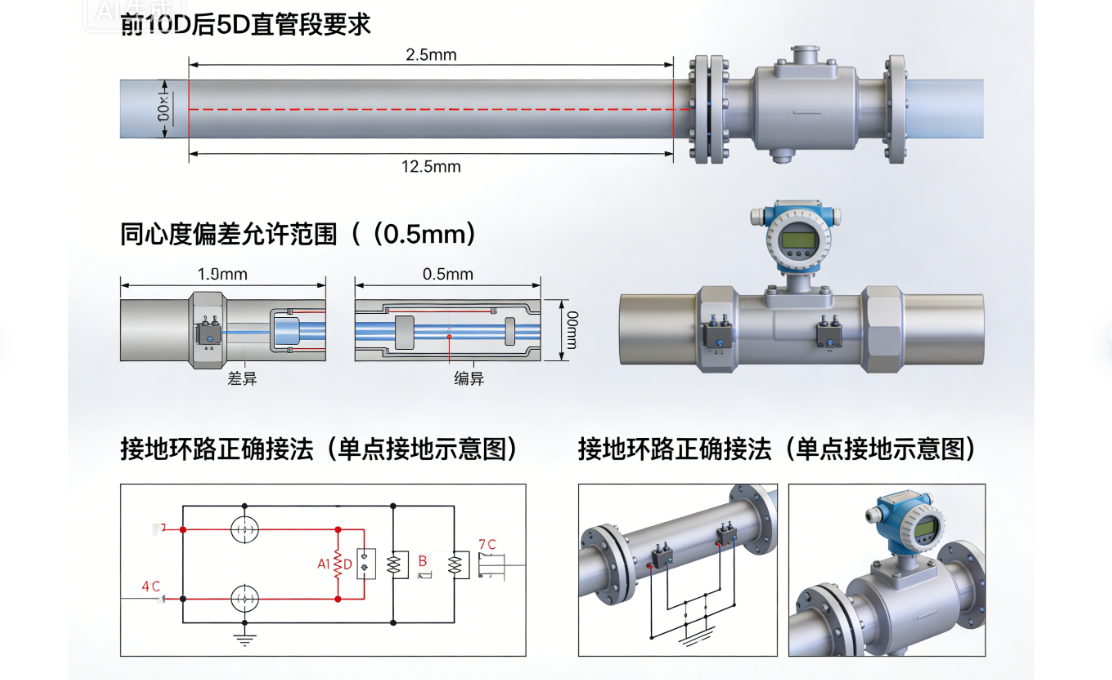
Core component quality: the essential foundation for precise measurement. If principle-based adaptation is the foundation, then the quality of core components is the key guarantee for precise measurement. The core components of a flow meter directly determine the accuracy and stability of signal acquisition and data processing; if any component fails to meet performance standards, the overall measurement performance will degrade.
Taking the electromagnetic flowmeter as an example, the electrodes and converter are the core components. The electrodes are responsible for sensing the electromotive force generated when the medium cuts magnetic field lines; the choice of electrode material and surface precision directly affect the quality of signal acquisition. For highly corrosive chemical wastewater, corrosion-resistant electrodes such as Hastelloy or titanium alloys must be selected; using ordinary stainless steel electrodes by mistake can cause signal distortion due to corrosion. Additionally, the electrode surfaces must undergo precision polishing to achieve a surface roughness of Ra ≤ 0.8 μm, thereby minimizing the impact of media adhesion and scaling on the signal. As the “data processing hub,” the converter must feature high-precision signal amplification and anti-interference filtering. Low-quality converters cannot effectively filter electromagnetic and vibration interference in industrial environments, leading to distortion of weak signals and consequently compromising measurement accuracy. A certain chemical enterprise once experienced measurement deviations exceeding 5% in its electromagnetic flowmeters due to the use of low-cost, substandard transmitters. After replacing them with high-precision transmitters, the deviation was stabilized within ±0.5% FS.
For ultrasonic flow meters, the sensor and the signal-processing module are the core components. The transmitter power and receiver sensitivity of a sensor directly determine signal strength; low‑quality sensors cannot stably detect signals when the wastewater contains high gas levels or when pipe scaling occurs. The signal‑processing module must incorporate adaptive algorithms to handle flow fluctuations and changes in medium characteristics; otherwise, untimely parameter adjustments will lead to accuracy deviations. Furthermore, the material precision and structural design of core components—such as the vortex shedding body in vortex flowmeters and the throttling device in differential-pressure flowmeters—directly affect measurement accuracy and must be rigorously controlled.
Installation and commissioning standards: the key to accurate metering. Even when a flowmeter with appropriate principles and excellent quality is selected, improper installation and commissioning can still lead to distorted measurement data. The core of installation and commissioning is to ensure the flowmeter operates in optimal condition and to mitigate the impact of installation deviations on measurement accuracy.
During installation, three key aspects require particular attention: First, the installation location should be chosen away from equipment that generates interference, such as pumps and valves, to avoid electromagnetic interference and flow velocity fluctuations. For electromagnetic flowmeters, ensure the measuring tube is completely filled with the process fluid to prevent dry‑run measurement, and provide sufficient straight pipe lengths upstream and downstream (typically 10 times the pipe diameter upstream and 5 times downstream) to ensure the fluid passes through the measurement section at a stable velocity. For ultrasonic flowmeters, avoid pipe bends and diameter changes; the sensor spacing must be precisely calculated based on the pipe diameter to prevent obstruction of the signal propagation path. Second, installation must follow established guidelines: for electromagnetic flowmeters, the electrodes should be perpendicular to the flow direction of the measured medium to prevent uneven signal acquisition caused by inclined mounting; for ultrasonic flowmeter transducers, ensure tight contact with the pipe wall and apply coupling agent evenly to avoid air gaps that could impair signal transmission. Third, ensure compatibility with pipeline conditions; before installation, clean scale and impurities from the inner pipe walls to avoid affecting the velocity profile of the process fluid. For corrosive media, verify that the pipeline-to-flowmeter connection is properly sealed to prevent leakage-induced measurement errors.
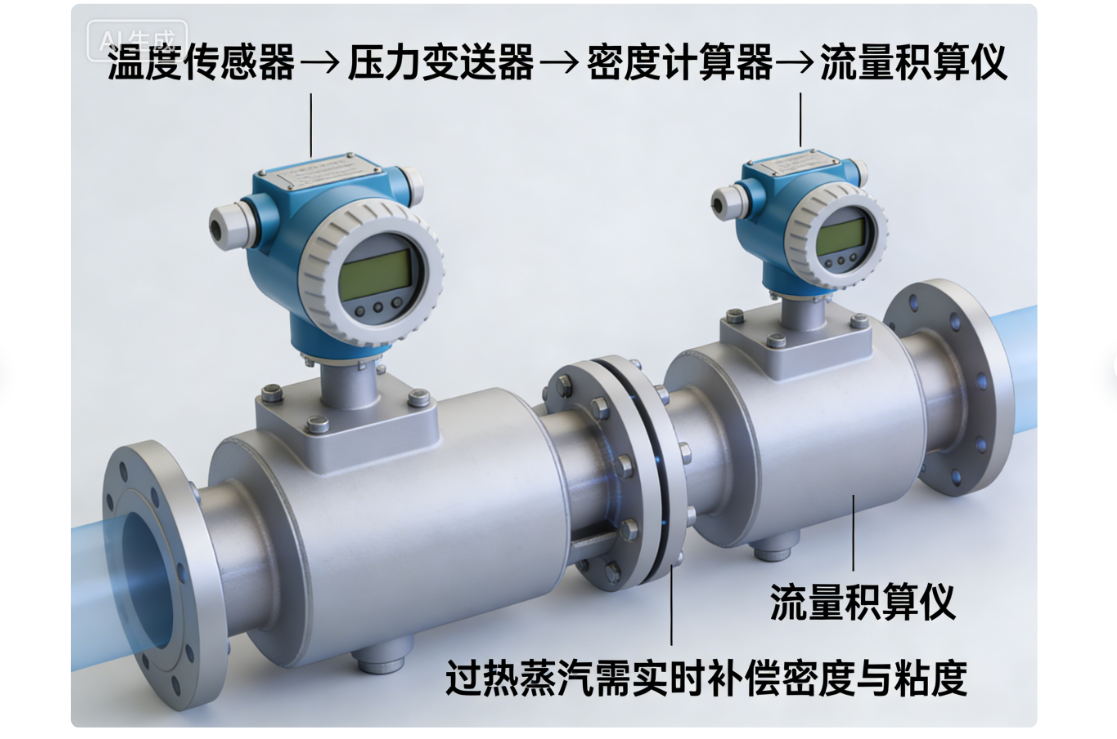
During the commissioning phase, parameters must be set precisely in accordance with operating conditions: range, filtering coefficients, and other parameters should be configured based on the fluid characteristics and flow rate range; on-site calibration using standard calibration equipment ensures that measurement accuracy meets specifications; for electromagnetic flowmeters, zero-point calibration is required to prevent low‑flow measurement errors caused by zero drift; for ultrasonic flowmeters, correction factors must be applied according to pipe material and wall thickness to ensure accurate calculation of the signal travel time difference. A municipal wastewater treatment plant once experienced a measurement deviation of 8% due to insufficient straight pipe lengths upstream and downstream of the electromagnetic flowmeter during installation. After adjusting the installation position and adding the required straight pipe sections, the deviation stabilized within the acceptable range.
Operations and maintenance management support: long-term backing for precise metering. Accurate measurement by flow meters is not a one-time achievement; long-term stable operation requires robust operations and maintenance management as a safeguard. Neglecting operations and maintenance can lead to component aging, scaling, and parameter drift, gradually reducing metering accuracy.
Daily operations and maintenance should focus on three key tasks: First, perform regular cleaning and upkeep. For electromagnetic flowmeters, periodically remove scale and deposits from the electrode surfaces to prevent interference with signal acquisition. For ultrasonic flowmeters, regularly clean dust and scale from the sensor transducers and pipe surfaces, and check the condition of the coupling agent. For differential pressure flowmeters, routinely clear accumulated debris and scale from the throttling element to avoid blockages that could lead to errors in calculating the pressure differential. Second, regular calibration and verification are essential. It is recommended to conduct professional calibration at least once a year, using a standard flow calibration device to compare measurement data and promptly correct any deviations. For flow meters used in environmental compliance monitoring, mandatory verification must be performed in accordance with regulatory requirements to ensure the legal validity of the data. Third, conduct routine condition monitoring by maintaining an operational log for flow meters that records flow data, operating parameters, and fault conditions. Leverage the remote monitoring capabilities of smart flow meters to track equipment status in real time, promptly detect issues such as signal anomalies and parameter drift, and take appropriate corrective action.
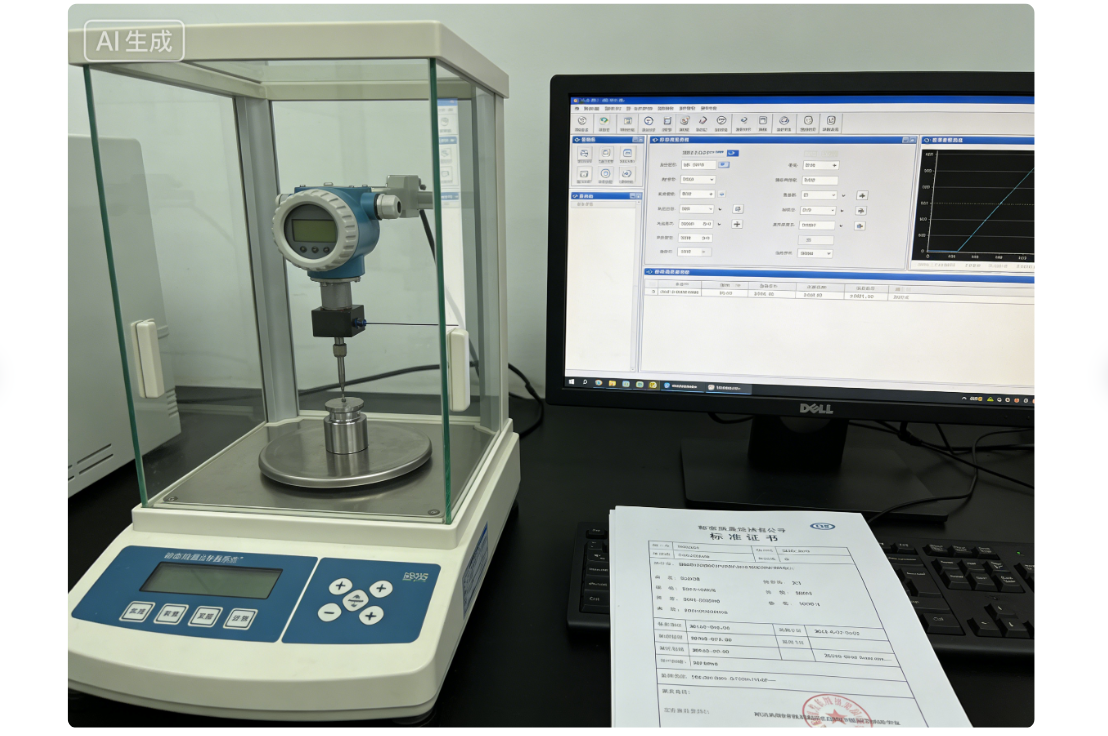
In addition, the professional competence of operations and maintenance personnel is also crucial. O&M personnel should receive regular training to ensure they understand the operating principles of various types of flow meters, as well as installation and commissioning techniques and troubleshooting methods, thereby preventing metering issues caused by improper operation. An industrial enterprise experienced a 10% measurement deviation after six months of operation because its maintenance staff failed to promptly remove scale buildup from the electrodes of an electromagnetic flowmeter. Following professional cleaning and recalibration, the meter returned to accurate measurement performance.
Additional control points for special scenarios. For special operating conditions involving high corrosivity, high suspended solids, or high temperature and pressure, additional targeted control measures should be implemented on top of the core considerations mentioned above: in highly corrosive media, select core components made from special materials, regularly inspect their corrosion status, and shorten calibration intervals; for applications with high suspended solids, choose flowmeter designs that eliminate dead volumes and resist clogging, and increase the frequency of cleaning and maintenance; under high‑temperature, high‑pressure conditions, ensure that the flowmeter’s materials and seals are compatible with the specified temperature and pressure ratings to prevent measurement errors caused by component deformation.
Conclusion: The accurate measurement of flowmeters is the result of the coordinated interplay of four core factors: principle compatibility, quality of core components, adherence to installation and commissioning standards, and robust operation and maintenance management. In practical applications, enterprises must abandon the misconceptions of “prioritizing selection over operations and maintenance” and “focusing on price rather than quality.” They should manage every critical stage across the entire value chain—ensuring principle‑based compatibility during the selection phase, adhering to standardized procedures during installation and commissioning, and implementing precise control in long-term operations and maintenance. Only in this way can the flow meter ensure long-term, stable output of accurate flow data, providing reliable support for process optimization, cost control, and compliance verification. In the future, as intelligent technologies evolve, flow meters will feature more sophisticated self‑diagnosis and automatic calibration capabilities, offering more convenient solutions for end‑to‑end precision measurement. Nevertheless, rigorous control of core parameters remains the fundamental prerequisite for achieving accurate metering.
Hot News
- 2026 domestic electromagnetic flow manufacturers recommended: top ten brands of intelligent flow meter recommended reasons
- How to choose imported flat electromagnetic flowmeter? How to choose micro-caliber, conventional flange and plug-in electromagnetic? Recommended by domestic high-quality manufacturers
- Four major brands of electromagnetic flowmeter hard core PK: Herbalife Water, Cloud Meter, E H, Cologne, who is more worthy of choice?
- November 2026 Top Ten Brands of Electromagnetic Flowmeter at Home and Abroad Ranking
- Recommended Top Ten Brands of Electromagnetic Flowmeter in 2026: Reference for Project Selection of Water Treatment, Sewage and Conductive Liquid
- TOP5 Manufacturer's Selection Guide for Food Sanitary Electromagnetic Flowmeter: Material and Connection Mode Check before Purchase
- Cost-effective chemical oxygen demand water quality online monitor manufacturers contact information
- How to choose the integrated electromagnetic water meter? Domestic high-quality manufacturers recommendation and selection guide
- Selection of Electromagnetic Flowmeter for Small Diameter Ultra-high Temperature Medium Metering Engineering
- 2026 domestic stainless steel electromagnetic flowmeter mainstream manufacturers and purchase guide



