




Summary and Prospect of Application Depth of Electromagnetic Water Meter Technology
2025-11-12 16:45:18
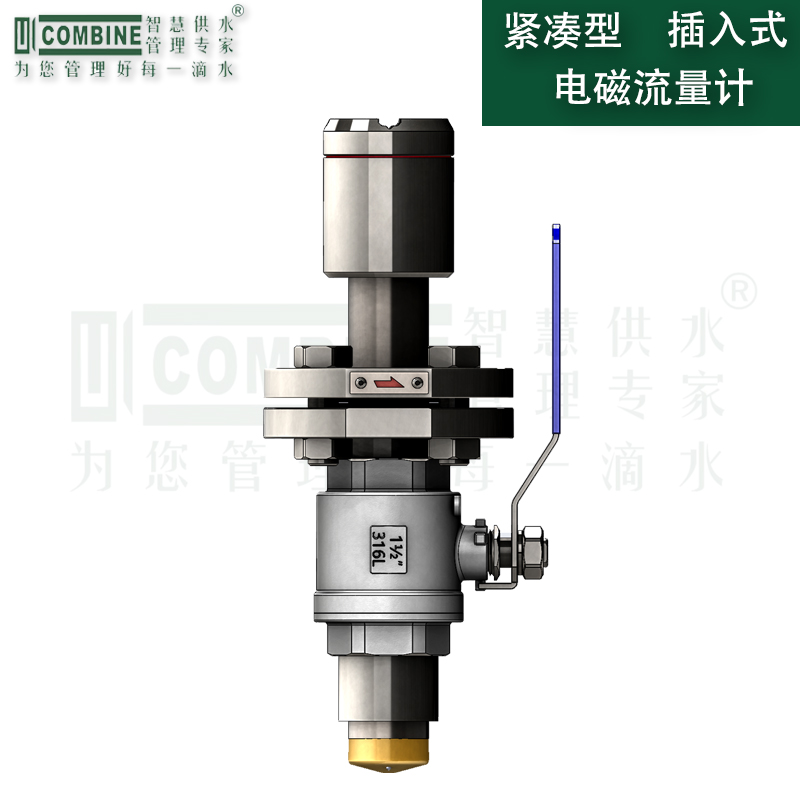
1. Introduction: The Wave of the Smart Metering Era
As global water scarcity grows increasingly severe and smart city development advances, water metering technology is undergoing a revolutionary shift from traditional mechanical systems to modern, intelligent solutions. Against this backdrop, electromagnetic water meters—high-precision measuring instruments based on Faraday’s law of electromagnetic induction—have become key devices for flow measurement in smart water management systems. Thanks to their outstanding advantages—no mechanical moving parts, high measurement accuracy, a wide rangeability, and low pressure loss—they provide robust technical support for the refined management and efficient utilization of water resources. This report aims to systematically review the technical characteristics, application outcomes, challenges, and future development trends of electromagnetic water meters, providing a reference for practice and decision-making in related fields.
2. Core Technical Principles and Performance Advantages of Electromagnetic Water Meters
2.1 Basic Measurement Principle
The core operating principle of an electromagnetic water meter is Faraday’s law of electromagnetic induction. When a conductive liquid (such as water) flows through a magnetic field, an induced electromotive force is generated that is directly proportional to the average flow velocity. By measuring the induced voltage between electrodes on either side of the pipe, the water flow velocity can be accurately determined; combined with the pipe’s cross-sectional area, this yields both the instantaneous and cumulative flow rates. This non-contact measurement method fundamentally eliminates the metering inaccuracies inherent in traditional mechanical water meters, which arise from wear and seizing of mechanical components such as impellers and gears.
2.2 Prominent Performance Advantages
Extremely high measurement accuracy and stability: Electromagnetic water meters typically achieve measurement accuracy of ±0.5% or better across the entire flow range, and are not significantly affected by factors such as foreign matter in the water or water hammer; their long-term stability far exceeds that of mechanical water meters.
Ultra-wide turndown ratio: Enables a turndown ratio of up to 1000:1, accurately measuring minute drip flows while withstanding high‑flow surges during peak water usage, thereby addressing the industry’s longstanding challenges of small‑flow under‑measurement and large‑flow meter damage in conventional water meters.
Virtually zero pressure loss: Thanks to the unobstructed flow path, electromagnetic water meters have almost no impact on pipeline network pressure, helping to reduce energy consumption at pumping stations and achieve energy savings and emission reductions.
Powerful data intelligence capabilities: Modern electromagnetic water meters typically integrate data storage, remote transmission, and anomaly alarms (such as dry‑run, low flow, and reverse flow), making them an ideal choice for building DMA zoning metering and leakage control systems.
3. Diversified application scenarios and implementation results of electromagnetic water meters
3.1 Analysis of Core Application Areas
Electromagnetic water meters have been widely adopted in the following key applications:
Urban and rural water supply trunk network and District Metered Areas (DMAs): Serving as a “fair scale” for district metering, they precisely monitor water supply and sales in each zone, providing an accurate data foundation for leak detection and control.
Water metering for large users: For major water consumers such as industrial and mining enterprises and commercial complexes, the meters’ high accuracy and wide measurement range ensure fair trade settlement and accurate water consumption analysis.
Leakage Monitoring and Early Warning: With its exceptional low-flow measurement capabilities, it can effectively detect background leakage and hidden leaks in the pipeline network. Through continuous data analysis, it enables early warning and rapid localization of leak points. Water resource allocation and water conservation management: In scenarios such as agricultural irrigation and inter-basin water transfer, it provides a reliable basis for the efficient scheduling and quantitative management of water resources.
3.2 Summary of Practical Outcomes
Practices by water utilities in many regions have shown that deploying electromagnetic water meters has yielded significant results. For example, in a project implementing DMA leak control, electromagnetic water meters helped accurately identify multiple long-standing hidden leaks, reducing the overall area’s leakage rate by more than 15% within six months. At the same time, its remote meter-reading capability significantly reduces labor costs and improves operational efficiency. Moreover, by leveraging the detailed water‑consumption data it provides, water utilities can offer customers more informed water‑use recommendations, thereby fostering greater water‑conservation awareness across society.
4. Challenges Faced and Prospects for Development Trends
4.1 Main Challenges Currently Faced
Despite their significant advantages, the widespread adoption of electromagnetic water meters still faces several practical challenges:
Higher initial investment costs: Compared with traditional mechanical water meters, electromagnetic water meters still have relatively high procurement and installation costs, which to some extent limits their widespread adoption.
High installation and maintenance requirements: Its accurate measurement depends on standardized installation conditions (such as sufficient straight pipe lengths upstream and downstream) and requires regular calibration and maintenance by qualified personnel.
Power Dependency and Battery Life: Although multiple operating modes are available—such as mains power and battery operation—the runtime on battery power is a primary concern for users, and batteries also represent a long-term cost.
Market Awareness and Standards: In some regions, water utilities managers and users still lack sufficient awareness, and the industry’s standards system requires further refinement and harmonization.
4.2 Outlook on Future Development Trends
Looking ahead, electromagnetic water meter technology will evolve in the following directions:
Deep integration of technology and intelligence: Future products will more deeply integrate the Internet of Things (IoT), AI, and big data analytics technologies. It not only enables remote data transmission but also supports advanced functions such as water‑use pattern recognition, intelligent diagnosis of abnormal water consumption, and water‑load forecasting, making it an intelligent node in the smart water‑management network.
Power Consumption Optimization and Energy Self-Sufficiency: Through low-power chip design, energy harvesting technologies (such as hydroelectric power generation), and other innovations, ultra-long battery life—or even perpetual operation without battery replacement—can be achieved, completely resolving the pain point of power supply.
Cost Optimization and Market Penetration: As technology matures and production scales up, manufacturing costs are expected to continue declining, making it economically viable not only in the high-end market but also across a broader range of civilian and general industrial applications.
Standardization and Ecosystem Development: The industry will drive the standardization of interfaces, protocols, and data formats to facilitate interoperability among devices from different vendors, thereby building an open and collaborative smart water ecosystem.
5. Conclusion and Recommendations
Thanks to their outstanding technical performance, electromagnetic water meters have become indispensable core equipment driving the digital and smart transformation of the water industry. It is not only a tool for precise measurement but also a crucial lever for achieving refined water resource management and implementing smart water services. In the face of current challenges, it is recommended that all stakeholders: governments and standards bodies accelerate the refinement of the standards framework and provide policy guidance; water utilities should take the lead in piloting new approaches to gain practical experience; and manufacturers need to pursue continuous innovation to reduce costs and enhance user-friendliness. Through collaborative efforts, we can jointly accelerate the large-scale, standardized deployment of electromagnetic water meters, making a critical contribution to addressing global water resource challenges and building a sustainable, water‑conserving society.
Previous post:
Gone
Hot News
- 2026 domestic electromagnetic flow manufacturers recommended: top ten brands of intelligent flow meter recommended reasons
- How to choose imported flat electromagnetic flowmeter? How to choose micro-caliber, conventional flange and plug-in electromagnetic? Recommended by domestic high-quality manufacturers
- Four major brands of electromagnetic flowmeter hard core PK: Herbalife Water, Cloud Meter, E H, Cologne, who is more worthy of choice?
- November 2026 Top Ten Brands of Electromagnetic Flowmeter at Home and Abroad Ranking
- Recommended Top Ten Brands of Electromagnetic Flowmeter in 2026: Reference for Project Selection of Water Treatment, Sewage and Conductive Liquid
- TOP5 Manufacturer's Selection Guide for Food Sanitary Electromagnetic Flowmeter: Material and Connection Mode Check before Purchase
- Cost-effective chemical oxygen demand water quality online monitor manufacturers contact information
- How to choose the integrated electromagnetic water meter? Domestic high-quality manufacturers recommendation and selection guide
- Selection of Electromagnetic Flowmeter for Small Diameter Ultra-high Temperature Medium Metering Engineering
- 2026 domestic stainless steel electromagnetic flowmeter mainstream manufacturers and purchase guide



