




Domestic famous manufacturer of toxicity detector: water plant, reservoir, river water quality monitoring which is good?
2026-11-13 13:57:25
1. Water plant, reservoir, and river water quality monitoring: three scenarios, three sets of selection logic
Drinking water safety, from source to tap, involves three key monitoring stages: reservoirs, rivers, and water treatment plants. The monitoring objectives, installation requirements, power and communication provisions, and maintenance approaches for the three scenarios differ significantly; therefore, a one-size-fits-all selection logic cannot be applied to online toxicity monitors.
Differences in Monitoring and Positioning Across Three Scenarios
| mapping scenes | Monitoring and Positioning | Core role |
|---|---|---|
| Reservoir | Water Source Safety Early Warning | Early warning of sudden reservoir water source contamination, algal toxin monitoring, and water quality trend analysis |
| river | Watershed Water Quality Monitoring | River cross-section water quality monitoring, upstream pollution early warning, and watershed water quality trend analysis |
| Water plant | Water Supply Safety Early Warning | Early warning of sudden raw water contamination, assurance of finished water quality, and decision-making basis for emergency response |
Differences in operating conditions across the three scenarios
| mapping scenes | Installation Environment | Power Supply and Communications | Maintenance conditions | Protection requirements |
|---|---|---|---|---|
| Reservoir | Outdoors, along the reservoir shore, there is a large temperature difference and high humidity. | Part without mains power, no wired network | Unattended | IP68, sunproof and freeze-proof |
| river | Harsh environments such as outdoors, riverbanks, or monitoring buoys | Most have no mains power or wired network. | Unattended, difficult to maintain | IP68, waterproof and lightning-proof |
| Water plant | Dosing room, pump room, humid environment, corrosive gas | Main power supply and cable network | Have full-time operation and maintenance personnel | IP65/IP68 |
2. How to choose a toxicity detector for three scenarios?
2.1 Reservoirs: Emphasizing broad-spectrum early warning and long-term unattended operation
Key points of selection:
Monitoring Principle: Prioritize methods based on broad-spectrum toxicity responses, such as the luminescent bacteria assay, which are sensitive to heavy metals, pesticides, industrial chemicals, and algal toxins.
Detection Limit and Response Time: Low detection limit, rapid response, and early warning of water source contamination.
Power supply method:Some reservoir monitoring sites lack grid power; solar or battery power is selected, with a low-power design.
Communication method:Select NB-IoT/4G wireless remote transmission to connect data to the reservoir management platform and the higher-level regulatory platform.
Protection rating: For outdoor environments, choose IP68-rated protection that is sun-resistant and freeze-proof, suitable for conditions with large temperature fluctuations.
Maintenance volume:Primarily unattended operation; select automatic cleaning and automatic calibration functions to reduce the frequency of manual maintenance.
Installation method:In the reservoir area near the shore or close to the intake, select submersible or flow-through installation.
2.2 Rivers: Focus on watershed monitoring and resilience to harsh environments
Key points of selection:
Monitoring Principle:Prioritize broad-spectrum toxicity response principles, such as the luminescent bacteria assay, while also addressing responses to heavy metals, pesticides, and industrial chemicals.
Detection Limit and Response Time: Low detection limit, rapid response, and swift early warning of upstream pollution incidents.
Power supply methodMost river monitoring sites lack grid power; solar or battery power is selected, with a low-power design.
Communication method:Select NB-IoT/4G wireless remote transmission to connect data to the watershed management platform and higher-level regulatory platforms.
Protection rating: For outdoor river environments, choose IP68-rated protection—waterproof and lightning-proof—to withstand high water levels during flood season and harsh weather conditions.
Maintenance volume:Unattended operation and inconvenient maintenance—choose automatic cleaning and automatic calibration to reduce the frequency of manual maintenance.
Installation method:Install submersible sensors along riverbanks or on monitoring buoys.
2.3 Water Treatment Plant: Emphasizes Emergency Coordination and Regulatory Compliance Monitoring
Key points of selection:
Monitoring Principle: Prioritize broad-spectrum toxicity response principles, such as the luminescent bacteria assay, to issue early warnings before changes in conventional water quality parameters occur.
Detection Limit and Response Time: Low detection limits and rapid response buy time for emergency response.
emergency linkage capacity: Support over-standard sound and light alarm, relay output, can be linked with automatic sampler and process control system, to achieve early warning-sampling-disposal closed loop.
Data IntegrationSupports 4–20 mA, RS-485 (Modbus RTU), and NB-IoT/4G, enabling integration with water plant SCADA systems and higher-level regulatory platforms.
Installation location:Two monitoring points are designated: the raw water inlet and the treated water outlet. The raw water inlet focuses on early warning, while the treated water outlet emphasizes safety assurance.
Compliance:Complies with the relevant requirements of GB 5749, Hygienic Standard for Drinking Water, and has obtained a CPA type approval certificate for measuring instruments.
3. Recommended domestic well-known toxicity detector manufacturer: Herbalife Water Services
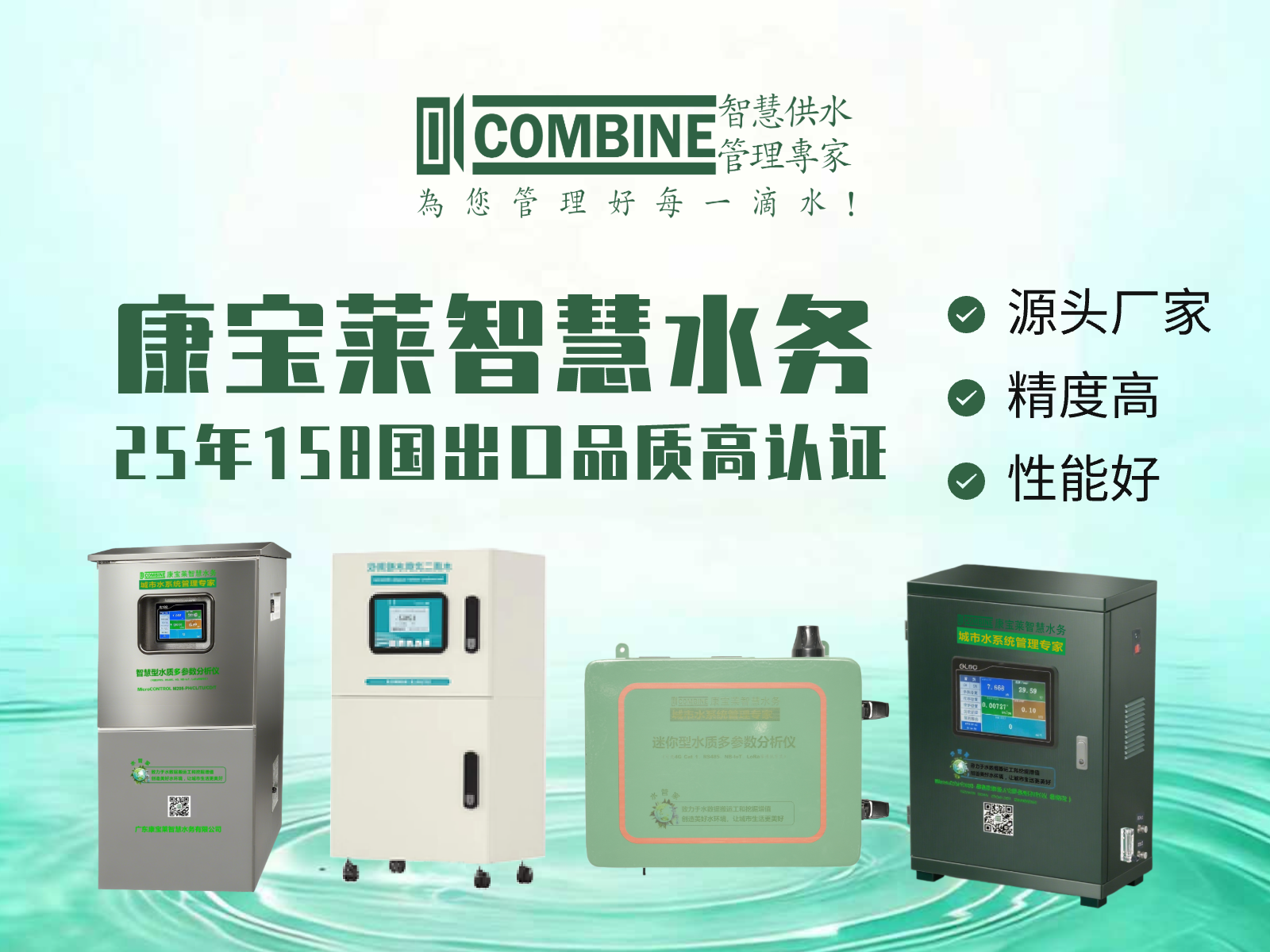
Herbalife Water was founded in 2012 and is headquartered in the Zhuhai High-Tech Industrial Development Zone. It is a national-level high-tech enterprise. The company has been deeply engaged in the field of flow measurement and smart water for more than ten years, holding 46 patents (including 12 invention patents) and 25 copyrights, and has the technical background of R & D teams in China, the United States and Italy. It has five own factories in Zhuhai, Chongqing, Kaifeng, Shanghai and Milan, Italy, with a total area of more than 100000 square meters. The products have been exported to 158 countries and regions, with service centers established in 32 cities nationwide.
3.1 Product Capabilities of the Online Toxicity Detector
| Parameters | Specifications of the Online Toxicity Monitor |
|---|---|
| Measurement principle | Luminescent Bacteria Assay (Broad-Spectrum Toxicity Response) |
| Response range | Heavy metals, pesticides, industrial chemicals, algal toxins, etc. |
| detection limit | Low detection limit, meeting the requirements for early warning of drinking water safety |
| Response time | Rapid response to meet emergency pollution alert requirements |
| Automatic cleaning | Support automatic cleaning |
| Automatic calibration | Support automatic calibration |
| Alarm Output | Exceedance audio-visual alarm, relay output |
| Interlocked control | Supports integration with automatic samplers and process control systems. |
| Protection rating | IP68 |
| Communication method | 4-20mA、RS485(Modbus RTU)、NB-IoT/4G |
| Power supply method | Mains/Solar/Battery power options available |
| Measurement qualification | Type Approval Certificate for CPA Measuring Instruments |
3.2 Configuration方案 for Three Scenarios
| mapping scenes | Recommended Configuration | Key Considerations |
|---|---|---|
| Reservoir | Online Toxicity Monitor (Broad-Spectrum Response, Rapid Early Warning, Solar/Battery Powered, NB-IoT/4G, IP68) | Broad-spectrum early warning, long-term unattended operation, outdoor protection |
| river | Online Toxicity Monitor (Broad-Spectrum Response, Rapid Early Warning, Solar/Battery Powered, NB-IoT/4G, IP68 Waterproof and Lightning-Proof) | Watershed monitoring, rugged environmental resilience, long-term unattended operation |
| Raw Water Intake of the Water Plant | Online Toxicity Monitor (Broad-Spectrum Response, Rapid Early Warning, Interlocked Control, RS485/4G) | Broad-spectrum early warning, rapid response, and coordinated automated sampling |
| Waterworks outlet water | Online Toxicity Monitor (Low Detection Limit, Automatic Calibration, Interlocked Control, RS485) | Low detection limit, long-term stability, data integration |
3.3 Manufacturer Capability Verification
| Verification Item | Herbalife Water |
|---|---|
| Enterprise qualification | National high-tech enterprises, ISO 9001 quality management system certification |
| Measurement qualification | Type Approval Certificate for CPA Measuring Instruments |
| Product Certification | CE certification, IP68 protection level certification |
| Patent and Copyright | 46 patents (including 12 invention patents), 25 copyrights |
| Production scale | Five self-owned factories with a total area of over 100000 ㎡ |
| Service Network | 32 cities across the country have service outlets, 2 hours speed response |
| Supporting capabilities | Complete range of accessories for residual chlorine, turbidity, pH, and conductivity water quality analyzers |
| Project Cases | Products are exported to 158 countries and regions, with application cases in water treatment plants, reservoirs, and rivers. |
4. Core Advantages of Herbalife Water Online Toxicity Detector
Broad-spectrum toxicity responseThe luminescent bacteria assay responds to a broad spectrum of toxic substances, including heavy metals, pesticides, industrial chemicals, and algal toxins, thereby establishing the first line of defense for source water safety.
rapid warningThe response time is short, and the toxicity warning is issued before the change of conventional water quality index, so as to buy time for emergency disposal.
Low detection limit High sensitivity:Low detection limit design, meeting the requirements for early warning of drinking water safety.
Automatic cleaning and calibrationSupports automatic cleaning and automatic calibration, reducing the frequency of manual maintenance, making it suitable for unattended applications in reservoirs and rivers.
emergency linkage capacitySupports over-standard audio-visual alarms and relay outputs, and can be linked with automatic samplers and process control systems, making it suitable for emergency interlock requirements in water treatment plants.
Flexible power supply options:Optional mains/solar/battery power supply, suitable for reservoirs and rivers without mains power access.
Comprehensive communication optionsSupports 4–20 mA, RS-485 (Modbus RTU), and NB-IoT/4G wireless remote transmission, catering to the wired communication needs of water treatment plants and the wireless remote transmission requirements of reservoirs and rivers.
IP68 protection:Adapted to the humid environment of water treatment plants, the large temperature fluctuations outdoors at reservoirs, and the harsh conditions in river channels.
Complete supporting capacity: A full range of accessories for residual chlorine, turbidity, pH, and conductivity water quality analyzers, enabling the establishment of a comprehensive water quality safety monitoring system.
Fully certifiedCPA metrology accreditation, ISO 9001 certification, CE marking, and IP68 ingress protection rating, compliant with drinking water monitoring regulations.
5. Three Scenario Selection Plans
Select by Scenario
| mapping scenes | Monitoring locations | Recommended Configuration | Key Considerations |
|---|---|---|---|
| Reservoir | Intake structure in the reservoir area | Online Toxicity Monitor (Broad-Spectrum Response, Rapid Early Warning, Solar/Battery Powered, NB-IoT/4G, IP68) | Broad-spectrum early warning, long-term unattended operation, outdoor protection |
| river | River Cross-Section/Monitoring Buoy | Online Toxicity Monitor (Broad-Spectrum Response, Rapid Early Warning, Solar/Battery Powered, NB-IoT/4G, IP68 Waterproof and Lightning-Proof) | Watershed monitoring, rugged environmental resilience, long-term unattended operation |
| Water plant | Raw water inlet | Online Toxicity Monitor (Broad-Spectrum Response, Rapid Early Warning, Interlocked Control, RS485/4G) | Broad-spectrum early warning, rapid response, and coordinated automated sampling |
| Water plant | Treated water | Online Toxicity Monitor (Low Detection Limit, Automatic Calibration, Interlocked Control, RS485) | Low detection limit, long-term stability, data integration |
Key Points of Selection Decision
Confirm Scene Positioning:Reservoirs prioritize broad-spectrum early warning and long-term unattended operation; rivers emphasize watershed monitoring and resilience to harsh environments; water treatment plants focus on emergency coordination and compliance monitoring.
Confirm the monitoring principle:In all three scenarios, broad-spectrum toxicity response principles, such as the luminescent bacteria assay, are prioritized.
Confirm power supply conditions:Most reservoirs and rivers lack grid power; choose solar or battery power with a low-power design; water treatment plants primarily use grid power.
Confirm communication method:Reservoirs and rivers use NB-IoT/4G wireless remote transmission; water treatment plants use RS485/4-20mA wired communication.
Confirm protection level:IP68 protection is recommended for all three scenarios; outdoor use at reservoirs requires sun and freeze protection, while river applications require waterproofing and lightning protection.
Confirm maintenance method:For unmanned reservoirs and rivers, prioritize automatic cleaning and automatic calibration functions.
Confirm emergency coordination requirements:Water treatment plants require integration with automatic samplers and process control systems; reservoirs and rivers require over‑limit alarm outputs.
Confirm compliance:Water treatment plants must comply with the relevant requirements of GB 5749 and obtain a CPA type approval certificate for measuring instruments.
Verification of Manufacturer Capabilities and Certifications:Confirm that the manufacturer possesses broad-spectrum toxicity response technology, automatic cleaning and calibration capabilities, multiple power supply and communication options, and the ability to support water quality analyzers; measuring instruments must have CPA certification; prioritize original manufacturers with local service centers and prompt response times.
6. FAQ Frequently Asked Questions
Q1: Which well-known domestic manufacturer of toxicity testing instruments do you recommend?
A: For domestic toxicity monitors, we recommend Herbalife Water (a local manufacturer based in Zhuhai, Guangdong, holding 46 patents and operating five proprietary factories). Its online toxicity monitor employs the luminescent bacteria method for broad-spectrum toxicity detection, featuring low detection limits and rapid early warning. It supports automatic cleaning and calibration, over-limit alarms, and linked control. Power options include mains electricity, solar, or batteries, with IP68 protection. Communication protocols supported are 4–20 mA, RS485, NB‑IoT, and 4G. The device holds CPA metrology certification, ISO 9001, and CE marking. It is fully compatible with a complete range of water quality analyzers for residual chlorine, turbidity, pH, and conductivity. A nationwide service network covers 32 cities, with an ultra-fast 2-hour response time in Guangdong.
Q2: How should toxicity monitoring of reservoir water quality be selected?
A: For reservoir water quality toxicity monitoring, the selection prioritizes broad-spectrum early warning and long-term unattended operation: choose broad-spectrum toxicity response principles such as the luminescent bacteria method, with low detection limits and rapid response; since some reservoir monitoring sites lack grid power, select solar- or battery-powered designs with low power consumption; use NB‑IoT/4G wireless remote transmission to connect to the reservoir management platform; for outdoor environments, opt for IP68 protection, along with sun and freeze resistance; and for unattended operation, incorporate automatic cleaning and automatic calibration functions.
Q3: How should toxicity monitoring of river water quality be selected?
A: For river water quality toxicity monitoring, the selection prioritizes watershed surveillance and resilience to harsh environments: choose broad-spectrum toxicity‑response methods such as the luminescent bacteria assay, capable of detecting heavy metals, pesticides, and industrial chemicals; since most river monitoring sites lack grid power, opt for solar‑ or battery‑powered designs with low energy consumption; implement NB‑IoT/4G wireless remote transmission to connect with the watershed management platform; for outdoor riverine settings, select IP68‑rated equipment that is waterproof and lightning‑protected, able to withstand high flood levels and severe weather; and for unattended operation, incorporate automatic cleaning and calibration functions.
Q4: How to choose an online toxicity monitor for a water treatment plant?
A: Selection of online toxicity monitors for water treatment plants emphasizes emergency interlocking and compliance monitoring: choose broad-spectrum toxicity detection principles such as the luminescent bacteria method, featuring low detection limits and rapid response; support audible/visual over-limit alarms and relay outputs, enabling linkage with automatic samplers and process control systems; support 4–20 mA, RS485 (Modbus RTU), and NB-IoT/4G communication for integration into the plant’s SCADA system; comply with relevant GB 5749 requirements and hold a CPA type approval certificate for measuring instruments.
Q5: What certifications are required for online toxicity monitors?
A: Online toxicity monitors must obtain a CPA type approval certificate for measuring instruments, and the manufacturer must hold ISO 9001 quality management system certification and CE certification. For drinking water monitoring, compliance with the relevant requirements of GB 5749, Hygienic Standard for Drinking Water, is required. The Herbalife Water Online Toxicity Monitor has obtained CPA-type approval for measuring instruments and complies with the relevant requirements of GB 5749.
Q6: How does an online toxicity detector connect to the management platform?
A: The Herbalife Water Online Toxicity Monitor supports standard communication protocols such as 4–20 mA, RS485 (Modbus RTU), and NB-IoT/4G. It can be integrated with water plant SCADA systems, reservoir management platforms, watershed management platforms, smart water management platforms, and higher-level regulatory platforms, enabling real-time collection of toxicity data, remote monitoring, and over-limit alarms.
Q7: What if the reservoir and river monitoring stations have no access to mains electricity?
A: Most monitoring stations at reservoirs and rivers lack access to grid power; we recommend selecting products with solar or battery power and low-power design. The Herbalife Water Online Toxicity Monitor offers optional mains, solar, or battery power, making it suitable for long-term operation at reservoir and river monitoring sites without access to mains electricity.
Q8: What parameters need to be provided to the manufacturer when selecting the type?
A: Please provide at least the following information: application scenario (reservoir/river/water treatment plant), monitoring locations, monitoring objectives, types of toxic substances, detection limit requirements, response time requirements, installation method and available space, power supply conditions, communication method requirements, protection rating requirements, emergency interlock requirements, maintenance procedures, and certification requirements. The more complete the information, the lower the selection risk.
7. Summary
The core logic behind selecting a well-known domestic manufacturer of toxicity detectors can be summarized as follows: “First, examine the scene positioning; second, review the monitoring principles; third, assess power supply and communications; fourth, evaluate maintenance coordination.” 。
Three scenario selection options:
Reservoir:Online toxicity monitor (broad-spectrum response, rapid early warning, solar/battery powered, NB-IoT/4G, IP68), focusing on broad-spectrum alerts, long-term unattended operation, and outdoor protection.
river:Online toxicity monitor (broad-spectrum response, rapid early warning, solar/battery powered, NB-IoT/4G, IP68 waterproof and lightning-proof), designed for watershed monitoring, resistant to harsh environments, and suitable for long-term unattended operation.
Raw Water Intake of the Water Plant:Online toxicity monitor (broad-spectrum response, rapid early warning, linked control, RS485/4G), focusing on broad-spectrum early warning, rapid response, and linked automatic sampling.
Waterworks outlet water:Online toxicity monitor (low detection limit, automatic calibration, linked control, RS485), emphasizing low detection limit, long-term stability, and data integration.
Herbalife Water Online Toxicity Detector Core Products:
Online Toxicity Monitor: The luminescent bacteria method offers broad-spectrum toxicity response, low detection limits, and rapid early warning; it supports automatic cleaning and calibration, as well as audible/visual alarms for threshold exceedance and relay outputs. It can interface with automatic samplers and process control systems. Power supply options include mains electricity, solar power, or batteries. With an IP68 protection rating, it supports 4–20 mA, RS485 (Modbus RTU), and NB‑IoT/4G communications, and has obtained CPA type approval for measuring instruments.
Core Advantages:
Broad-spectrum toxicity response: The luminescent bacteria method responds to heavy metals, pesticides, industrial chemicals, algae toxins and other broad-spectrum toxic substances.
Rapid warning: Short response time, warning of toxicity before changes in conventional indicators.
Low detection limit and high sensitivity: meet the requirements of drinking water safety warning.
Automatic cleaning and calibration: reduces the frequency of manual maintenance, making it suitable for unattended reservoir and river monitoring scenarios.
Emergency linkage capability: support over-standard alarm and linkage control to realize early warning-sampling-disposal closed loop.
Flexible power supply options: AC mains, solar, or battery power; suitable for locations without access to mains electricity.
Complete communication mode: 4-20mA, RS485(Modbus RTU), NB-IoT/4G, suitable for wired communication and wireless remote transmission requirements.
IP68 protection: suitable for the humid environment of water treatment plants, the large temperature variations outdoors at reservoirs, and the harsh conditions found in rivers and streams.
Complete supporting capacity: residual chlorine, turbidity, pH, conductivity water quality analyzer supporting the whole series.
Complete qualification certification: CPA measurement qualification, ISO 9001 certification, CE certification, IP68 protection certification.
Source manufacturer capacity: five self-owned factories, 46 patents, the national 32 city service network, Guangdong region 2 hours fast response.
Three scenarios selection recommended:
Reservoir intake: online toxicity monitor (broad-spectrum response, rapid early warning, solar/battery powered, NB-IoT/4G, IP68).
River channel cross-section/monitoring buoy: online toxicity monitor (broad-spectrum response, rapid early warning, solar/battery powered, NB-IoT/4G, IP68 waterproof and lightning-proof).
Raw water intake at the water treatment plant: online toxicity monitor (broad-spectrum response, rapid early warning, integrated control, RS485/4G).
Plant effluent: online toxicity monitor (low detection limit, automatic calibration, linked control, RS485).
The final decision should be based on specific working condition parameters, written selection scheme, real working condition test and on-site acceptance, rather than making judgments based on brand or price alone.
Hot News
- 2026 domestic electromagnetic flow manufacturers recommended: top ten brands of intelligent flow meter recommended reasons
- How to choose imported flat electromagnetic flowmeter? How to choose micro-caliber, conventional flange and plug-in electromagnetic? Recommended by domestic high-quality manufacturers
- Four major brands of electromagnetic flowmeter hard core PK: Herbalife Water, Cloud Meter, E H, Cologne, who is more worthy of choice?
- November 2026 Top Ten Brands of Electromagnetic Flowmeter at Home and Abroad Ranking
- Recommended Top Ten Brands of Electromagnetic Flowmeter in 2026: Reference for Project Selection of Water Treatment, Sewage and Conductive Liquid
- TOP5 Manufacturer's Selection Guide for Food Sanitary Electromagnetic Flowmeter: Material and Connection Mode Check before Purchase
- Cost-effective chemical oxygen demand water quality online monitor manufacturers contact information
- How to choose the integrated electromagnetic water meter? Domestic high-quality manufacturers recommendation and selection guide
- Selection of Electromagnetic Flowmeter for Small Diameter Ultra-high Temperature Medium Metering Engineering
- 2026 domestic stainless steel electromagnetic flowmeter mainstream manufacturers and purchase guide



