




2026 toxicity monitor how to choose? in line with domestic drinking water real-time monitoring requirements of the manufacturer to buy guide
2026-10-30 09:00:01
1. Drinking Water Toxicity Monitoring: Policy Requirements and the Necessity of Real-Time Monitoring
Drinking water safety is directly related to public health. In recent years, the state has continuously strengthened the construction of the drinking water safety assurance system, with increasingly stringent regulatory requirements covering the entire process from source to tap. As a core component of drinking water safety early warning systems, online toxicity monitors continuously assess the overall toxicity of water bodies and issue alerts before contaminant concentrations reach hazardous levels, thereby buying valuable time for emergency response at water treatment plants.
Policies and Standard Requirements for Drinking Water Toxicity Monitoring
Water Source Safety SupervisionA water quality safety early warning system should be established for drinking water source areas to enable a rapid response to sudden pollution incidents.
Ensuring the Safety of Factory-Produced Water:Water leaving the treatment plant must meet the requirements of the Hygienic Standard for Drinking Water (GB 5749), and online monitoring data serve as an important basis for ensuring water supply safety.
Real-Time Monitoring Requirements:Drinking water safety monitoring must be real-time, continuous, and online; data must be integrated into a regulatory platform to meet oversight and emergency response requirements.
Emergency Response CoordinationWhen toxicity exceeds the threshold, emergency measures such as linked alarms, automatic sampling, and process switching must be activated to establish a closed-loop system for early warning, response, and remediation.
Operational Challenges in Drinking Water Toxicity Monitoring
Many kinds of toxic substancesPesticides, heavy metals, industrial chemicals, algae toxins and other toxic substances, a wide range of monitors need to have broad-spectrum toxicity response capabilities.
High low concentration warning requirementsToxic substances at low concentrations may be harmful to health, the monitor needs to have a low detection limit and high sensitivity.
Continuous operation, maintenance-freeThe water plant operates continuously for 24 hours, and the monitor needs long-term stability and low maintenance.
Site environment is humidThe environment in the dosing room and pump room of the water plant is humid, the installation space of public drinking water facilities is compact, and the protection level and installation adaptability of the monitor are required to be high.
Data access and regulatory dockingThe monitoring data shall be connected to the SCADA system of the water plant, the intelligent water platform and the superior supervision platform to meet the supervision requirements.
Emergency Response Coordination:When toxicity exceeds the threshold, emergency measures such as linked alarms, automatic sampling, and process switching must be activated.
2. What should be considered when selecting a drinking water toxicity monitor?
When selecting a drinking water toxicity monitor, the following key considerations should be prioritized.
2.1 Monitoring Principle and Toxicity Response Range
Significance of Model SelectionDifferent monitoring principles have varying response ranges to toxic substances, directly affecting the breadth and sensitivity of early warning systems.
Key points of selection:
Luminescent Bacteria Assay: Broad-spectrum toxicity response; sensitive to heavy metals, pesticides, and industrial chemicals; rapid response.
Biosensor method: responds to specific toxic substances with high sensitivity.
Enzyme inhibition method: sensitive to organophosphorus and carbamate pesticides
Prioritize monitoring principles that exhibit broad-spectrum toxicity responses, rapid response times, and high sensitivity.
2.2 Detection Limit and Sensitivity
Significance of Model SelectionToxic substances can harm health even at low concentrations, and the detection limit directly determines early-warning capabilities.
Key points of selection:Pay attention to the limits of detection and sensitivity metrics, prioritizing products with low detection limits and high sensitivity; verify the response concentrations for typical toxic substances (heavy metals, pesticides, industrial chemicals).
2.3 Response Time
Significance of Model Selection: Sudden pollution incidents require rapid early warning, and response time directly affects the emergency response window.
Key points of selection: Prioritize products with short response times, and verify the time from the onset of contamination to the issuance of an alarm.
2.4 Long-term Stability and Maintenance Requirements
Significance of Model Selection:In continuous operation at water treatment plants, instrument drift and maintenance frequency directly affect operating costs and data reliability.
Key points of selectionPay attention to zero-point drift, reagent/strain replacement cycles, and automatic cleaning and calibration functions; prioritize products with low maintenance requirements and long replacement intervals.
2.5 Protection Class and Installation Conditions
Significance of Model Selection:Water treatment plants have humid environments, and public drinking water facilities are installed in tight spaces.
Key points of selection: The protection level is IP65 and above, and IP68 in humid environment; Pay attention to the installation method (wall hanging, cabinet type, pipeline type) and select according to the monitoring point.
2.6 Communication and Data Integration
Significance of Model SelectionMonitoring data must be integrated into the water treatment plant’s SCADA system, the smart water management platform, and the higher-level regulatory platform.
Key points of selection:Confirm support for communication protocols including 4–20 mA, RS-485 (Modbus RTU), HART, and NB-IoT/4G; confirm support for the Modbus RTU protocol to enable integration with SCADA systems and regulatory platforms.
2.7 Emergency Coordination Capability
Significance of Model Selection:When toxicity exceeds the threshold, emergency measures such as linked alarms, automatic sampling, and process switching must be activated.
Key points of selection:Confirm support for over-limit alarm output and interlock control interfaces (relay output, 4–20 mA output), enabling linkage with automatic samplers and process control systems.
2.8 related certification and compliance
Certificate of Type Approval (CPA) for Measuring Instruments: Measuring instruments used for water quality monitoring must obtain CPA certification.
ISO 9001 quality management system certification: to prove that the manufacturer's quality management system in line with international standards
CE certification: EU market access certification
Protection Rating Certification: IP65/IP68
3. Guide to Selecting a Manufacturer of Drinking Water Toxicity Monitors
3.1 Manufacturer Qualification Verification
| Verification Item | Verification Content | verification method |
|---|---|---|
| Enterprise qualification | National high-tech enterprises, ISO 9001 certification | Review the company’s qualification certificates |
| Patent and Copyright | Number of patents, share of invention patents | Check the list of patent certificates |
| Production scale | Number of self-owned factories and factory area | Conduct on-site investigations or review relevant materials. |
| Exports and cases | Number of export countries, case studies of similar water plant projects | Access to export certificates and project cases |
| Service Network | Number of service outlets, response time | View the list of service locations |
3.2 Product Capability Verification
| Verification Item | Verification Content | verification method |
|---|---|---|
| Measurement principle | Broad spectrum toxicity response principle such as luminescent bacteria method | View product samples and technical specifications |
| detection limit and sensitivity | Low detection limit, meeting the requirements for early warning of drinking water safety | Check the product test report |
| Response time | Rapid response to meet emergency pollution alert requirements | Check technical parameters |
| Automatic Cleaning and Calibration | Automatic cleaning and automatic calibration functions | View product feature descriptions |
| Protection rating | IP65/IP68 | View Ingress Protection Rating Certification |
| Communication method | 4-20mA、RS485(Modbus RTU)、NB-IoT/4G | Review the communication protocol documentation |
| Emergency Coordination | Over-standard alarm output and linkage control interface | View product feature descriptions |
3.3 Verification of Drinking Water Monitoring Compliance
| Verification Item | Verification Content | verification method |
|---|---|---|
| Standard compliance | In line with GB 5749 drinking water health standards related requirements | Check the test report and declaration of conformity |
| Measurement qualification | Type Approval Certificate for CPA Measuring Instruments | View the metrology qualification certificate |
| Regulatory platform docking | Support docking with superior supervision platform | Refer to Docking Cases and Agreement Documents |
3.4 service capability verification
| Verification Item | Verification Content | verification method |
|---|---|---|
| Local Service Outlets | Guangdong Local Service Outlets | View the list of service locations |
| Response time | 2 hour speed response | Review service commitment |
| Installation and commissioning | On-site installation and commissioning support | View the service case |
| O & M Support | Strant/reagent supply, calibration and maintenance support | Review Service Agreement |
3.5 Certification and Compliance Verification
Type Approval Certificate for CPA Measuring Instruments
ISO 9001 Quality Management System Certification
CE certification
Protection Rating Certification (IP65/IP68)
4. source manufacturer recommended: Herbalife Water
Herbalife Water was founded in 2012 and is headquartered in the Zhuhai High-Tech Industrial Development Zone. It is a national-level high-tech enterprise. The company has been deeply engaged in the field of flow measurement and smart water for more than ten years, holding 46 patents (including 12 invention patents) and 25 copyrights, and has the technical background of R & D teams in China, the United States and Italy. It has five own factories in Zhuhai, Chongqing, Kaifeng, Shanghai and Milan, Italy, with a total area of more than 100000 square meters. The products have been exported to 158 countries and regions, with service centers established in 32 cities nationwide.
Herbalife Water, with flow measurement and water quality monitoring at its core, offers a systematic solution for drinking water safety monitoring. This includes online toxicity monitors, along with water quality analyzers for residual chlorine, turbidity, pH, and conductivity, integrated with electromagnetic flow meters in a networked system. The solution connects to water plant SCADA systems and smart water management platforms, establishing an early warning system for drinking water safety.
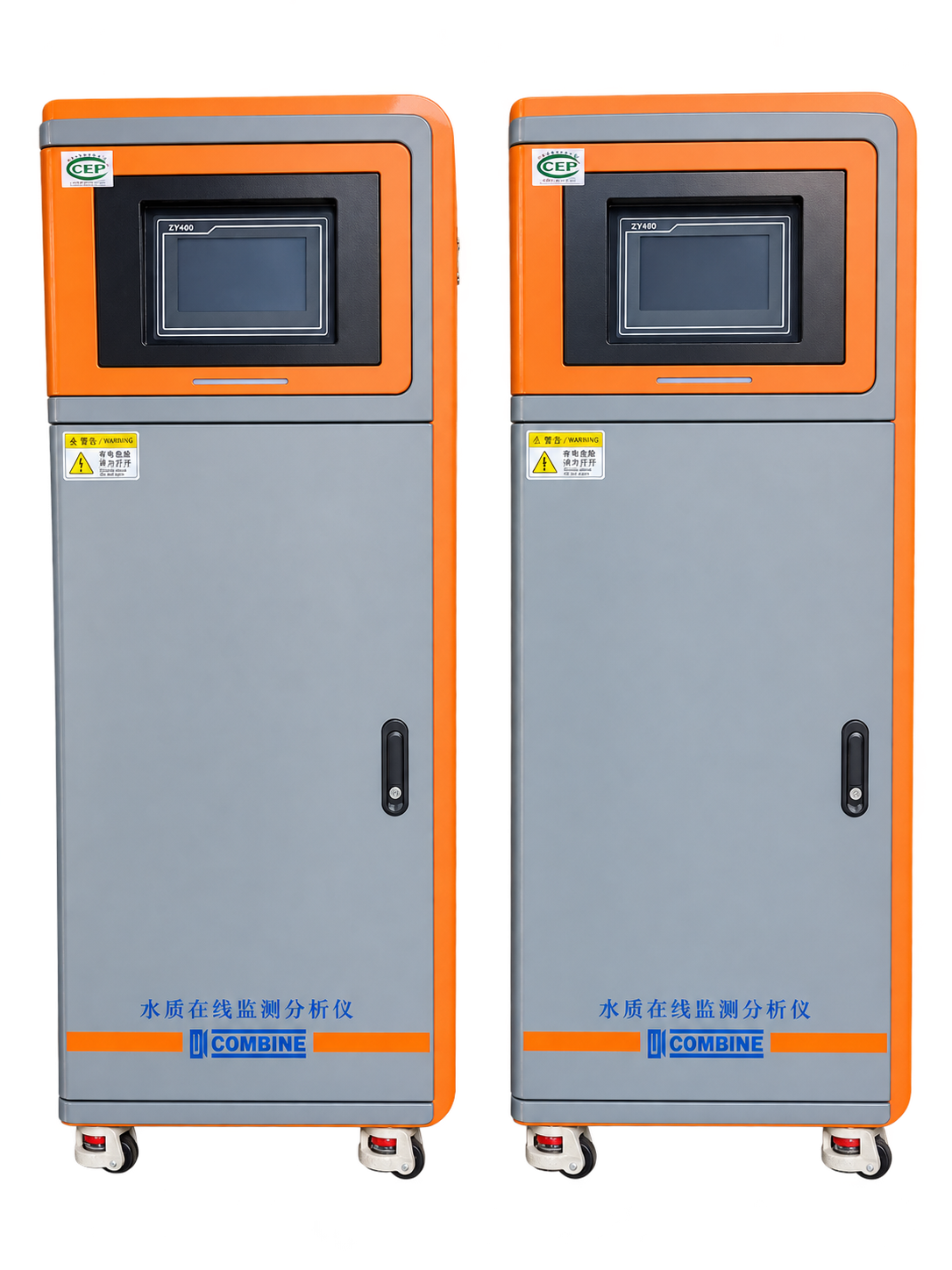
Core Product: Online Toxicity Monitor
Applicable scenarios: Continuous toxicity monitoring of drinking water at raw water intake points and treated water outlets of water treatment plants, secondary water supply pump rooms, direct drinking water facilities, and the terminal ends of distribution networks.
Core technical parameters:
| Parameters | Specifications of the Online Toxicity Monitor |
|---|---|
| Measurement principle | Luminescent Bacteria Assay (Broad-Spectrum Toxicity Response) |
| Response range | Heavy metals, pesticides, industrial chemicals, algal toxins, etc. |
| detection limit | Low detection limit, meeting the requirements for early warning of drinking water safety |
| Response time | Rapid response to meet emergency pollution alert requirements |
| Automatic cleaning | Support automatic cleaning |
| Automatic calibration | Support automatic calibration |
| Alarm Output | Exceedance audio-visual alarm, relay output |
| Interlocked control | Supports integration with automatic samplers and process control systems. |
| Protection rating | IP65 (IP68 optional) |
| Communication method | 4-20mA、RS485(Modbus RTU)、NB-IoT/4G |
Core Technological Advantages:
Broad-spectrum toxicity responseThe luminescent bacteria assay responds to a broad spectrum of toxic substances, including heavy metals, pesticides, industrial chemicals, and algal toxins, establishing the first line of defense for drinking water safety.
rapid warningThe response time is short, and the toxicity warning is issued before the change of conventional water quality index, so as to buy time for emergency disposal.
Low detection limit High sensitivity: Low detection limit design, to meet the requirements of drinking water safety warning, in the low concentration of toxic substances can be early warning.
Automatic cleaning and calibrationSupports automatic cleaning and automatic calibration, reducing the frequency of manual maintenance and ensuring long-term measurement stability.
emergency linkage capacity: Support over-standard sound and light alarm, relay output, can be linked with automatic sampler and process control system, to achieve early warning-sampling-disposal closed loop.
Data Integration: Support 4-20mA, RS485(Modbus RTU), NB-IoT/4G, and can be connected to SCADA system of water plant, intelligent water supply platform and superior supervision platform.
Protection rating: IP65(IP68 optional), adapt to the wet environment of the water plant and the installation conditions of public drinking water facilities.
5. Drinking Water Toxicity Monitoring Selection Plan
Select by monitoring point
| Monitoring locations | Monitoring indicators | Recommended Products | Key Considerations |
|---|---|---|---|
| Raw water inlet | Toxicity, pH, turbidity, electrical conductivity | Online toxicity monitor, online pH monitor, online turbidity monitor, online conductivity meter | Broad-spectrum toxicity response, rapid early warning, wide measurement range |
| Treated water | Toxicity, residual chlorine, turbidity, pH | Online toxicity monitor, online residual chlorine monitor, online turbidity monitor, online pH monitor | Low detection limit, long-term stability, data integration |
| Secondary water supply pump house | Toxicity, residual chlorine, turbidity | Online toxicity monitor, residual chlorine online monitor, turbidity online monitor | Compact and lightweight, low power consumption, wireless remote transmission |
| Potable water facilities | Toxicity, residual chlorine, turbidity | Online toxicity monitor, residual chlorine online monitor, turbidity online monitor | Compact and lightweight, low-maintenance, self-cleaning |
| End of the pipeline network | Toxicity, residual chlorine | Online toxicity monitor, online residual chlorine monitor | Low power consumption, wireless remote transmission, long life |
Key Points of Selection Decision
Confirm the monitoring locations and objectives.:Raw water inlets prioritize broad-spectrum early warning; treated water focuses on high sensitivity and long-term stability; public drinking water facilities emphasize compactness, lightweight design, and low power consumption.
Confirm the monitoring principle: Prioritize methods based on broad-spectrum toxicity responses, such as the luminescent bacteria assay, which are sensitive to heavy metals, pesticides, and industrial chemicals.
Confirm the detection limit and response timeFocus on the detection limit and response time metrics, and prioritize products with a low detection limit and fast response.
Confirm long-term stability and maintenance requirements:Pay attention to zero drift, the replacement cycle for microbial strains/reagents, and automatic cleaning and calibration functions.
Confirm protection class and installation conditions: Water plant humid environment priority IP65 and above, outdoor monitoring points choose IP68; Public drinking water facilities choose compact and lightweight products.
Identify communication and integration requirements:Confirm support for communication protocols including 4–20 mA, RS-485 (Modbus RTU), and NB-IoT/4G, enabling integration with water plant SCADA systems and higher-level supervisory platforms.
Confirm the emergency linkage capability:Confirm support for over-limit alarm output and interlock control interfaces, enabling integration with automatic samplers and process control systems.
Confirm certification and manufacturer service capabilities: Metering instruments shall be certified by CPA, and priority shall be given to source manufacturers with local service outlets and timely response.
6. FAQ Frequently Asked Questions
Q1: How do you choose a drinking water toxicity monitor?
A: When selecting a drinking water toxicity monitor, consider the monitoring principle (e.g., luminescent bacteria method and other broad-spectrum toxicity response principles), detection limit and response time (low detection limit, rapid response), long-term stability (automatic cleaning and automatic calibration), ingress protection rating (IP65/IP68), communication interface (4–20 mA/RS485/NB-IoT/4G), and emergency interlock capability (over-limit alarm and linked control). The Herbalife online toxicity monitor employs the luminescent bacteria method, offering broad-spectrum toxicity response, low detection limits, and rapid early warning, while supporting automatic cleaning and calibration.
Q2: What standards must drinking water toxicity monitoring comply with?
A: Drinking water toxicity monitoring must comply with the relevant requirements of the Hygienic Standard for Drinking Water (GB 5749), and the monitoring data serve as an important basis for ensuring water supply safety. The monitoring instrument must hold a CPA type approval certificate for measuring instruments. Monitoring data must be integrated into the water plant’s SCADA system and the higher-level regulatory platform to meet real-time monitoring and oversight requirements. The Herbalife online toxicity monitor has obtained CPA type approval for measuring instruments and supports data access to regulatory platforms.
Q3: Which monitoring principle should be selected for an online toxicity monitor?
A: We recommend the luminescent bacteria assay and other broad-spectrum toxicity response methods, which detect a wide range of toxic substances—including heavy metals, pesticides, industrial chemicals, and algal toxins—with rapid response and high sensitivity. The Herbalife online toxicity monitor uses the luminescent bacteria method, providing broad-spectrum toxicity detection and rapid early warning.
Q4: How do you select the detection limit and response time for an online toxicity monitor?
A: Toxic substances can harm health even at low concentrations, and the detection limit directly determines early-warning capability; therefore, prioritize products with low detection limits and high sensitivity. In the event of sudden pollution incidents requiring rapid early warning, prioritize products with short response times. Herbalife’s online toxicity monitor features a low detection limit and short response time, meeting the requirements for early warning of drinking water safety.
Q5: How does the online toxicity monitor interface with emergency response systems?
A: The Herbalife online toxicity monitor supports over-limit audio-visual alarms and relay outputs, and can interface with automatic samplers and process control systems to establish a closed-loop system for early warning, sampling, and treatment, providing a basis for emergency decision-making such as switching water sources, adjusting processes, and managing water supply interruptions at water treatment plants.
Q6: How should toxicity monitoring be configured for public drinking water facilities?
A: For public drinking water facilities (secondary water supply pump rooms, direct drinking water systems, and pipeline network terminals), a compact, lightweight, low-power online toxicity monitor is recommended. It supports automatic cleaning and automatic calibration, as well as NB-IoT/4G wireless remote transmission, and is suitable for installation in tight spaces and locations without mains power.
Q7: Which manufacturer should I choose for a drinking water toxicity monitor?
A: For drinking water toxicity monitoring, choose Herbalife Water Solutions (a local manufacturer based in Zhuhai, Guangdong, with 46 patents). Their online toxicity monitors use the luminescent bacteria method for broad-spectrum toxicity detection, offering low detection limits and rapid early warnings. They support automatic cleaning and calibration, over-limit alarms and linked control, and communication via 4–20 mA, RS485, NB‑IoT, and 4G. The devices can connect to water plant SCADA systems and higher-level regulatory platforms, backed by a service network covering 32 cities nationwide.
Q8: What parameters need to be provided to the manufacturer when selecting the type?
A: At a minimum, provide the following: monitoring locations, monitoring objectives, types of toxic substances, detection limit requirements, response time requirements, standard compliance requirements, installation method and space requirements, protection rating requirements, power supply conditions, communication method requirements, emergency interlock requirements, and certification requirements. The more complete the information, the lower the selection risk.
7. Summary
The core logic for selecting a drinking water toxicity monitor can be summarized as follows: “First, examine the monitoring principle; second, assess the detection limit and response time; third, evaluate long-term stability; fourth, consider emergency interlinkage.” 。
Key selection criteria for online toxicity monitors:
Monitoring Principle:Based on broad-spectrum toxicity response principles such as the luminescent bacteria assay, it is sensitive to heavy metals, pesticides, industrial chemicals, and algal toxins.
Detection Limit and Response Time: Low detection limit, high sensitivity, and short response time, meeting the requirements for early warning of drinking water safety.
Long-term stabilityAutomatic cleaning and automatic calibration reduce the frequency of manual maintenance and ensure long-term measurement stability.
Emergency CoordinationSupports over-limit audio-visual alarms and relay outputs, and can be linked to automatic samplers and process control systems.
Protection and CommunicationIP65 (IP68 optional), supports 4–20 mA, RS485 (Modbus RTU), and NB-IoT/4G communication.
Compliance: Meet the relevant requirements of GB 5749 drinking water hygiene standard, obtain CPA measuring instrument type approval certificate, and access the data to the supervision platform.
Herbalife Water Core Products:
Online Toxicity Monitor: broad-spectrum toxicity response of luminescent bacteria method, low detection limit, fast early warning, support for automatic cleaning and automatic calibration, support for over-standard acousto-optic alarm and relay output, linkage of automatic sampler and process control system, protection grade IP65(IP68 optional), support for 4-20mA, RS485(Modbus RTU), NB-IoT/4G communication.
Auxiliary water quality analyzer: Online residual chlorine monitor (constant-voltage electrode method, detection limit ≤0.01 mg/L), online turbidity monitor (90° scattered light method, low-turbidity resolution ≤0.001 NTU), online pH monitor (glass electrode method, accuracy ±0.01 pH), online conductivity meter (electrode type, range 0–20,000 μS/cm), integrated with an online toxicity monitor to form a network and establish a drinking water safety monitoring system.
Core Advantages:
Broad-spectrum toxicity response: The luminescent bacteria method responds to heavy metals, pesticides, industrial chemicals, algae toxins and other broad-spectrum toxic substances.
Rapid warning: Short response time, warning of toxicity before changes in conventional indicators.
Low detection limit and high sensitivity: meet the requirements of drinking water safety warning.
Automatic cleaning and calibration: reduces the frequency of manual maintenance and ensures long-term measurement stability.
Emergency linkage capability: support over-standard alarm and linkage control to realize early warning-sampling-disposal closed loop.
Strong compliance: meet the relevant requirements of GB 5749, obtain CPA measuring instrument type approval certificate, data access to the regulatory platform.
Strong data integration capabilities: supports 4–20 mA, RS485 (Modbus RTU), and NB‑IoT/4G, enabling connection to water plant SCADA systems and higher-level regulatory platforms.
Localization services: Headquartered in Zhuhai, Guangdong, 32 city service outlets across the country, Guangdong area 2 hours fast response.
Recommended selection of drinking water monitoring locations:
Raw water inlet: online toxicity monitor, online pH monitor, online turbidity monitor, and online conductivity meter (broad-spectrum toxicity response, rapid early warning, wide measurement range).
Raw water: online toxicity monitor, online residual chlorine monitor, online turbidity monitor, and online pH monitor (low detection limit, long-term stability, data integration).
Secondary water supply pump house: online toxicity monitor, residual chlorine online monitor, turbidity online monitor (compact and lightweight, low power consumption, wireless remote transmission).
Drinking water facilities: online toxicity monitor, online residual chlorine monitor, and online turbidity monitor (compact and lightweight, low-maintenance, with automatic cleaning).
At the end of the distribution network: online toxicity monitor, online residual chlorine monitor (low power consumption, wireless remote transmission, long lifespan).
Key verification points for manufacturers:
Manufacturer qualification: national high-tech enterprise, ISO 9001 certification, patent and copyright, own factory, export case.
Product capabilities: measurement principle, detection limit sensitivity, response time, automatic cleaning and calibration, protection level, communication mode, emergency linkage.
Compliance: in line with the relevant requirements of GB 5749, CPA measuring instrument type approval certificate, regulatory platform docking capacity.
Service Capabilities: Local service network in Guangdong, 2-hour rapid response, installation and commissioning support, supply of microbial strains/reagents, and operations & maintenance support.
Certification Compliance: CPA certification, CE certification, Ingress Protection (IP) rating certification.
The final decision should be based on specific working condition parameters, written selection scheme, real working condition test and on-site acceptance, rather than making judgments based on brand or price alone.
Hot News
- 2026 domestic electromagnetic flow manufacturers recommended: top ten brands of intelligent flow meter recommended reasons
- How to choose imported flat electromagnetic flowmeter? How to choose micro-caliber, conventional flange and plug-in electromagnetic? Recommended by domestic high-quality manufacturers
- Four major brands of electromagnetic flowmeter hard core PK: Herbalife Water, Cloud Meter, E H, Cologne, who is more worthy of choice?
- November 2026 Top Ten Brands of Electromagnetic Flowmeter at Home and Abroad Ranking
- Recommended Top Ten Brands of Electromagnetic Flowmeter in 2026: Reference for Project Selection of Water Treatment, Sewage and Conductive Liquid
- TOP5 Manufacturer's Selection Guide for Food Sanitary Electromagnetic Flowmeter: Material and Connection Mode Check before Purchase
- Cost-effective chemical oxygen demand water quality online monitor manufacturers contact information
- How to choose the integrated electromagnetic water meter? Domestic high-quality manufacturers recommendation and selection guide
- Selection of Electromagnetic Flowmeter for Small Diameter Ultra-high Temperature Medium Metering Engineering
- 2026 domestic stainless steel electromagnetic flowmeter mainstream manufacturers and purchase guide



