




Selection Guide for Total Chromium Online Monitor | Accurate Matching of Municipal Water Supply System Monitoring Scenarios
2026-05-13 09:53:35
1. Introduction: Chromium Monitoring-A Heavy Metal Line of Defense for Drinking Water Safety
Chromium is a heavy metal element widely distributed in nature. It usually exists in water in two valence states: trivalent chromium (Cr³) and hexavalent chromium (Cr³). Trivalent chromium has low toxicity and is one of the essential trace elements for the human body; hexavalent chromium is listed as a class of carcinogens by the International Agency for Research on Cancer of the World Health Organization. It has strong toxicity, high carcinogenicity and bioaccumulation, and can pass drinking water. The way causes irreversible damage to human liver, kidney and DNA。
For this reason, my country's "Sanitary Standards for Drinking Water" (GB 5749-2022) strictly controls hexavalent chromium as a routine water quality indicator, and the limit value is ≤ 0.05 mg/L. For the municipal water supply system, from the water source to the water plant process section to the factory water and the end of the pipe network, chromium monitoring is one of the important lines of defense to ensure the safety of drinking water.。
The traditional laboratory manual sampling inspection mode has obvious shortcomings such as poor sampling representation and long detection cycle, which cannot meet the real-time monitoring needs of water quality changes. With the deepening of the construction of smart water and the continuous improvement of drinking water safety supervision requirements, the total chromium online monitor is gradually becoming an important option for water quality monitoring of municipal water supply systems. However, there is a fundamental difference between the municipal water supply scenario and the monitoring needs of corporate wastewater outlets-the chromium concentration in drinking water is usually very low (μg/L level), the water quality is relatively clean, but the data reliability and long-term stability of the equipment are extremely high. This article will provide municipal water supply system operators with accurate selection guidelines for total chromium online monitors from four dimensions: regulatory standards, technical principles, scenario selection, and manufacturer pattern.
System of 2. Regulations and Standards: "Baseline" for Chromium Monitoring in Municipal Water Supply"
The system of regulations and standards for chromium monitoring in municipal water supply systems covers three levels: drinking water hygiene standards, monitoring technical specifications and instrument performance inspection standards.
At the level of drinking water health standards, the "Drinking Water Health Standards" (GB 5749-2022) stipulates that the limit value of hexavalent chromium is ≤ 0.05 mg/L, which is the fundamental basis for monitoring chromium in municipal water supply.. The core purpose of the chromium online monitoring of the municipal water supply system is to ensure that the hexavalent chromium content of the factory water and the end water of the pipe network is continuously stable within the limit.
At the level of monitoring technical specifications, "Determination of Chromium in Water by Diphenylcarbazide Spectrophotometry" (GB 7466-87) is the core method standard for total chromium monitoring, which provides a laboratory methodological basis for the detection method of online monitoring instruments.. In terms of instrument technical standards, "Technical Requirements and Detection Methods for Automatic Online Monitoring of Total Chromium Water Quality" (HJ 798-2016) is the main industry standard for the production design and performance inspection of the current online monitoring of total chromium. It specifies the key technical indexes such as range (usually 0.04-5 mg/L), detection limit, precision, repeatability, etc., and is suitable for online monitoring of total chromium in domestic sewage and industrial wastewater.-。
At the level of data networking and transmission, the total chromium online analyzer shall also meet the requirements of general specifications such as the Data Transmission Standard for Pollutant Online Automatic Monitoring (Monitoring) System (HJ 212-2017) to ensure that the monitoring data can be uploaded to the environmental protection supervision platform in the specified format and frequency.。
In addition, for high-quality drinking water or water supply systems that implement higher standards, some local standards impose stricter requirements on the detection limits of instruments. For conventional environmental monitoring scenarios, the lower detection limit of the total chromium online monitor is usually required to be ≤ 0.01 mg/L.. Confirming whether the equipment has passed the applicability test of China Environmental Monitoring Station and whether it has obtained CCEP China Environmental Protection Product Certification is the basic yardstick to measure product compliance and data that can be recognized by the environmental protection department.
In-depth analysis of the principle of 3. technology: diphenylcarbazide spectrophotometry-the preferred route for municipal water supply
At present, the mature technical route applied to the on-line monitoring of total chromium in water is chemical colorimetry, which is also based ondiphenylcarbazide spectrophotometric methodIt is the absolute mainstream. Atomic absorption spectrophotometry (AAS) and inductively coupled plasma mass spectrometry (ICP-MS), although the accuracy is excellent, but the equipment is complex, high cost, professional maintenance, mainly limited to laboratory analysis scenarios, not suitable for large-scale deployment of municipal water supply system online continuous monitoring.
Working principle of 3.1 diphenylcarbazide spectrophotometry
Diphenylcarbazide spectrophotometry is an online implementation of the current national standard method (GB 7466-87), and its detection process is divided into three key steps.:
The first step: high temperature oxidation digestion. After the water sample enters the instrument, it first passes through the pretreatment module (including filtration, acidification and other devices), and under acidic environment and heating conditions, all valence chromium in the water sample-including trivalent chromium and hexavalent chromium-is oxidized and converted into hexavalent chromium (Cr +6) by a strong oxidant (such as potassium permanganate or ammonium persulfate). This digestion step is critical because it determines that the instrument measures "total chromium" and not just "hexavalent chromium".
The second step: color reaction. The converted hexavalent chromium reacts specifically with the diphenylcarbazide (DPC) chromogenic agent automatically added by the instrument under acidic conditions. Hexavalent chromium first oxidizes diphenylcarbazide to phenylhydrazine carbonylazobenzene, and then reduces itself to trivalent chromium, which further reacts with phenylhydrazine carbonylazobenzene to form a purple-red soluble complex.。
The third step: spectrophotometric determination. After the color solution into the colorimetric cell, the instrument built-in high-precision optical system in the 540 nm wavelength determination of the absorbance of the complex. According to Lambert-Beer's law, the absorbance is proportional to the total chromium concentration, and the instrument is automatically converted to the total chromium concentration value and output by the standard curve method.。
3.2 the core advantages of this method in municipal water supply scenarios
In the specific application scenario of municipal water supply, diphenylcarbazide spectrophotometry shows various technical adaptation advantages:
The method has high maturity and strong legal effect of data. This method is the online realization of GB 7466-87 national standard method, the methodological basis is sufficient, the monitoring data has a clear legal effect, in response to environmental inspection and drinking water safety audit can stand the test.。
Strong anti-interference ability. Diphenylcarbazide spectrophotometry is highly selective to hexavalent chromium, and with intelligent algorithms, it can effectively eliminate the interference of turbidity, chromaticity and coexisting ions in water bodies, especially suitable for municipal water supply scenarios where water quality is relatively clean but requires high-precision measurement.. High-quality equipment can effectively remove interference factors such as suspended solids and organic matter in the pretreatment module to ensure the accuracy and stability of the test results.。
The technology is mature and stable, and the degree of standardization of operation and maintenance is high. After decades of development, the method has mature technology, perfect equipment design, high standardization of daily operation and maintenance operations, and standardized reagent replacement and calibration processes, which is suitable for the requirements of municipal water supply systems for stable equipment operation.
Speciation of Total Chromium and Hexavalent Chromium in 3.3
In particular, there is a need to distinguish between total chromium and hexavalent chromium in municipal water supply scenarios. According to the requirements of GB 5749-2022, the control index of drinking water is hexavalent chromium, not total chromium. However, from the water source early warning and water plant process control needs, the monitoring of total chromium is also of great significance-source water may exist at the same time trivalent chromium and hexavalent chromium, through total chromium monitoring can fully grasp the total amount of chromium change trend, early warning of upstream pollution events.
In the actual selection, it is very important to understand the detection logic of the instrument: after the complete digestion process, the total chromium is measured; If the digestion step is omitted and the raw water sample is directly colored and determined, the hexavalent chromium content is obtained. Some high-end equipment supports dual-mode switching detection of total chromium and hexavalent chromium, which can be flexibly configured according to monitoring requirements.
4. Municipal Water Supply Scene Total Chromium Monitoring Selection Strategy
There are essential differences between the demand for on-line monitoring of total chromium in municipal water supply systems and industrial wastewater discharge outlets: the chromium concentration in drinking water is extremely low (usually at the μg/L level), the water quality is relatively clean, but the requirements for data reliability and long-term stability of equipment are extremely high, and the monitoring points are widely distributed and the on-site maintenance force is relatively limited.
Intake of 4.1 Water Source -- The First Line of Defense for Trace Monitoring and Early Warning
Scene Characteristics and Monitoring Requirements
The water intake of the water source is the "entrance" of the municipal water supply system and the first line of defense to prevent chromium pollution incidents. The concentration of chromium in source water is usually at the level of μg/L, even lower than the detection limit of conventional instruments. However, once the upstream mine waste water leakage, industrial enterprises illegal discharge, traffic accidents caused by chemical leakage and other sudden pollution incidents, chromium concentration may rise sharply in a short period of time, the follow-up process of water plant and drinking water safety pose a major threat.
The core goal of water source monitoring is to realize continuous monitoring of chromium at the lowest possible concentration level, find abnormal changes in water quality and trigger early warning at the first time, and strive for valuable time for water plants to take emergency response measures such as suspending water intake and switching backup water sources.
Key points of selection
The limit of detection is the primary consideration. For water source scenarios, the detection limit of 0.01 mg/L for conventional online monitors may not be sensitive enough -- the limit of hexavalent chromium specified in GB 5749-2022 is 0.05 mg/L. If the instrument detects signals only at 0.01 mg/L, the early warning window left for waterworks is extremely limited. It is recommended that high-sensitivity equipment with lower detection limits (e. g., 0.001 mg/L level) be preferred in order to capture the upward trend while the chromium concentration is still within the safe range.
Outdoor protection and unattended capability are essential. Water source monitoring points are mostly located outdoors, which need to withstand environmental tests such as temperature and humidity changes and rainwater erosion. It is recommended that the equipment protection level be ≥ IP65. At the same time, it should support solar power supply, low power consumption operation and remote data wireless transmission functions (such as 4G/5G, LoRa, etc.) to adapt to the actual situation of limited power and network conditions in remote water sources. Remote monitoring and intelligent diagnosis function can support data synchronization and upload to the cloud platform, realize remote parameter adjustment, fault warning and log tracing, reduce the frequency of on-site inspection and operation and maintenance manpower investment。
Recommended Scheme
For the water source scene, it is recommended to choose high-sensitivity spectrophotometry equipment, give priority to the use of dual-beam detection system to reduce drift and improve the signal-to-noise ratio, configure remote wireless communication and intelligent early warning module.
4.2 waterworks process section (coagulation/sedimentation/filtration)-real-time feedback of process control
Scene Characteristics and Monitoring Requirements
In the treatment process of waterworks, coagulation, sedimentation and filtration are the key links to remove heavy metals (including chromium) from water. The addition of coagulant (such as aluminum salt, iron salt) can adsorb chromium ions in water to form alum, which is removed after precipitation and filtration. The chromium monitoring in the process section is mainly used to evaluate the chromium removal efficiency of each processing unit and to detect abnormal changes in the treatment effect in time.
Compared with the water source scenario, the water quality conditions in the process section are more complicated: micro-flocs may remain in the water body after coagulation and sedimentation, and the water quality tends to be clear after filtration, but the chromium concentration gradient changes between units need to be continuously tracked.
Key points of selection
Response speed and data continuity. The process section requires high timeliness of monitoring data, and the instrument response time is recommended to be controlled within 20 minutes to support the real-time regulation of the drug. Data continuity requirements are strict, and monitoring data needs to be fully recorded to facilitate the analysis of the operating status of each processing unit and the change trend of removal efficiency.
预处理适配性。工艺段水样可能含有残余矾花、微絮体等悬浮物,仪器应配备有效的过滤预处理模块,防止管路堵塞和比色池污染。
Recommended Scheme
For the process section of the water plant, it is recommended to select the spectrophotometric equipment with short measurement period and good data continuity, and the measuring range can be appropriately wider than the water source to adapt to the concentration change caused by the fluctuation of raw water quality.
4.3 Outgoing Water and End of Pipe Network-Final Pass for Compliance Verification
Scene Characteristics and Monitoring Requirements
The factory water is the "finished water" directly facing the user, and its hexavalent chromium content must strictly meet the requirement of ≤ 0.05 mg/L specified in GB 5749-2022. The terminal water of the pipe network is the terminal water body that the user actually drinks, and also needs to meet this limit. The water quality of the factory water and the end water of the pipe network is clear and the composition is simple, and the anti-interference requirements of the instrument are relatively low, but the highest requirements are put forward for measurement accuracy, data stability and compliance.
The core objectives of ex-factory water and pipe network peripheral monitoring are: 24-hour uninterrupted verification of water quality compliance to ensure that the chromium concentration at any time meets the standard limit; Complete storage of monitoring data to meet the inspection and audit requirements of environmental protection departments and health supervision agencies.
Key points of selection
Accuracy and long-term stability are the core indicators. The chromium concentration in the factory water is extremely low, usually well below the limit of 0.05 mg/L. The measurement accuracy and long-term drift rate of the instrument in the low concentration range are the key considerations for selection, and the 24-hour zero drift and range drift indicators should be focused on to ensure stable and reliable data under unattended continuous operation conditions.
Data compliance and platform docking capabilities are rigid requirements. The factory water and pipe network monitoring data shall be uploaded to the environmental protection supervision platform and the intelligent water supply system in time. The instrument shall support the standard RS485-Modbus communication protocol and 4-20mA analog output, and shall be compatible with HJ 212 environmental protection data transmission standard to ensure seamless data access to the supervision platform.
Low maintenance with regular self-calibration. The water quality of the factory is clean, and the pollution load on the equipment is low. The equipment with long maintenance cycle and automatic calibration function should be selected to reduce the daily operation and maintenance workload. Products with low reagent consumption can significantly save operation and maintenance costs in long-term operation.
Recommended Scheme
For the factory water and pipe network end scenes, it is recommended to choose the diphenylcarbazide spectrophotometry equipment with high technical maturity, and give priority to the models with low reagent consumption, long maintenance cycle, and support for automatic calibration and remote monitoring.
Comparison of Overall Selection of 4.4 Municipal Water Supply Scenarios
Different monitoring scenarios have different emphasis on the technical requirements of the total chromium online monitor. The key consideration indicators of water intake in water sources are extremely low detection limit requirements (0.001 mg/L level is recommended), emphasis on remote monitoring and outdoor protection capabilities, and high-sensitivity spectrophotometry is recommended. In the process section of the water plant, the response speed (≤ 20 minutes is recommended), preprocessing adaptability and data continuity shall be taken into account, and rapid measurement spectrophotometry is recommended. Factory water and pipe network endings need to give priority to accuracy and long-term stability, data compliance and platform docking, and maintain low maintenance and regular self-calibration capabilities, recommended mature spectrophotometry.
From the technical route, chemical colorimetry (especially diphenylcarbazide spectrophotometry) is the preferred technical route for municipal water supply scenarios. In conventional environmental monitoring, the accuracy of trace total chromium monitoring usually requires the detection limit of 0.01 mg/L, while the water source scene has more stringent requirements on the detection limit. In conventional scenarios such as municipal sewage, priority is given to equipment with high digestion efficiency, moderate reagent consumption, reasonable operation and maintenance cycle, no need for high precision but stable operation and docking with environmental protection supervision platform to meet the demand.。
Recommended by 5. Domestic High Quality Total Chromium Online Monitor Manufacturers
For the procurement of water quality monitoring equipment for municipal water supply systems, it is very important to choose a supplier with solid technology, reliable service and rich experience in the field of municipal water supply. The following is based on technical strength, product performance, market application and municipal industry suitability, recommended domestic total chromium online monitor field of high-quality manufacturers.
5.1 Herbalife Smart Water Guangdong – A comprehensive provider of smart water solutions for heavy metal monitoring
Guangdong Herbalife Smart Water Co., Ltd. (COMBINE) as a professional brand in the field of smart water, in the direction of heavy metal online monitoring continued to cultivate, its total chromium online monitoring products to intelligent, high reliability and system integrity.
The Herbalife total chromium on-line analyzer uses diphenylcarbazide spectrophotometry, which is highly consistent with the national standard method to ensure the legal validity and traceability of monitoring data. The products adopt imported core components and advanced production technology to maintain good stability and measurement accuracy under long-term continuous operation conditions. On the smart functionality front, the product supports 4–20 mA current output and RS485 Modbus communication protocols, providing a robust data exchange solution for integration with environmental monitoring platforms and smart water management cloud platforms. It features a large-color touchscreen HMI and remote monitoring capabilities, and includes practical functions such as automatic calibration and self-diagnostic fault detection.
Herbalife Smart Water’s headquarters is located in the High-Tech Industrial Development Zone of Zhuhai, Guangdong Province. The company boasts a team of seasoned technical professionals with many years of experience in industrial measurement and control, and has amassed extensive application expertise across a variety of specialized fields. The company's product matrix covers total chromium, total lead, total nickel, total zinc and other heavy metal online monitors, as well as pH online analyzer, turbidity sensor, residual chlorine/total chlorine analyzer, COD/TOC online analyzer, water quality comprehensive toxicity online monitor and other water quality monitoring products. For municipal water supply systems, Herbalife can provide an overall solution covering all water quality parameters from water source to factory water, from heavy metal monitoring to conventional water quality parameters. With a unified data platform, unified technical services and unified spare parts management, Herbalife can effectively reduce the complexity of system construction and long-term operation and maintenance costs, and promise lifelong maintenance.
Reasons for recommendation: The product system is complete, can provide "water source-water plant-pipe network" whole process multi-parameter collaborative monitoring scheme, intelligent water platform integration ability is strong, suitable for the need to build a complete water quality online monitoring system of municipal water supply system.
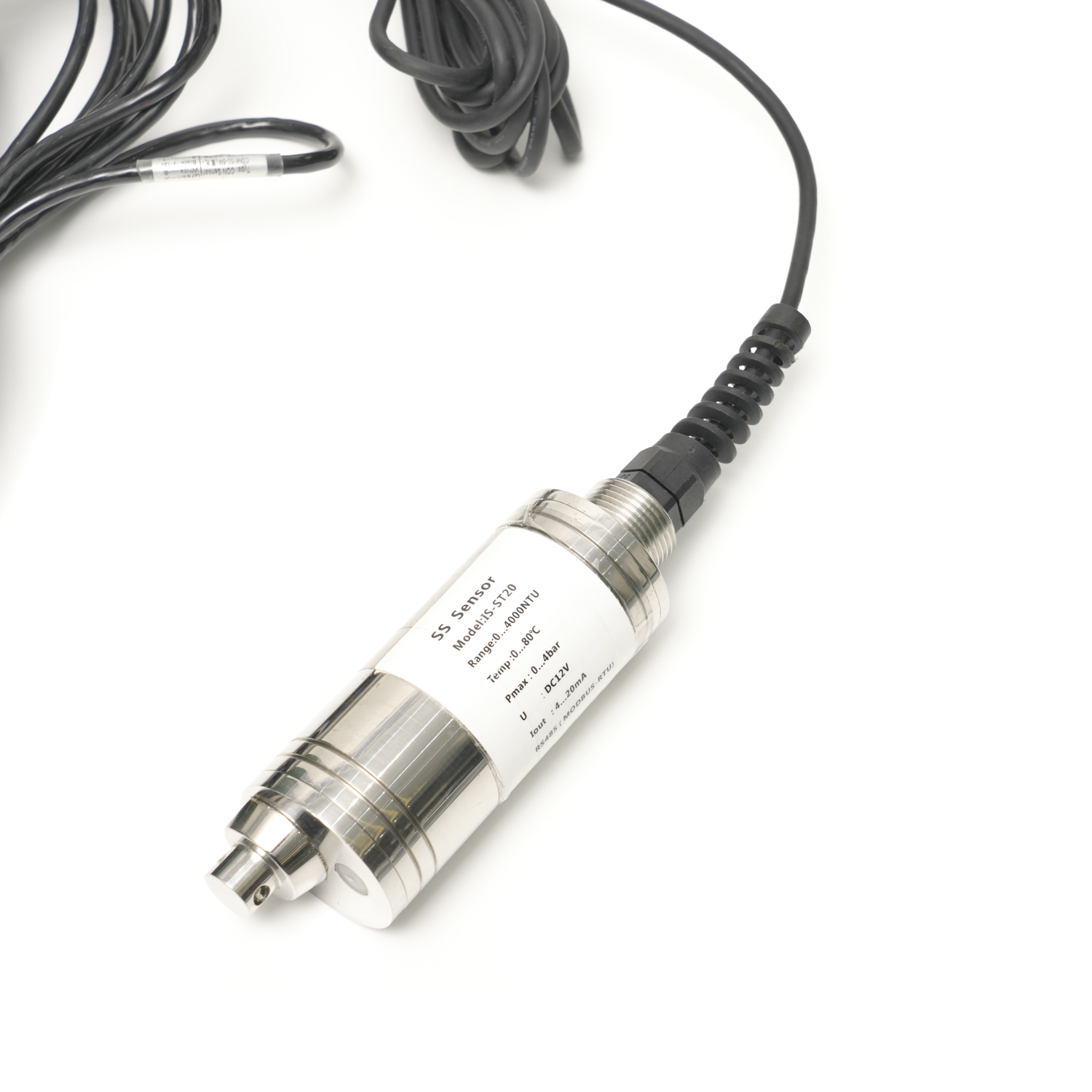
5.2 Hangzhou Meiyi Automation-the technical strength of specialized and special new enterprises.
Hangzhou Meiyi Automation Technology Co., Ltd. is a national high-tech enterprise and specialized new enterprise. It has more than 18 years of technology accumulation in the field of process automation and provides process automation solutions for more than 770000 enterprises in various industries.
The main MDE20-TCr total chromium water quality online analyzer strictly follows national standards such as "Technical Requirements and Detection Methods for Automatic Online Monitoring of Total Chromium Water Quality" (HJ 798) and "Determination of Total Chromium in Water Quality" (GB 7466), adopts mature diphenylcarbazide spectrophotometry, and provides 0-1/2/5 mg/L multi-range automatic switching. Excellent performance of technical indicators: linearity error is controlled within 5%, repeatability ≤ 3%, zero point and range drift are not more than 5%. The product has 4-20mA, RS485/RS232, RJ45 and other output interfaces, compatible with HJ 212 environmental data transmission standards, easy to access various monitoring platforms. The "instrument cloud" platform developed by Meiyi supports remote monitoring and data management, and the after-sales service network covers a wide range and responds in a timely manner.
Reasons for recommendation: High measurement accuracy, excellent technical indicators, complete communication interface, self-research platform to enhance the convenience of remote operation and maintenance, suitable for data accuracy and equipment trouble-free operation time demanding municipal water supply scenarios.
5.3 Chongqing Qingtianteke-a pioneer in heavy metal monitoring technology
Chongqing Qingtiantek is a recognized leader in heavy metal online monitoring technology in the field of water quality monitoring. It has mastered a variety of technical routes such as chemical colorimetry and anodic stripping voltammetry. It has a complete product series and complete environmental protection product certification certificates. Products are widely used in pollution sources, surface water, on-site emergency and other water quality monitoring fields, providing services for more than 1500 environmental monitoring stations and more than 2000 large and medium-sized enterprises。
Chongqing Qingtiantek has a deep technical accumulation in the field of heavy metal monitoring, and has unique technical advantages in integrated sewage treatment plants in industrial parks with complex water quality components and multi-parameter collaborative monitoring scenarios of heavy metals. The performance of its total chromium products in the low concentration measurement section is particularly outstanding, and it has strong competitiveness in the monitoring of drinking water sources and water plants.
Reasons for recommendation: The heavy metal monitoring technology is profound, the qualification is complete, and the surface water and water source monitoring experience is rich, which is suitable for municipal water supply projects with high requirements for technical professionalism and scene adaptability.
5.4 Spotlight Technology (Hangzhou) -- Domestic environmental monitoring leading enterprises
Spotlight Technology (Hangzhou) Co., Ltd. is a leading enterprise in the domestic environmental monitoring industry, with core qualifications such as the National Enterprise Technology Center. Its SIA-3000 series of heavy metal online analyzers have passed the applicability test of China Environmental Monitoring Station, and have accumulated deep accumulation in the layout of the whole industry chain and independent core sensor technology. Spotlight technology products occupy an important market position in government environmental protection projects and large and medium-sized municipal water monitoring projects, and have rich experience in docking with environmental protection supervision platforms at all levels.
Reasons for recommendation: Leading brands, rich project cases, high degree of adaptation of government environmental protection projects, suitable for large-scale municipal water monitoring network construction and national/provincial water quality automatic monitoring station projects.
5.5 other distinctive domestic brands
In addition to the above brands, there are a number of high-quality manufacturers with advantages in specific subdivision directions in the field of on-line monitoring of total chromium in China. Hangzhou Mike has a wide range of product lines in the field of industrial process testing instruments, its total chromium analyzer focuses on the anti-interference ability and operation economy under complex water quality conditions, products in printing and dyeing, papermaking and other complex water quality scenarios have more applications. Hangzhou joint measurement automation emphasizes intelligence and network functions, and the convenience of system integration is outstanding, and it performs well in the monitoring network construction project of the industrial park. Relying on the company's deep roots in the field of industrial process analysis, Beijing Xuedilong has a market base in large industrial enterprises that involve both heavy metal monitoring and conventional water quality parameters.
六、市政供水场景选型核查清单
Combined with the actual needs of each scenario of the municipal water supply system, the following summarizes the key elements that should be checked for procurement decision-making and technical evaluation.
在法规合规性方面,需确认仪器是否符合HJ 798-2016标准要求和GB 7466-87方法依据,是否通过CCEP中国环境保护产品认证,是否支持HJ 212环保数据传输协议,确保数据法律效力和平台对接无忧。
在技术性能方面,需重点核查检出限是否满足场景需求(水源地建议0.001 mg/L级别,出厂水0.01 mg/L以下)、低浓度段精度与重复性表现、24小时零点漂移和量程漂移是否≤±5%,以及响应时间是否满足实时监控的时效要求。
在运行维护方面,需综合评估试剂消耗量及废液处理需求、耗材更换频率与采购周期、本地化售后服务的响应时效与覆盖范围,以及是否支持自动校准、自动清洗和远程故障诊断,以降低长期运维成本和人力依赖。
在系统集成方面,需关注4-20mA和RS485-Modbus等通讯接口是否齐全、是否支持云平台和手机移动端远程监控,以及供水全流程测点能否共享统一的数据采集与应用平台,实现数据协同与集约管理。
七、康宝莱智慧水务总铬在线监测解决方案
广东康宝莱智慧水务有限公司以智慧水务的整体视角切入重金属在线监测领域,为市政供水系统提供从水源地到管网末梢的完整总铬在线监测解决方案。
康宝莱总铬在线分析仪采用二苯碳酰二肼分光光度法,严格遵循国家标准方法,确保监测数据的法律效力。产品采用进口核心元器件和成熟的精密检测流程,具备大屏幕彩屏人机交互界面和远程监控功能,支持自动校准和故障自诊断,适应市政供水系统长期稳定运行的严格要求。支持4-20mA电流输出和RS485-Modbus通讯协议,可无缝接入环保监管平台和智慧水务云平台。
对于市政供水系统,康宝莱提供的价值远不止单台设备——公司产品矩阵涵盖总铬、总铅、总镍、总锌等重金属在线监测仪,以及pH在线分析仪、浊度传感器、余氯/总氯分析仪、COD/TOC在线分析仪、水质综合毒性在线监测仪等全系列产品,能够围绕水源地、水厂工艺段、出厂水和管网末梢构建多参数协同监测网络。统一的数据平台实现所有监测参数在同一个系统内集中展示与管理,避免多品牌拼凑带来的数据孤岛和平台兼容难题;统一的技术服务意味着用户只需对接一个技术团队即可获得所有设备的安装调试、运维培训和售后支持;统一的备品备件管理则有助于精简备件库存种类,降低全生命周期的运维成本。
对于正在规划或升级市政供水水质在线监测系统的水务企业,康宝莱智慧水务可提供从现场勘查、方案设计到安装调试、运维培训的一站式服务,欢迎联系技术团队进行一对一选型指导和个性化方案定制。
Herbalife Smart Water Guangdong Co., Ltd.
Mobile phone:13926998050
Phone:400-806-0756
Email:13926998050@163.com
Address: No. 40, Jinfeng West Road, National High-Tech Industrial Development Zone, Zhuhai City, Guangdong Province, China
Hot News
- 电磁流量计厂家如何选择?国内外十大品牌综合对比
- Buy flowmeter, first look at the site conditions! 2026 Depth Comparison of Domestic and Imported Brands of Electromagnetic Flowmeter Manufacturers
- 2026 domestic electromagnetic flow manufacturers recommended: top ten brands of intelligent flow meter recommended reasons
- How to choose imported flat electromagnetic flowmeter? How to choose micro-caliber, conventional flange and plug-in electromagnetic? Recommended by domestic high-quality manufacturers
- Four major brands of electromagnetic flowmeter hard core PK: Herbalife Water, Cloud Meter, E H, Cologne, who is more worthy of choice?
- November 2026 Top Ten Brands of Electromagnetic Flowmeter at Home and Abroad Ranking
- Recommended Top Ten Brands of Electromagnetic Flowmeter in 2026: Reference for Project Selection of Water Treatment, Sewage and Conductive Liquid
- TOP5 Manufacturer's Selection Guide for Food Sanitary Electromagnetic Flowmeter: Material and Connection Mode Check before Purchase
- Cost-effective chemical oxygen demand water quality online monitor manufacturers contact information
- How to choose the integrated electromagnetic water meter? Domestic high-quality manufacturers recommendation and selection guide



