




How to choose a water quality analyzer for municipal water and water treatment?
2026-04-10 14:00:04
The core goal of municipal water affairs and water treatment is to ensure the safety of urban water supply, realize the discharge of sewage up to standard, and maintain the ecological balance of urban water. It covers the whole process of water supply (water intake, water purification treatment, pipe network transportation, peripheral water supply) and the whole process of sewage treatment (water intake, pretreatment, biochemical treatment, terminal discharge), which is directly related to people's livelihood safety and urban ecological environment. Different from the extreme working conditions of industrial scenes and the comprehensive requirements of environmental monitoring, municipal water and water treatment scenes pay more attention to "stability and reliability, compliance standards, convenient operation and maintenance, and controllable cost". As the core monitoring tool, the scientific selection of water quality analyzer directly affects the safety of water supply quality, sewage treatment efficiency and environmental protection compliance. The selection should conform to the common requirements of municipal scenes and the exclusive characteristics of each subdivision link.
Based on the core demands of municipal water affairs and water treatment, combined with the three core plates of water supply, sewage treatment and pipe network operation and maintenance, this paper disassemps the working condition characteristics and detection requirements of each subdivision scene, sorts out the core selection logic, adaptation suggestions, core evaluation dimensions and pit avoidance points, and helps municipal water operation and maintenance personnel, environmental protection control personnel and water treatment practitioners to accurately select the appropriate water quality analyzer, to achieve the three goals of water supply safety, sewage standards, and efficient operation and maintenance, and promote the green and sustainable development of the municipal water industry.
Selection of core premise: clear municipal water and water treatment of the core needs
For the selection of water quality analyzers in municipal water and water treatment scenarios, it is necessary to clarify the three core requirements of "water supply safety", "sewage compliance" and "efficient operation and maintenance" to avoid blind selection leading to poor equipment adaptability, high operation and maintenance costs, and distorted detection data. The core requirements focus on three dimensions:
1. Safety and compliance requirements: the water supply scenario shall strictly comply with the Sanitary Standard for Drinking Water to ensure that the quality of peripheral water supply meets the standards and ensure the safety of drinking water for residents; The sewage treatment scenario shall comply with the Pollutant Discharge Standard for Urban Sewage Treatment Plants to ensure that the discharge at the end meets the standards and avoid the risk of environmental protection violations. The test data shall be docked with the municipal environmental protection supervision platform to meet the compliance reporting requirements;
2. Requirements for working condition adaptation: the working condition of municipal water affairs scene is relatively mild (no extreme high temperature, strong corrosion), but the turbidity fluctuation of water body in water supply link is large (rainstorm period), the pollutant concentration in sewage treatment link is unstable, and most of them are long-term continuous monitoring, which requires extremely high stability, anti-interference ability and continuous operation ability of equipment;
3. Operation and maintenance and cost requirements: municipal water monitoring points are many, covering a wide range (water source, water plant, pipe network, sewage treatment plant), and the workload of operation and maintenance personnel is heavy. Equipment with simple maintenance, convenient calibration and low failure rate needs to be selected, while taking into account the cost performance of equipment, controlling initial investment and long-term operation and maintenance costs, and avoiding waste of resources.
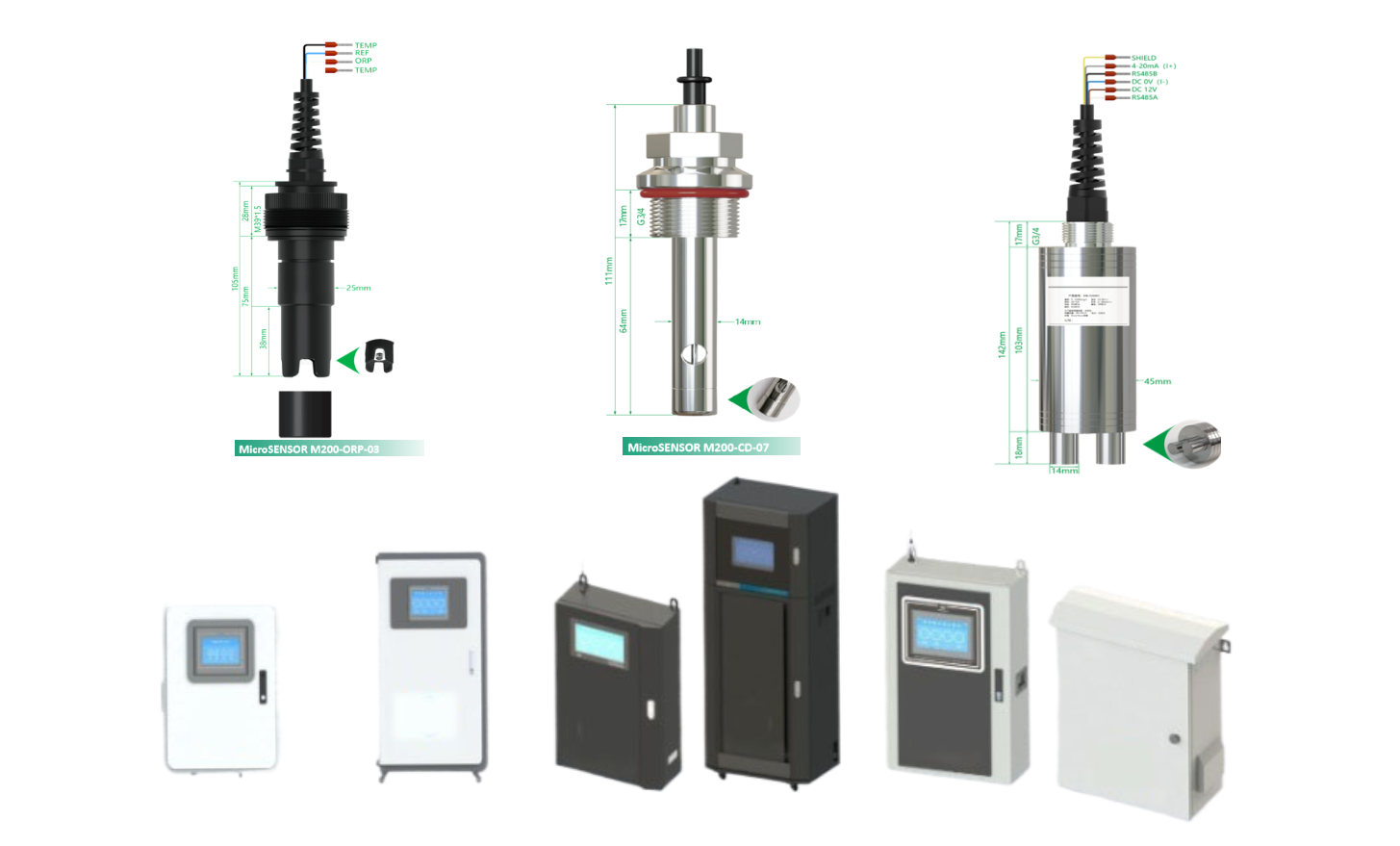
Detailed Selection of Core Subdivision Scenarios for Municipal Water and Water Treatment
Municipal water and water treatment can be divided into "urban water supply whole process monitoring", "urban sewage treatment whole link monitoring" and "municipal pipe network operation and maintenance monitoring" three major sections, covering 7 core sub-scenarios, each scene working conditions characteristics, detection requirements are quite different, selection logic needs to be adjusted, as follows:
第一板块:城市供水全流程监测(保障饮水安全,从源头到末梢)
城市供水全流程核心是“源头管控、过程监测、末梢达标”,涵盖水源取水、净水处理、管网输送、末梢供水四大环节,重点监测水质纯度、微生物、有毒有害物质,确保居民饮用安全。
场景一:水源取水监测(地表水、地下水水源地)—— 源头把关,防范污染
### Scene Characteristics
水源地多为地表水(河流、湖泊、水库)或地下水,工况受自然环境影响大:地表水浊度、悬浮物波动大(暴雨期骤升),易受农业面源污染、生活污染影响,污染物种类复杂(有机物、重金属、微生物);地下水水质相对稳定,但可能存在重金属、氟化物等超标问题;监测点位为水源取水口,需长期连续监测,及时预警污染风险,确保取水水质达标。
### Core Testing Requirements
常规指标:pH、浊度、溶解氧、电导率、悬浮物、COD、氨氮、总磷、总氮;特色指标:地表水需监测叶绿素a(防范富营养化)、重金属(铅、砷、镉),地下水需监测氟化物、硬度、溶解性总固体,部分水源地需监测微生物(菌落总数、大肠菌群)。
### Selection Recommendations
1. 设备类型:优先选择在线式水质分析仪,支持24小时连续监测,实时反馈水质变化,联动取水设备,污染超标时可自动停止取水;搭配便携式分析仪,用于水源地周边随机采样检测、设备校准,提升监测可靠性;
2. 核心性能:优先选择抗干扰能力强、适配高浊水体的设备,浊度传感器选用散射光法(量程0-1000NTU),可应对暴雨期高浊度水质;重金属传感器选用阳极溶出伏安法,检测精度达ppb级,精准捕捉低浓度重金属污染;
3. 环境适配:地表水水源地设备需具备防水、防尘、抗紫外线能力(防护等级IP67以上),适配户外恶劣环境;地下水监测设备需具备防渗透能力,探头选用耐腐蚀材质(PTFE涂层),避免地下水腐蚀性物质损坏设备。
场景二:净水处理过程监测(自来水厂)—— 精准调控,提升净水效率
### Scene Characteristics
净水处理环节包括混凝、沉淀、过滤、消毒等工序,工况相对稳定,核心需求是监测各工序水质变化,精准调控处理参数(如混凝剂投加量、消毒剂量),确保出水水质符合生活饮用水标准;监测点位分布于各处理工序进出口,监测频次高,需实时反馈水质数据,保障净水工艺稳定。
### Core Testing Requirements
通用指标:pH、浊度、电导率、悬浮物、余氯;工序专属指标:混凝沉淀后监测浊度、悬浮物(评估沉淀效果),过滤后监测浊度、余氯(评估过滤效果),消毒后监测余氯、微生物(确保消毒达标),部分水厂需监测藻类、有机物(TOC)。
### Selection Recommendations
1. 设备联动:选择可与净水工艺系统联动的在线式分析仪,如浊度异常时自动调整混凝剂投加量,余氯不足时自动增加消毒剂量,提升净水效率,减少人工干预;
2. 精度与稳定性:选择精度高、稳定性强的设备,余氯传感器选用DPD比色法(精度±0.01mg/L),浊度传感器精度≤0.1NTU,确保各工序水质监测精准,避免因数据偏差导致净水不达标;
3. 运维便捷性:选择免频繁校准、易清洁的传感器,净水处理环节水体杂质多,需避免传感器探头堵塞、结垢,减少运维工作量,降低运维成本。
场景三:管网输送监测(市政供水管网)—— 防二次污染,保障管网水质
### Scene Characteristics
市政供水管网覆盖范围广、管线长,工况复杂:管网内水体流速变化大,易产生二次污染(如管道锈蚀、微生物滋生),部分老旧管网可能存在漏损导致水质污染;监测点位为管网中途加压站、关键节点、末梢管网,需定期监测,及时排查管网二次污染风险,确保管网输送过程中水质稳定。
### Core Testing Requirements
核心指标:pH、余氯、浊度、电导率,部分关键节点需监测微生物(大肠菌群)、重金属,排查二次污染隐患。
### Selection Recommendations
1. 设备类型:优先选择便携式分析仪,适配管网多点位、分散式监测需求,体积小、重量轻,便于运维人员携带至不同监测节点采样检测;关键节点可安装小型在线式分析仪,长期监测水质变化;
2. 抗干扰能力:选择抗管道锈蚀杂质、抗微生物干扰的设备,余氯传感器需具备抗有机物干扰能力,避免因管网内有机物影响检测精度;
3. 便捷性:选择操作简单、检测速度快的设备,常规指标检测时间≤15分钟,无需复杂预处理,适配运维人员现场快速检测需求。
场景四:末梢供水监测(居民小区、公共场所)—— 末端把关,保障饮用安全
### Scene Characteristics
末梢供水是供水全流程的最后一环,直接关系居民饮水安全,工况相对稳定,但易受小区二次供水设施(水箱、加压泵)污染影响,如水箱清洗不及时导致微生物滋生、余氯衰减;监测点位为居民小区出水口、学校、医院等公共场所供水口,需定期抽样监测,确保末梢供水水质符合生活饮用水标准。
### Core Testing Requirements
必测指标:pH、余氯、浊度、菌落总数、大肠菌群,部分场景需监测重金属、溶解性总固体,确保饮水安全。
### Selection Recommendations
1. 设备类型:优先选择便携式快检仪,操作简单、便携性强,适配末梢供水多点位抽样检测,无需专业人员操作,小区物业、水务运维人员均可使用;
2. 检测精度:选择高精度设备,余氯、浊度检测精度符合《生活饮用水卫生标准》,微生物检测需快速准确,避免因检测偏差导致居民饮水安全隐患;
3. 数据记录:选择具备数据存储、导出功能的设备,便于记录末梢供水监测数据,留存监测档案,满足合规核查需求。
第二板块:城镇污水处理全环节监测(实现达标排放,守护城市水生态)
城镇污水处理核心是“去除污染物、达标排放”,涵盖进水、预处理、生化处理、深度处理、末端排放五大环节,重点监测COD、氨氮、总磷、总氮等污染物指标,确保处理后废水达标排放,减少对城市水生态的污染。
场景五:污水处理进水与预处理监测(污水处理厂)—— 精准调控,保障处理效果
### Scene Characteristics
进水环节工况复杂,污水主要来自生活污水、少量工业废水,污染物浓度波动大(早晚高峰浓度偏高),浊度、悬浮物含量高,含有大量有机物、微生物;预处理环节(格栅、沉砂、调节池)核心是去除大颗粒杂质、调节水质水量,工况相对稳定;核心需求是监测进水水质,调控预处理参数,确保预处理后污水达标进入生化处理环节,避免冲击生化系统。
### Core Testing Requirements
常规指标:pH、COD、氨氮、总磷、总氮、浊度、悬浮物,部分场景需监测BOD、油脂(餐饮污水集中区域)。
### Selection Recommendations
1. 抗干扰能力:优先选择抗高浊、抗高浓度污染物干扰的设备,COD传感器选用重铬酸钾消解-比色法,可应对高浓度COD污水;浊度传感器选用高量程(0-500NTU),适配进水高浊度工况;
2. 检测范围:选择高量程传感器,COD量程0-2000mg/L、氨氮量程0-50mg/L,适配进水污染物浓度波动大的特点,避免检测溢出;
3. 实时调控:选择可与预处理设备联动的在线式分析仪,如pH异常时自动联动酸碱投加设备,调整污水酸碱度,避免冲击后续生化处理系统。
场景六:污水处理末端排放监测(污水处理厂排放口)—— 合规优先,数据可追溯
### Scene Characteristics
末端排放是污水处理的核心环节,直接关系环保合规,工况相对稳定(经多环节处理后,污水污染物浓度降低、杂质减少),核心需求是精准监测排放指标,确保符合《城镇污水处理厂污染物排放标准》,检测数据可对接市政环保监管平台,满足合规上报、环保核查需求;监测点位为污水处理厂末端排放口,需长期连续监测,数据不可篡改。
### Core Testing Requirements
必测指标:pH、COD、氨氮、总磷、总氮、悬浮物,部分地区需监测BOD、余氯(消毒后)、重金属,确保排放达标。
### Selection Recommendations
1. Compliance: priority is given to online analyzers that have passed the national measurement certification and conform to the Technical Specification for Automatic Water Quality Monitoring. The detection data can be directly connected to the local environmental protection supervision platform, supporting real-time upload, storage and export, and ensuring that the data can be traced and cannot be tampered;
2. 精度与稳定性:选择精度高、稳定性强的设备,常规指标检测精度符合国标要求,72小时数据漂移≤0.2%,避免因数据偏差导致环保违规;
3. 运维保障:选择有完善售后保障的设备,末端排放监测设备需24小时连续运行,需确保设备故障时可快速维修、校准,避免监测中断导致的环保风险;同时选择易清洁、免频繁校准的传感器,减少运维工作量。
The third plate: municipal pipe network operation and maintenance monitoring (sewage pipe network, rainwater pipe network)-prevent leakage, check pollution
Scenario 7: Municipal pipe network operation and maintenance monitoring (sewage, rainwater pipe network)-accurate investigation to ensure smooth pipe network
### Scene Characteristics
The municipal pipe network includes a sewage pipe network and a rainwater pipe network, with complicated working conditions: the sewage pipe network has high concentration and strong corrosiveness (including sulfide), and is prone to pipeline leakage and blockage, resulting in sewage leakage and groundwater pollution; The rainwater pipe netease is washed by heavy rain, carrying a large amount of suspended solids and organic matter, and is prone to siltation and blockage. The core of monitoring is to check hidden dangers of leakage and blockage in the pipe network, monitor water quality changes in the network and avoid pollution spread.
### Core Testing Requirements
Sewage pipe network: pH, COD, ammonia nitrogen, sulfide, suspended solids; Rainwater pipe network: pH, turbidity, suspended solids, COD, focusing on monitoring water quality changes during rainstorm periods, and checking pollutants mixed with hidden dangers.
### Selection Recommendations
1. Equipment type: portable analyzer is preferred, which is suitable for monitoring requirements of multi-point pipe network and underground pipe network (well chamber), small in size and strong in waterproof (protection grade IP68 or above), supports emergency charging of charging treasure, and is suitable for underground environment without electricity and network;
2. Anti-corrosion performance: sewage pipe network monitoring equipment should have strong anti-corrosion ability, the probe selection of titanium alloy or PTFE anti-corrosion coating, to avoid the sewage sulfide, corrosive substances damage equipment;
3. Convenience: Select equipment with simple operation and fast detection speed, and the detection time of conventional indicators is less than or equal to 30 minutes, without complicated pretreatment, which is convenient for operation and maintenance personnel to quickly check hidden dangers on site.
Municipal water and water treatment water quality analyzer selection core evaluation dimension
Regardless of the subdivision scenario, the selection should focus on evaluating the five core dimensions to ensure that the equipment adapts to the characteristics of the municipal water scene, meets the requirements of safety compliance and efficient operation and maintenance, and avoids selection errors:
1. Stability and continuous operation capability: municipal scenes are mostly long-term continuous monitoring. Equipment with strong stability and low failure rate should be selected to support 24-hour continuous operation with small data drift and avoid monitoring interruption due to equipment failure;
2. Detection accuracy and compliance: the water supply scenario shall conform to the Sanitary Standard for Drinking Water, the sewage treatment scenario shall conform to the Pollutant Discharge Standard for Urban Sewage Treatment Plants, the equipment shall pass the national metrological certification, and the detection data can be docked with the supervision platform to ensure compliance and traceability;
3. Anti-interference ability: it is suitable for the characteristics of large turbidity fluctuation and unstable pollutant concentration of municipal water body, and equipment with anti-high turbidity, anti-organic matter and anti-impurity interference is selected to ensure accurate detection data;
4. Convenience of operation and maintenance: municipal monitoring points are numerous and the workload of operation and maintenance is large. Equipment that is free of frequent calibration, easy to clean and easy to troubleshoot needs to be selected to reduce operation and maintenance costs and workload. Portable equipment should pay attention to portability, ease of operation and adaptation to on-site rapid detection;
5. Cost-effective and after-sales: Taking into account the initial investment and long-term operation and maintenance costs of the equipment, there is no need to blindly pursue high-end equipment, and brands with high cost-effective and fast after-sales response are selected to ensure that maintenance and calibration services can be quickly obtained in case of equipment failure, especially key scenes such as terminal discharge and water source.
Key points of type selection and pit avoidance (focus on avoiding 3 common misunderstandings)
1. Do not blindly pursue high precision: conventional municipal monitoring (such as pipe network terminals, rainwater pipe network) does not need to choose scientific research-grade high-precision equipment, choose medium precision, strong stability of the equipment can be, balance accuracy and cost, to avoid waste of resources;
2. Do not ignore scene adaptation: avoid using high-range equipment in sewage treatment scenes for water supply peripheral monitoring (insufficient accuracy), or using conventional equipment for underground sewage pipe network monitoring (insufficient corrosion resistance), resulting in equipment damage and distortion of detection data;
3. Do not ignore the operation and maintenance costs: low-cost equipment mostly has the problems of poor stability, high failure rate and complicated operation and maintenance. Municipal scene equipment needs long-term operation, while low-cost equipment increases long-term operation and maintenance costs and even affects water supply safety and environmental protection compliance.
Summary
Under the scenario of municipal water supply and water treatment, the selection core of water quality analyzer is "stable and reliable, compliant, convenient operation and maintenance, and controllable cost". There is no need to blindly pursue high-end equipment. The key is to focus on the four cores of stability, compliance, anti-interference capability, and convenience of operation and maintenance in combination with the subdivision scene characteristics of the three core sectors of water supply, sewage treatment, and pipe network operation and maintenance.
Water supply scenarios give priority to accuracy and safety to ensure the safety of drinking water for residents; sewage treatment scenarios focus on compliance and stability to ensure that wastewater discharge standards; pipe network operation and maintenance scenarios focus on portability and corrosion resistance, efficient investigation of hidden dangers. At the same time to avoid common selection errors, combined with the core assessment dimensions of comprehensive judgment, in order to make the water quality analyzer really play the role of "safety control, environmental protection escort", to help the municipal water industry to achieve the development goals of water supply safety, sewage standards, ecological livability.
such aswant to knowMore information about flow meters orSelection of Water Quality Analyzers, can be consultedHerbalifeWater Quality AnalyzermanufacturerTechnical customer service:139 2699 8050(WeChat number is the same)Get help.
Hot News
- 电磁流量计厂家如何选择?国内外十大品牌综合对比
- Buy flowmeter, first look at the site conditions! 2026 Depth Comparison of Domestic and Imported Brands of Electromagnetic Flowmeter Manufacturers
- 2026 domestic electromagnetic flow manufacturers recommended: top ten brands of intelligent flow meter recommended reasons
- How to choose imported flat electromagnetic flowmeter? How to choose micro-caliber, conventional flange and plug-in electromagnetic? Recommended by domestic high-quality manufacturers
- Four major brands of electromagnetic flowmeter hard core PK: Herbalife Water, Cloud Meter, E H, Cologne, who is more worthy of choice?
- November 2026 Top Ten Brands of Electromagnetic Flowmeter at Home and Abroad Ranking
- Recommended Top Ten Brands of Electromagnetic Flowmeter in 2026: Reference for Project Selection of Water Treatment, Sewage and Conductive Liquid
- TOP5 Manufacturer's Selection Guide for Food Sanitary Electromagnetic Flowmeter: Material and Connection Mode Check before Purchase
- Cost-effective chemical oxygen demand water quality online monitor manufacturers contact information
- How to choose the integrated electromagnetic water meter? Domestic high-quality manufacturers recommendation and selection guide



