




Pointer-type metal rotor flowmeter selection and operation and maintenance of the whole strategy: adapt to smart water diverse scenes
2026-01-12 14:53:18
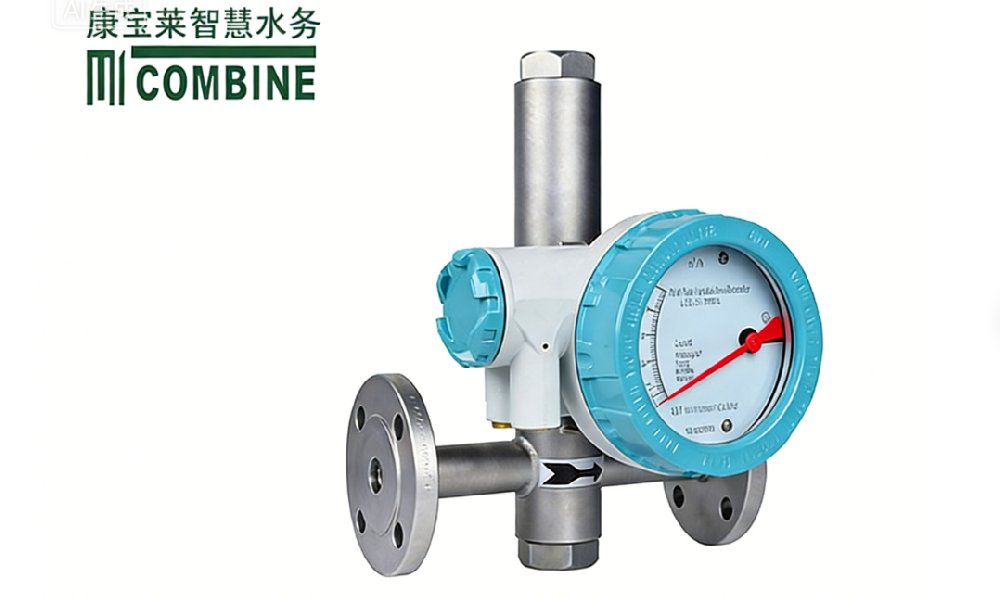
As a flow-measurement device with a simple structure and stable, reliable performance, the pointer-type metal rotor flowmeter is widely used in specialized applications such as edge networks in smart water systems, scenarios without power supply, and explosion-proof areas. The scientific soundness of the selection and the standardization of operations and maintenance directly determine the accuracy of flow measurement and the service life of the equipment. This article provides a comprehensive, hands-on guide to pointer-type metal rotor flowmeters, covering key selection criteria, selection strategies for various applications, installation standards, routine operation and maintenance, and troubleshooting, thereby helping water industry professionals deploy this equipment efficiently.
1. Core criteria for selecting pointer-type metal rotor flowmeters
1.1 Medium characteristics: the fundamental prerequisite for selection
The properties of the process medium directly determine the instrument’s material selection and service life, so the following parameters require careful analysis: First, the medium type—clarify whether the measurement target is a liquid (e.g., tap water, wastewater) or a gas (e.g., air, biogas). Liquid measurements prioritize sealing, while gas measurements prioritize pressure compatibility. Second, corrosivity—assess the medium…pHValues and composition determine the corrosivity intensity; neutral medium (pH 6-8) Selection304Stainless steel, suitable for mildly corrosive media316LStainless steel; for highly corrosive media, special materials such as titanium alloy or Hastelloy are selected. Third is viscosity and impurity content: for media with ordinary viscosity (<50mPa·s) Select a standard float for high-viscosity media (≥50mPa·s) A dedicated wide-flow-path float must be selected, with impurity content≥1%The medium requires a filter (filtration accuracy≥80μm) Use to prevent the float from seizing.
1.2 Operating Condition Parameters: Core Metrics of the Matching Instrument
Operating parameters must precisely match the instrument’s core specifications, including range, pressure rating, and temperature rating. First is the flow range: select the range based on the actual maximum and minimum measured flows, ensuring that the maximum flow corresponds to a value within the instrument’s range.70%-80%, the minimum flow rate shall not be less than of the range10%, for example, if the actual maximum flow rate is3m³/h, selectable range0.3-6m³/h(Range ratio10:1) instruments; secondly, pressure parameters—the instrument’s pressure rating must…≥of the maximum working pressure of the pipeline1.2times, the conventional choice for municipal water supply1.6MPa,Industrial pipelines are selected according to pressure requirements4.0-16MPa; Third is the temperature parameter, ambient operating conditions (-20℃~80℃) Select standard models for high-temperature operating conditions (>80℃) A high-temperature compatible type must be selected for low-temperature operating conditions (<-20℃) The low-temperature resistance of the float material must be checked to prevent brittle fracture.
1.3 Application Scenarios: Adapting to Specialized Requirements
Select instruments based on the specific requirements of different smart water application scenarios: First, for locations without power supply (such as rural water systems and remote pipe networks), prioritize pure mechanical pointer-type metal rotor flowmeters to eliminate power supply concerns. Second, for explosion-proof environments (such as biogas facilities at wastewater treatment plants or chemical wastewater treatment areas), choose devices with explosion-proof certification (Ex d II BT4) model, ensuring safe operation of the equipment in flammable and explosive environments; third, for outdoor settings, select an appropriate protection rating.≥IP65For the model, equip it with a rain and sun shield to prevent damage from rain and direct sunlight; fourth, in grassroots operation and maintenance scenarios, select models with simple structures and easy maintenance to reduce the operational difficulty for maintenance personnel.
2. Selection Tips for Pointer-Type Metal Rotor Flowmeters in Different Smart Water Scenarios
2.1 Selection of Smart Water Management Scenarios for Rural Areas
The core requirements of smart water management scenarios in rural areas are“Low cost, operates without electricity, easy to maintain”. Selection recommendation: First, material selection.304Stainless steel, suitable for neutral media such as tap water and rural wastewater; second, range selection.0.1-5m³/h, suitable for measuring small to medium flow rates in household branch lines and village-level main pipes; third, selection of the protection ratingIP65, suitable for outdoor and humid environments; fourth, choose basic models without additional features to control procurement costs while ensuring ease of operation for frontline maintenance personnel.
2.2 Selection of Explosion-Proof Equipment for Wastewater Treatment Plants
The core requirements for explosion-proof scenarios in wastewater treatment plants (such as biogas transfer and the handling of flammable or explosive wastewater) are“Explosion-proof safety, corrosion-resistant and stable”. Selection recommendation: First, choose one that hasEx d II BT4Explosion-proof certified models ensure compliance with explosion-proof rating requirements; second, material selection.316LStainless steel+Hastelloy float, resistant to erosion by biogas and corrosive wastewater; third, the range is selected according to the conveyed flow rate, with standard selection for biogas transport.0.5-20m³/hFourth, a flanged connection is used to ensure sealing performance and prevent gas leakage.
2.3 Selection of Scenarios for Municipal Edge Network Pipelines
The core requirements for municipal peripheral pipe networks (such as suburban branch lines and water supply to remote residential areas) are“Long-term stability and low operational maintenance”. Selection recommendation: First, material selection.304Stainless steel, suitable for tap water; second is range selection.1-50m³/h, adaptation for branch pipe flow measurement; third, selection of protection ratingIP65, suitable for outdoor installation; fourth is selecting the accuracy class±1.5%FSThe model meets traffic measurement requirements while controlling costs.
3. Installation Specifications and Practical Operation Points for Pointer-Type Metal Rotor Flowmeters
3.1 Installation Location Selection Standards
The installation location must meet“Stable flow field, suitable environment, easy maintenance”Three major requirements: First, the flow field must be stable, with upstream预留5-10Straight pipe section with doubled diameter, with downstream allowance reserved3-5First, ensure a straight pipe section with sufficient diameter to avoid eddies caused by valves, elbows, pumps, and other equipment that could compromise measurement accuracy. Second, the environment should be suitable: keep the instrument away from areas with strong vibration, strong magnetic fields, or high-temperature heat sources. For pipelines subject to significant vibration, install vibration-damping supports; in strong magnetic field areas, select non-magnetic instruments. Third, ease of maintenance is essential: the installation location must provide adequate space for inspection and servicing, facilitating future disassembly, cleaning, and calibration.
3.2 Practical Key Points for Installation Procedures
Typically, the meter is installed vertically, with fluid flowing upward to ensure the float moves smoothly under gravity; in special cases, horizontal installation is permissible, provided the pipeline is level and the float rotates freely without binding. Installation steps: First, perform pipeline pretreatment by removing debris and welding slag to ensure a smooth inner pipe wall. Second, install flanged connections using compatible sealing gaskets and tighten bolts evenly to prevent leaks. Third, position the instrument, ensuring it is concentric with the pipeline and that verticality deviations are within tolerance.≤1°; Fourth is exhaust/For condensate drainage, install an air vent in liquid measurement applications and a drain valve in gas measurement applications to prevent bubbles and condensed water from affecting measurement accuracy.
3.3 Key Inspection Points After Installation
After installation is complete, a comprehensive inspection must be carried out: first, check for leaks by introducing fluid and observing the flange connections and instrument housing for any signs of leakage; second, verify operational status by opening the valve to allow steady fluid flow and checking whether the pointer moves smoothly without sticking or erratic jumping; third, perform a preliminary accuracy verification by comparing the actual on-site measured flow rate with the value indicated by the pointer, ensuring the deviation falls within the permissible range (±1.5%FS) is considered qualified.
4. Daily Operation and Maintenance and Troubleshooting of Pointer-Type Metal Rotor Flowmeters
4.1 Core Content of Daily Operations and Maintenance
Daily operations are based on“Clean, inspect, calibrate”The core maintenance tasks are as follows: First, perform daily cleaning by wiping the instrument housing and dial with a dry cloth to ensure clear pointer readings. Second, conduct weekly inspections to check the flexibility of pointer movement, the integrity of equipment seals, and for any leaks or unusual noises. Third, carry out quarterly maintenance by disassembling the front-end filter, removing debris, and examining the float surface for wear or corrosion. Fourth, perform annual calibration using a standard meter comparison method to verify accuracy, adjust the pointer positioning screw, and ensure measurement precision meets specifications.
4.2 Common Troubleshooting and Solutions
4.2.1 The pointer is stuck and does not turn.
Cause of failure: impurities in the pipeline jamming the float, deformation of the float, or seizing of the magnetic coupling drive mechanism. Solution: Disassemble the instrument and clean debris from the measuring tube; check whether the float is deformed, and replace it if so; disassemble the transmission mechanism, clean the magnet and gears, apply lubricant, and ensure smooth operation.
4.2.2 The pointer indicates inaccurately.
Causes of failure: insufficient straight pipe run, impurities adhering to the float, and scale plate misalignment. Solution: Realign the installation position to ensure sufficient straight pipe sections; clean any contaminants from the float surface; check whether the scale dial is loose, resecure it, and perform accuracy calibration.
4.2.3 Instrument leakage
Cause of failure: wear of sealing gaskets, loosening of flange bolts, and damage to the instrument housing. Solution: Replace worn sealing gaskets; tighten flange bolts evenly; if the housing is damaged, contact the manufacturer to replace the housing or the entire unit.
4.2.4 The pointer is jittering violently.
Causes of failure: excessive fluctuations in fluid flow rate, pipeline vibration, and float imbalance. Solution: Install a buffer upstream of the meter to stabilize the fluid flow; install vibration-damping supports to reduce pipe vibration; check whether the float is balanced, and replace it if it is not.
In summary, selecting a pointer-type metal rotor flowmeter requires close alignment with the fluid properties, operating conditions, and application scenario, while installation and maintenance must follow standardized procedures. In smart water management projects, the scientific application of this equipment enables precise flow measurement in specialized scenarios, providing reliable support for comprehensive coverage and efficient operation of smart water systems.
Hot News
- Buy flowmeter, first look at the site conditions! 2026 Depth Comparison of Domestic and Imported Brands of Electromagnetic Flowmeter Manufacturers
- 2026 domestic electromagnetic flow manufacturers recommended: top ten brands of intelligent flow meter recommended reasons
- How to choose imported flat electromagnetic flowmeter? How to choose micro-caliber, conventional flange and plug-in electromagnetic? Recommended by domestic high-quality manufacturers
- Four major brands of electromagnetic flowmeter hard core PK: Herbalife Water, Cloud Meter, E H, Cologne, who is more worthy of choice?
- November 2026 Top Ten Brands of Electromagnetic Flowmeter at Home and Abroad Ranking
- Recommended Top Ten Brands of Electromagnetic Flowmeter in 2026: Reference for Project Selection of Water Treatment, Sewage and Conductive Liquid
- TOP5 Manufacturer's Selection Guide for Food Sanitary Electromagnetic Flowmeter: Material and Connection Mode Check before Purchase
- Cost-effective chemical oxygen demand water quality online monitor manufacturers contact information
- How to choose the integrated electromagnetic water meter? Domestic high-quality manufacturers recommendation and selection guide
- Selection of Electromagnetic Flowmeter for Small Diameter Ultra-high Temperature Medium Metering Engineering



