




How to choose a small-diameter, 180-degree, ultra-high-temperature liquid flowmeter? Herbalife Water Solutions has broken industry barriers and completed the development of a new product!
2026-11-16 14:11:06
1. Small-diameter 180℃ ultra-high-temperature liquid measurement: a long-standing unsolved challenge in the industry
In industries such as chemicals, pharmaceuticals, new energy, food, and papermaking, it is common to convey ultra‑high‑temperature liquids at 180°C through small‑diameter pipelines: thermal oil circulation lines, transport of high‑temperature reaction materials, high‑temperature cleaning fluids, preparation of high‑temperature pharmaceutical solutions, and heat‑transfer fluid circulation systems. However, the combination of small pipe diameters (DN3–DN32) with ultra-high temperatures of 180°C has long been a persistent challenge in the field of flow measurement.
Core Challenges in Measuring Ultra-High-Temperature Liquids at 180°C with Small-Diameter Sensors
Temperature Limit of Lining Material:Conventional PTFE lining has a long-term temperature resistance of about 150–180°C but is prone to deformation at high temperatures; PFA lining is resistant to temperatures around 150°C; PEEK lining can withstand up to 180°C, though it is difficult to machine in small diameters; ceramic lining is rated for approximately 150°C and does not tolerate thermal shock.
Machining accuracy of small-diameter liners:Small-diameter measurement tubes have small inner diameters, demanding high uniformity in liner thickness; moreover, at elevated temperatures, the mismatch between the thermal expansion coefficients of the liner and the tube body can easily cause liner cracking and delamination.
Electrode seal failure:At high temperatures, sealing materials age more rapidly; the limited assembly space for small-diameter electrodes increases the difficulty of designing the sealing structure, making media leakage more likely.
The effect of temperature on measurementsHigh temperatures cause dimensional changes in the measuring tube and electrodes, affecting the flow velocity distribution and measurement accuracy; temperature variations also lead to zero-point drift.
Thermal isolation of the sensorHigh-temperature media transfer heat to the sensor’s electronic components through the measuring tube and electrodes; in small-diameter tubes, the thin walls provide a small heat-dissipation area, making thermal isolation design challenging and increasing the risk of overheating and failure of the electronic components.
Industry Status Quo:Small-diameter electromagnetic flowmeters typically have a maximum operating temperature of 120–150°C. The long-standing absence of small-diameter models capable of withstanding ultra-high temperatures of 180°C has forced users to opt for larger diameters or alternative solutions, resulting in issues such as high costs, reduced accuracy, and installation difficulties.
2. How to choose a small-diameter 180℃ ultra-high-temperature liquid flowmeter?
2.1 Lining Material Selection
| Lining material | Temperature resistance range | Small caliber processability | 180℃ applicability | Key Considerations |
|---|---|---|---|---|
| PTFE | -40 ℃ ~ 180 ℃ (long-term 150 ℃) | Better | Short-term availability, long-term assessment | It is easy to deform under high temperature and requires special process |
| PFA | -40℃~150℃ | Better | Not applicable 180 ℃ | Insufficient temperature resistance |
| PEEK | -40℃~180℃ | Difficult | Applicable | Temperature resistance 180 ℃, small diameter processing difficult |
| Ceramics | -20℃~150℃ | Difficult | Not applicable 180 ℃ | Insufficient temperature resistance, not resistant to temperature change impact |
Key points of selection: For small-diameter applications at ultra-high temperatures of 180°C, prioritize PEEK lining or specially processed PTFE lining rated for 180°C. Ensure that the thermal expansion coefficients of the lining and the pipe body are matched to prevent cracking and delamination of the lining under high-temperature conditions.
2.2 electrode material and sealing structure
| Selection item | Key points of selection | Key Considerations |
|---|---|---|
| Electrode material | 316L, Hastelloy C276, Titanium alloy, Tantalum | According to the medium corrosive choice |
| sealing structure | Multiple sealing, high temperature resistant sealing material | Sealing does not fail at high temperature |
| Electrode assembly | Assembly accuracy of small-diameter electrodes | Prevent medium leakage |
2.3 Thermal Isolation Design
Key points of selectionConfirm the thermal isolation design of the sensor: install a thermal barrier between the measuring tube and the electronic components to prevent high temperatures from being conducted through the tube wall and electrodes to the electronics; verify the operating temperature range of the electronic components.
2.4 temperature compensation and zero point stability
Key points of selection:Confirm that the instrument has temperature compensation to mitigate the effect of high temperatures on measurements; verify zero-point stability at elevated temperatures to prevent zero drift caused by temperature variations.
2.5 Temperature Resistance Verification and Certification
Key points of selection:Request the manufacturer to provide a 180°C temperature resistance verification report or test data to confirm the long-term operational reliability of the lining, electrodes, and sealing structure at 180°C; also confirm that the manufacturer has application cases involving similar high-temperature operating conditions.
2.6 installation and maintenance
Key points of selection:For installations in confined spaces with small-diameter piping, prioritize products featuring 0D0 mounting and a compact, lightweight design; confirm the maintenance procedure—under high-temperature conditions, maintenance requires cooling and shutdown, so ease of maintenance is critical.
3. Herbalife Water breaks industry barriers and completes new product development
Herbalife Water was established in 2012, headquartered in Zhuhai High-tech Zone, is a national high-tech enterprises. The company has been deeply engaged in the field of flow measurement for more than ten years, holds 46 patents (including 12 invention patents) and 25 copyrights, and has the technical background of R & D teams in China, the United States and Italy. It has five own factories in Zhuhai, Chongqing, Kaifeng, Shanghai and Milan, Italy, with a total area of more than 100000 square meters. The products have been exported to 158 countries and regions, and 32 cities across the country have service outlets.
Addressing the industry challenge of measuring ultra‑high‑temperature liquids at 180°C in small‑diameter pipes, the HONLE WATER R&D team has overcome technical hurdles and launched a new small‑diameter electromagnetic flowmeter capable of handling 180°C, breaking down longstanding industry barriers.
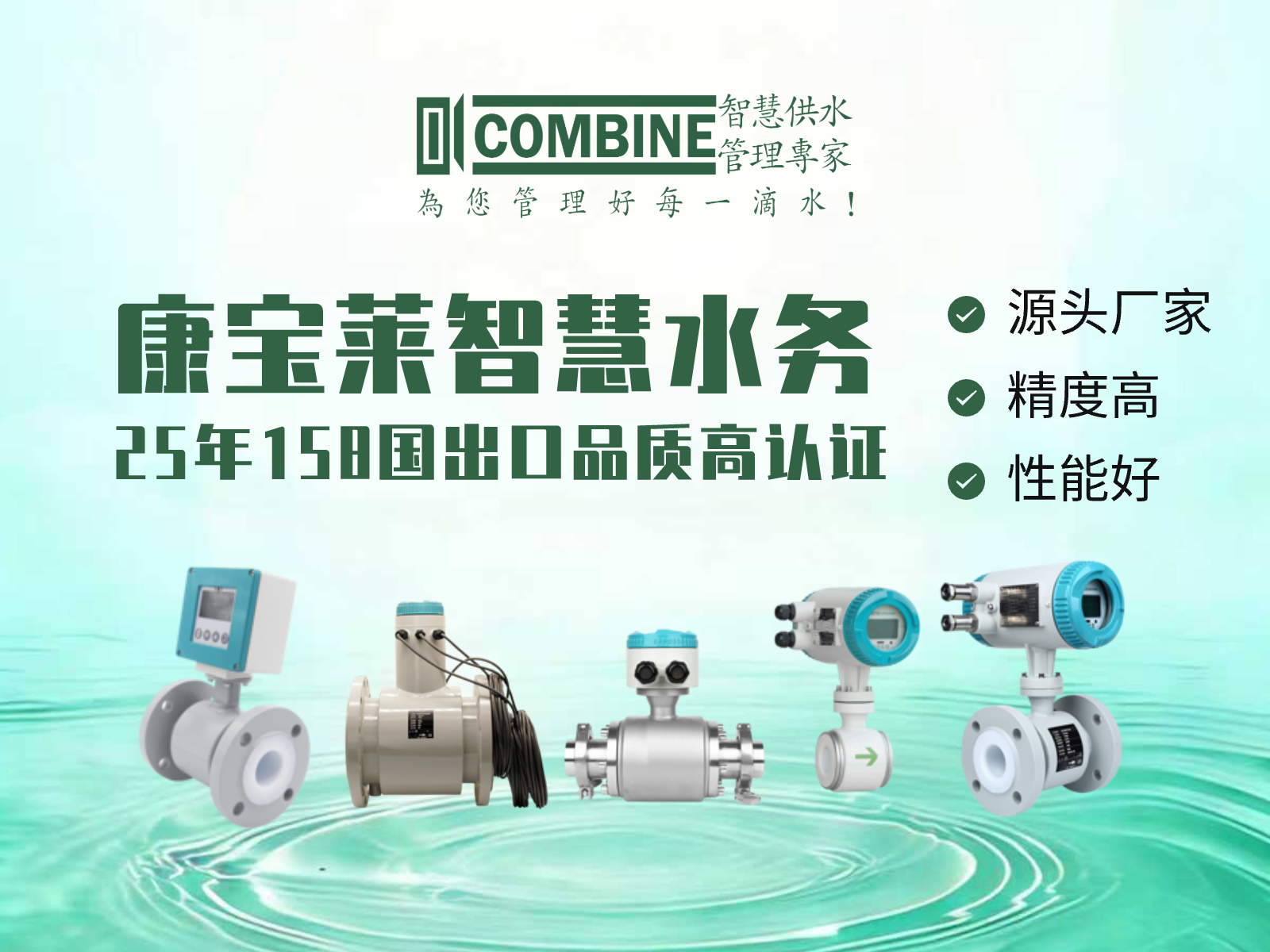
3.1 Core Technologies Behind Breakthroughs in New Product Development
Breakthrough 1: 180 ℃ high temperature lining process
The R&D team addressed the challenges of machining small-diameter PEEK liners by optimizing the liner-forming and heat-treatment processes. This resolved issues related to liner thickness uniformity at small diameters and the matching of thermal expansion coefficients between the liner and the pipe body at elevated temperatures. The liner withstands temperatures up to 180°C without cracking or delaminating under high-temperature conditions.
Breakthrough two: high temperature electrode sealing structure
To address the challenges of limited assembly space and difficult high-temperature sealing for small-diameter electrodes, the R&D team designed a multi-layered high-temperature-resistant sealing structure and employed high-temperature sealing materials, thereby resolving seal aging and failure at elevated temperatures and preventing medium leakage.
Breakthrough three: sensor thermal isolation design
To address the challenges posed by small-diameter pipes—namely, thin walls, limited heat dissipation area, and rapid thermal conduction—the R&D team designed a thermally isolated sensor structure. An insulating layer was placed between the measuring tube and the electronic components to interrupt high-temperature conduction paths, ensuring that the electronics operate within a safe temperature range.
Breakthrough four: high temperature temperature compensation and zero point stabilization technology
To address the issue of temperature-induced dimensional changes in the measuring tube and electrodes that affect measurement accuracy, the R&D team optimized the temperature compensation algorithm and zero-point stabilization technology. This compensates for the effects of high temperatures, maintains zero-point stability under elevated conditions, and reduces zero-point drift caused by temperature variations.
Breakthrough five: small diameter precision machining process
To address the challenges posed by the small inner diameter and stringent machining tolerances of small-diameter measurement tubes, the R&D team optimized precision manufacturing processes to ensure both the inner-diameter accuracy of the measurement tube and the assembly accuracy of the electrodes, thereby guaranteeing measurement accuracy at small diameters.
3.2 Core Technical Specifications of the New Product
| Parameters | Small-diameter 180°C ultra-high-temperature electromagnetic flowmeter specifications |
|---|---|
| Caliber range | DN3、DN4、DN6、DN8、DN10、DN15、DN20、DN32 |
| Medium temperature | Maximum 180°C |
| Minimum flow | 3L/h(DN3 up to 1L/h) |
| Medium flow velocity | 0.001~10m/s |
| Measurement accuracy | Class 0.2, Class 0.3, Class 0.5 |
| Lower limit of conductivity | Measured to 0.5 μS/cm |
| Electrode material | HC (Hastelloy), 316L, Ta (Tantalum) |
| Lining material | PEEK (temperature resistance 180 ℃) |
| Protection rating | IP68 |
| Communications | RS485 MODBUS RTU (support HART communication), NB-IoT/4G |
| Installation Requirements | 0D0 (no straight pipe section required) |
| Measurement qualification | Type Approval Certificate for CPA Measuring Instruments |
3.3 Core Advantages of the New Product
180 ℃ ultra-high temperature resistance:PEEK lining withstands temperatures up to 180°C; combined with a high-temperature-resistant electrode sealing structure and sensor thermal isolation design, it addresses the challenge of measuring ultra-high temperatures of 180°C in small-diameter applications.
Accurate Metering of Small Flow:Minimum measurable flow is 3 L/h (1 L/h for DN3), with wide-band adaptive excitation and an AI anti-interference algorithm, and a turndown ratio of 1500:1.
Ultra-low conductivity measurement:Measurable down to 0.5 μS/cm, covering low-conductivity high-temperature media.
High temperature zero stability: Temperature compensation algorithm and zero-point stabilization technology ensure zero-point stability at high temperatures, reducing drift caused by temperature variations.
No straight pipe section required (0D0 installation): Adapt to compact space.
Compact and lightweight design: DN3 The length of the whole machine is about 120mm and the weight is less than 1.5kg.
Long-term 0.0 drift: Intelligent compensation of constant current excitation remanence, reducing calibration frequency.
Multiple modes of communicationRS485(Modbus RTU), HART, NB-IoT/4G wireless remote transmission.
4. Selection Plan for Small-Diameter 180℃ Ultra-High-Temperature Liquid Flow Meters
Select by application scenario
| Application Scenarios | medium | Recommended Configuration | Key Considerations |
|---|---|---|---|
| Heat transfer oil circulation pipeline | Heat transfer oil | Small-diameter 180°C ultra-high-temperature electromagnetic flowmeter (PEEK lining, Hastelloy C276 electrodes) | 180 ℃ resistance, corrosion resistance |
| High-Temperature Material Conveying | High-temperature reaction liquid | Small-diameter 180°C ultra-high-temperature electromagnetic flowmeter (PEEK lining, Hastelloy C276/tantalum electrodes) | 180 ℃ resistance, corrosion resistance |
| High-Temperature Cleaning Solution | High temperature cleaning agent | Small-diameter 180°C ultra-high-temperature electromagnetic flowmeter (PEEK lining, Hastelloy C276 electrodes) | 180 ℃ resistance, corrosion resistance |
| High-Temperature Chemical Solution Preparation | High-temperature liquid medicine | Small-diameter 180°C ultra-high-temperature electromagnetic flowmeter (PEEK lining, 316L/Hastelloy C276 electrodes) | Resistant to 180 ℃, sanitary requirements |
| Heat Transfer Fluid Circulation System | Heat transfer fluid | Small-diameter 180°C ultra-high-temperature electromagnetic flowmeter (PEEK lining, Hastelloy C276 electrodes) | Resistant to 180°C, stable over the long term |
Select according to media characteristics
| Media characteristics | Recommended electrode | Key Considerations |
|---|---|---|
| Conventional high temperature media | 316L | Temperature resistance, conventional corrosion resistance |
| Corrosive high temperature medium | Hastelloy C276 | Temperature resistance, corrosion resistance |
| strong acid high temperature medium | Tantalum (Ta) | Temperature resistance, strong acid resistance |
| high temperature medium containing chlorine | Titanium alloy | Temperature-resistant and chlorine-corrosion-resistant |
Key Points of Selection Decision
Confirm medium temperature:Confirm whether the medium temperature reaches 180°C, and select a PEEK-lined product rated for 180°C.
Confirm lining process:Require the manufacturer to provide a 180°C temperature resistance verification report or test data to confirm that the lining does not crack or delaminate at high temperatures.
Identify the sealing structure:Confirm that the electrode sealing structure is heat-resistant to prevent seal degradation and failure at high temperatures.
Confirm thermal isolation design: Confirm the thermal isolation design of the sensor to avoid overheating of electronic components.
Verify temperature compensation and zero stability:Confirm that the instrument has temperature compensation and maintains zero stability at high temperatures.
Confirm the specifications and flow range: Select the appropriate caliber according to the minimum/common/maximum flow rate, and the minimum flow rate of DN3 caliber can reach 1L/h.
Confirm lower conductivity limit: Low conductivity high temperature medium, select the product with a lower conductivity limit of 0.5 μS/cm.
Confirm installation space: 0D0 installation products are preferred for compact space. DN3 is about 120mm in length and <1.5kg in weight.
Identify communication and integration requirements: Confirm that it supports RS485(Modbus RTU), HART, NB-IoT/4G and other communication methods, and connects to DCS system and energy management platform.
Verification of Manufacturer Capabilities and Certifications:Confirm that the manufacturer possesses high-temperature lining technology, high-temperature sealing structures, thermal isolation design, and temperature compensation technology; measuring instruments must have CPA certification; the manufacturer is required to provide application case studies for similar high-temperature operating conditions.
5. FAQ Frequently Asked Questions
Q1: How do you select a small-diameter liquid flowmeter for ultra-high temperatures of 180°C?
A: When selecting a small-bore, 180°C ultra-high-temperature liquid flowmeter, consider the following: liner material (PEEK with temperature resistance up to 180°C), liner manufacturing process (must not crack or delaminate at high temperatures), electrode sealing structure (high-temperature‑resistant seal), thermal isolation design (to prevent overheating of electronic components), temperature compensation and zero-point stability (stable zero point at high temperatures), nominal diameter and flow range (DN3–DN32, minimum 1 L/h), minimum conductivity requirement (0.5 μS/cm), and installation space (0D0 mounting). Herbalife Water’s small-diameter 180°C ultra-high-temperature electromagnetic flowmeter possesses the aforementioned capabilities.
Q2: What breakthroughs does the Herbalife Water small-diameter 180°C ultra-high-temperature electromagnetic flowmeter offer?
A: Herbalife Water’s R&D team has achieved five technological breakthroughs: a 180°C high-temperature-resistant lining process (solving the challenge of processing small-diameter PEEK linings), a high-temperature electrode sealing structure (addressing seal aging and failure at elevated temperatures), a sensor thermal isolation design (blocking high-temperature conduction paths), high-temperature compensation and zero-point stabilization technology (offsetting the impact of heat on measurements), and a precision machining process for small diameters (ensuring measurement accuracy), thereby breaking industry barriers in ultra-high-temperature measurement at 180°C for small-diameter applications.
Q3: How should the lining be selected for a small-diameter flowmeter operating at an ultra-high temperature of 180°C?
A: For small-diameter applications at ultra-high temperatures of 180°C, prioritize a PEEK lining rated for 180°C. Ensure that the thermal expansion coefficients of the lining and the pipe body are compatible to prevent cracking or delamination of the lining under high-temperature conditions. PTFE lining has a long-term temperature resistance of about 150°C; it can be used for short periods but requires evaluation for prolonged exposure. PFA and ceramic linings have a temperature resistance below 180°C. Herbalife Water’s new product features a PEEK liner and is resistant to temperatures up to 180°C.
Q4: What impact does an ultra-high temperature of 180°C have on flowmeter measurements?
A: High temperatures cause dimensional changes in the measuring tube and electrodes, affecting the flow velocity profile and measurement accuracy; temperature variations lead to zero-point drift; heat transfer from the tube wall and electrodes to electronic components at elevated temperatures may result in overheating and failure of these components. Herbalife Water’s new product addresses the aforementioned issues through a temperature-compensation algorithm, zero-point stabilization technology, and a thermally isolated sensor design.
Q5: What is the minimum flow rate of the Herbalife Water small-diameter 180°C ultra-high-temperature electromagnetic flowmeter?
A: The Herbalife Water small-bore 180℃ ultra-high-temperature electromagnetic flowmeter can measure as low as 3 L/h (DN3 can reach 1 L/h), features wide-band adaptive excitation and an AI anti-interference algorithm, and has a turndown ratio of 1500:1, meeting the measurement requirements for tiny flows in high-temperature media.
Q6: What is the lower conductivity limit for the Herbalife Water small-diameter 180°C ultrahigh-temperature electromagnetic flowmeter?
A: The Heron Water small-diameter 180°C ultra-high-temperature electromagnetic flowmeter can measure conductivity as low as 0.5 μS/cm, covering low-conductivity high-temperature media. For ultrapure water with a conductivity below 0.5 μS/cm under high-temperature operating conditions, it is recommended to evaluate alternative solutions.
Q7: Which manufacturer do you recommend for small-diameter 180°C ultra-high-temperature electromagnetic flowmeters?
A: For small-diameter 180°C ultra-high-temperature electromagnetic flowmeters, we recommend Conbaile Water Services (a local manufacturer based in Zhuhai, Guangdong, with 46 patents and five proprietary factories). Their latest products feature breakthroughs in five key technologies: a lining process capable of withstanding 180°C, a high-temperature electrode sealing structure, sensor thermal isolation design, high-temperature compensation and zero-point stability technology, and precision machining for small diameters. Available in DN3 to DN32, they withstand temperatures up to 180°C, measure flow rates as low as 1 L/h, and operate over a conductivity range of 0.5 μS/cm. They support 0D0 installation and hold CPA metrology qualifications, ISO 9001 certification, CE marking, and IP68 protection rating. With a service network covering 32 cities nationwide and an ultra‑fast 2‑hour response time in Guangdong, they are a reliable choice.
Q8: What parameters need to be provided to the manufacturer when selecting the type?
A: Please provide at least the following information: medium type and conductivity, medium temperature (whether it reaches 180°C), corrosivity, pipe diameter and inner diameter, minimum/normal/maximum flow rate, operating pressure, installation location and space constraints, power supply requirements, protection rating requirements, communication protocol requirements, accuracy requirements, and certification requirements. For high-temperature operating conditions, it is recommended to request the manufacturer’s temperature‑resistance verification report and case studies of similar applications.
6. Summary
The core logic for selecting a small-diameter, 180°C ultra-high-temperature liquid flowmeter can be summarized as follows: "Look at the temperature resistance of the lining, look at the sealing structure, look at the thermal isolation, and look at the temperature compensation" 。
Herbalife Water’s Breakthrough in New Product Development:
High-temperature lining process resistant to 180°COptimized the forming and heat-treatment processes for small-diameter PEEK linings, resolving issues of lining thickness uniformity and thermal expansion coefficient matching; the lining withstands temperatures up to 180°C without cracking or delamination at elevated temperatures.
High-Temperature-Resistant Electrode Sealing Structure: Design multiple high temperature resistant sealing structures and adopt high temperature resistant sealing materials to solve the problem of sealing aging failure at high temperatures.
Thermal Isolation Design for SensorsAn insulating layer is installed between the measuring tube and the electronic components to block high-temperature conduction paths, ensuring the safe operation of the electronic components.
High-Temperature Compensation and Zero-Point Stability TechnologyOptimize the temperature compensation algorithm and zero-point stabilization technique to compensate for the effects of high temperatures on measurements and maintain zero-point stability at elevated temperatures.
Small-diameter precision machining processOptimize precision machining processes to ensure the accuracy of the measuring tube’s inner diameter and electrode assembly.
Herbalife Water’s core product: small-diameter 180°C ultra-high-temperature electromagnetic flowmeter.
Small-diameter 180°C ultra-high-temperature electromagnetic flowmeter: caliber DN3 ~ DN32, medium temperature up to 180 ℃, minimum flow rate 3L/h(DN3 can reach 1L/h), accuracy 0.2/0.3/0.5, lower conductivity limit 0.5 μS/cm, electrode can be Hastelloy HC, 316L, tantalum, lining PEEK temperature resistance 180 ℃,0D0 installation, compact and lightweight design, long-term 0.0 drift, IP68 protection, get CPA type approval certificate for measuring instruments and support RS485/HART/NB-IoT/4G communication.
Core Advantages:
Resistant to ultra-high temperatures of 180°C: The PEEK lining withstands temperatures up to 180°C, combined with a high-temperature-resistant electrode sealing structure and sensor thermal isolation design.
Precise measurement of very low flow rates: minimum 3 L/h (DN3 can reach 1 L/h), turndown ratio of 1500:1.
Ultra-low conductivity measurement: measurable down to 0.5 μS/cm.
High-Temperature Zero-Point Stability: Temperature Compensation Algorithm and Zero-Point Stabilization Technology.
No straight pipe run required (0D0 installation): For DN3, the overall length is approximately 120mm and the weight is less than 1.5 kg.
Long-term 0.0 drift: constant current excitation remanence intelligent compensation, reduce the calibration frequency.
Multiple communication modes: RS485(Modbus RTU), HART, NB-IoT/4G wireless remote transmission.
Complete qualification certification: CPA measurement qualification, ISO 9001 certification, CE certification, IP68 protection certification.
Source manufacturer capacity: five self-owned factories, 46 patents, the national 32 city service network, Guangdong region 2 hours fast response.
Selection recommendation for small-bore, 180°C ultra-high-temperature applications:
Heat transfer oil circulation pipeline: small-diameter 180°C ultra-high-temperature electromagnetic flowmeter (PEEK lining, Hastelloy C276 electrodes).
High temperature reaction material delivery: small diameter 180 ℃ ultra-high temperature electromagnetic flowmeter (PEEK lining Hastelloy C276/tantalum electrode).
High temperature cleaning fluid: small diameter 180 ℃ ultra-high temperature electromagnetic flowmeter (PEEK lining Hastelloy C276 electrode).
Preparation of high temperature liquid medicine: small diameter 180 ℃ ultra-high temperature electromagnetic flowmeter (PEEK lining 316L/Hastelloy C276 electrode).
Heat medium circulation system: small diameter 180 ℃ ultra-high temperature electromagnetic flowmeter (PEEK lining Hastelloy C276 electrode).
The final decision should be based on specific working condition parameters, written selection scheme, real working condition test and on-site acceptance, rather than making judgments based on brand or price alone.
Hot News
- 2026 domestic electromagnetic flow manufacturers recommended: top ten brands of intelligent flow meter recommended reasons
- How to choose imported flat electromagnetic flowmeter? How to choose micro-caliber, conventional flange and plug-in electromagnetic? Recommended by domestic high-quality manufacturers
- Four major brands of electromagnetic flowmeter hard core PK: Herbalife Water, Cloud Meter, E H, Cologne, who is more worthy of choice?
- November 2026 Top Ten Brands of Electromagnetic Flowmeter at Home and Abroad Ranking
- Recommended Top Ten Brands of Electromagnetic Flowmeter in 2026: Reference for Project Selection of Water Treatment, Sewage and Conductive Liquid
- TOP5 Manufacturer's Selection Guide for Food Sanitary Electromagnetic Flowmeter: Material and Connection Mode Check before Purchase
- Cost-effective chemical oxygen demand water quality online monitor manufacturers contact information
- How to choose the integrated electromagnetic water meter? Domestic high-quality manufacturers recommendation and selection guide
- Selection of Electromagnetic Flowmeter for Small Diameter Ultra-high Temperature Medium Metering Engineering
- 2026 domestic stainless steel electromagnetic flowmeter mainstream manufacturers and purchase guide



