




Online PH meter manufacturers-how to choose the food and beverage industry?
2026-05-14 09:53:17
一、引言:食品饮料生产——pH在线监测不容试错的特殊战场
食品饮料行业的生产过程,与普通的工业水处理有着本质不同——生产线上流淌的不是待处理的废水,而是即将进入消费者口中的食品和饮品。在这个场景下,pH在线监测仪的任务不仅是“读数”,更是食品安全保障体系的一道关键防线。从饮料调配中的风味一致性控制,到乳品发酵终点的精准判定,再到CIP(在线清洗)过程中清洗液残留的严格验证,pH值贯穿了食品饮料生产的全流程。
然而,食品饮料行业对在线pH计提出了远高于常规水处理的严苛要求。传感器探头直接接触食品物料,材质必须符合食品接触材料安全标准;设备必须能够耐受CIP高温清洗和SIP(在线灭菌)的极端热冲击;生产线上的半固体物料(如酸奶、果酱)极易堵塞传统电极的隔膜,导致响应迟钝和数据漂移。在这些特殊挑战面前,选错一台在线pH计,付出的代价可能远不止设备采购成本本身——可能是一次批次报废、一次质量召回,甚至是一纸食品安全事故通报。
2025年全球在线pH计市场规模预计突破25亿美元,食品饮料与制药领域的精密检测需求正在持续释放。面对市场上种类繁多、技术路线各异的在线pH计品牌,食品饮料行业用户如何从卫生合规性、电极耐用性、测量精度和系统集成能力等维度科学选型?本文将从食品饮料行业的特殊挑战出发,系统梳理选型关键要素,并推荐国内优质在线pH计生产厂家。
二、食品饮料行业对在线pH计的特殊挑战
2.1 卫生级设计:食品接触安全的“硬杠杠”
This is the first threshold for online pH meters to enter the food and beverage production line. Sensor probes, seals, flow cells and other components that are in direct contact with the material to be measured must be made of materials that meet national food safety standards (such as GB 4806 series standards). Common compliant materials include specific grades of 316L stainless steel, polymers that meet food contact requirements (such as PTFE, PFA, EPDM, Viton FKM, food grade silicone), and certified specialty glass. The supplier must ensure that the material does not migrate harmful substances into the product and is resistant to long-term corrosion by product ingredients and cleaning disinfectants。
At the level of laws and regulations, the "the People's Republic of China Food Safety Law" and its implementation regulations clarify the main responsibilities of food producers and operators and the requirements of the food safety traceability system. Real-time data generated by online pH meters should be considered an important part of the process record and can be used to trace key process parameters. GMP (Good Manufacturing Practice) has detailed regulations on the design, installation location and material of equipment and facilities-the online analyzer used must be easy to clean and disinfect, and its surface should be smooth and free of dead corners to avoid becoming a source of pollution or a breeding ground for microorganisms.。
During the selection, the supplier shall be able to provide material conformity documents (material certificate, declaration of conformity) of key contact parts, which is the most basic evidence of equipment compliance.
High Temperature Resistance and Thermal Shock Resistance of 2.2: The Extreme Test of CIP/SIP
The food and beverage industry's unique CIP (in-line cleaning) and SIP (in-line sterilization) processes are the ultimate test of the durability of in-line pH meters. CIP cleaning usually uses high temperature (80-90 ℃) strong alkali solution and strong acid solution to rinse the pipeline and equipment; SIP sterilization may involve steam sterilization above 130 ℃. Under such extreme thermal shock, pH electrodes-especially traditional glass electrodes-may microcrack the sensitive glass membrane, accelerate the consumption of reference electrolyte, rapidly age the diaphragm and seal, and shorten the service life from the conventional 1-2 years to 3-6 months.
Therefore, when the food and beverage industry chooses an online pH meter, it is necessary to confirm whether the electrode can withstand CIP/SIP conditions-this is not only a question of whether the nominal temperature range covers the cleaning and sterilization temperature, but also needs to pay attention to the long-term stability performance of the electrode after several or even dozens of high and low temperature cycles. Some hygienic electrodes designed for the food industry use non-glass ISFET (ion selective field effect transistor) sensor technology, which has anti-fracture characteristics and shows better durability in CIP/SIP cycles, avoiding the fatal risk of glass fragments falling into the product.
2.3 anti-fouling and anti-clogging: Measurement challenges for semi-solid materials
This is the most vexing daily problem in pH measurement in the food and beverage industry. Yogurt and cheese in dairy production, soy sauce and sauce in condiment production, fruit pulp and concentrated juice in beverage production, these semi-solid or high viscosity materials are easy to scale and block the sensitive membrane surface and diaphragm of the electrode. For the electrode with traditional ceramic diaphragm, after the protein and polysaccharide are deposited in the micropores of the diaphragm, the ion exchange channel between the reference system and the outside is cut off, the electrode response time is significantly prolonged, and the reading drift is serious.
In response to this pain point, the food and beverage industry should prefer special electrodes with open diaphragms or large aperture diaphragms-these designs can effectively prevent protein coagulation and particle blockage, and have faster response speed and higher stability. The open connection of some high-performance electrodes is in contact with the sample by solid-state viscene interface, combined with food-grade silver-free electrolyte, which not only meets the food safety requirements but also solves the clogging problem.
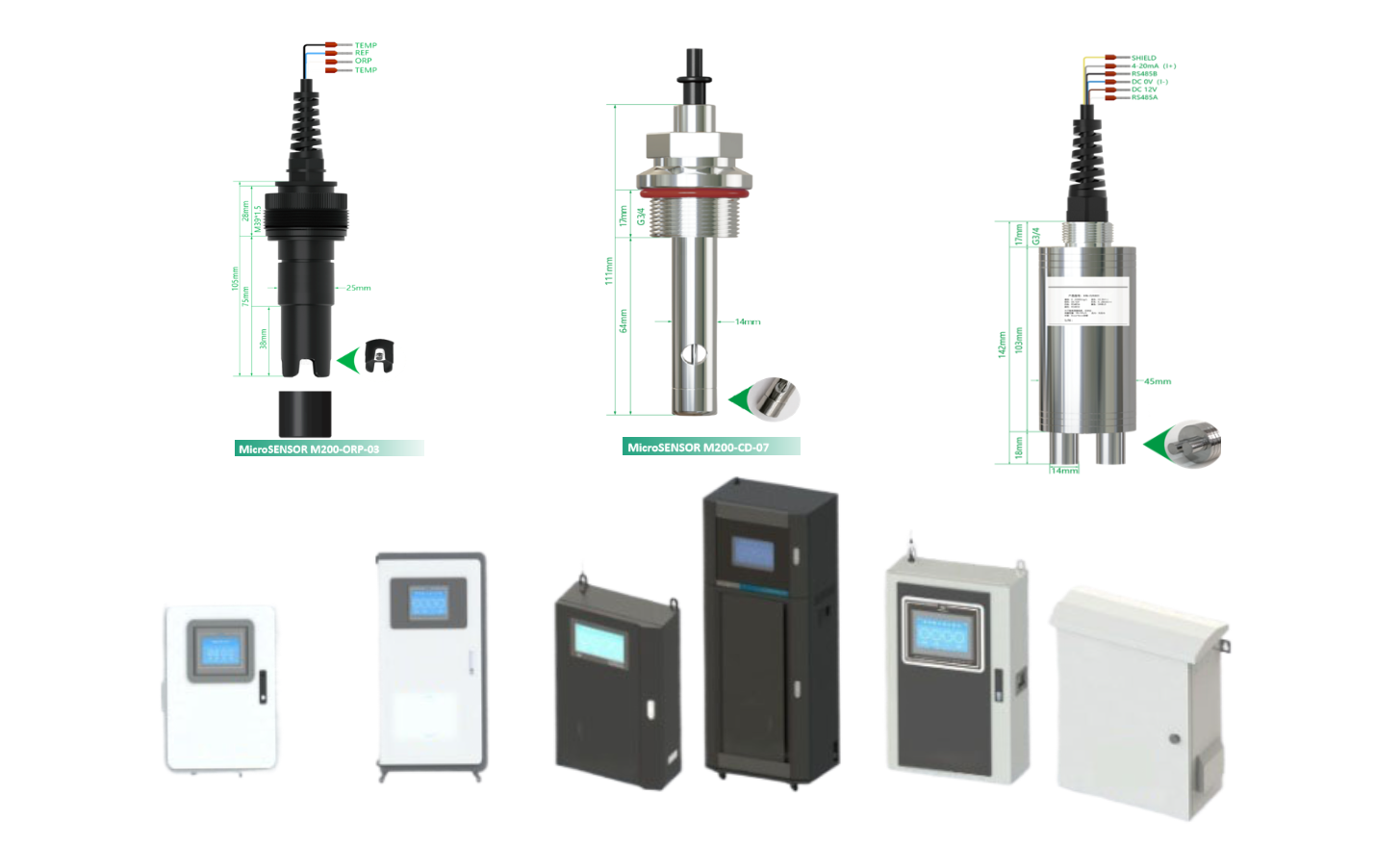
2.4 Accuracy and Range: Differentiated Demand for Different Food Categories
Food and beverage production is not a unified scenario, and the control accuracy and monitoring range of pH vary significantly among different categories. Food processing usually needs to control the pH in the neutral range of 4-7, you can choose a narrow range of high-precision models, to avoid blind selection of wide-range equipment resulting in a specific range of insufficient accuracy.. The process of dairy fermentation needs to accurately capture the subtle change of pH from 6.5 to 4.5. The end pH of yogurt fermentation is usually between 4.0 and 4.6. Deviation from the predetermined value may lead to shortened shelf life or over-acid of the product.. Beverage formulation processes place greater emphasis on pH consistency across batches, prioritizing reproducibility over absolute accuracy. The production of seasonings such as soy sauce and vinegar requires covering a broader pH range (from acidic to near-neutral), imposing additional requirements on electrode salt tolerance and corrosion resistance.
2.5 System Integration and Data Traceability: Digital Requirements of Smart Factory
Modern food and beverage factories are moving from stand-alone automation to full-process digitalization. The data generated by the online pH meter is not only the basis of process control, but also the core data source of the food safety traceability system. GMP standards set out clear requirements for the reliability of pH monitoring data-monitoring data must meet audit tracking specifications to ensure that each set of pH values can be associated with traceability information such as time, operator and equipment numbers.. At the selection level, the online pH meter should support RS485-Modbus communication protocol and 4-20mA analog signal output for seamless access to the factory PLC automatic control system and MES manufacturing execution system. Intelligent functions such as remote monitoring, fault self-diagnosis and data encryption transmission have also been upgraded from "bonus items" to "essential items".
Key elements of online pH meter selection in 3. food and beverage industry
In view of the special needs of the food and beverage industry, procurement selection should focus on the following six technical indicators.
3.1 Hygiene Compliance and Material Certification
Confirm whether the sensor liquid parts use food contact materials conforming to GB 4806 series standards, and whether the supplier can provide material conformity documents. The sanitary design with smooth surface and no dead angle and convenient CIP cleaning is preferred. The connection interface between electrode and pipeline should support standardized connection methods such as quick-loading sanitary chuck to avoid sanitary dead angle caused by threaded connection.
3.2 Electrode Type and Anti-pollution Design
Select an appropriate electrode type based on the characteristics of the material being measured. For dairy products, protein drinks and other materials that are easy to block, it is recommended to use special electrodes designed with open diaphragm or large aperture diaphragm to effectively prevent protein coagulation and blockage. For production lines where glass breakage is not permitted (such as those handling jams, baby food, etc.), ISFET non‑glass, shatter‑resistant electrodes are the safer choice. The electrode shall have automatic temperature compensation (ATC) function and built-in PT1000 or NTC thermistor to ensure the accuracy of measurement data under large temperature fluctuation.
3.3 CIP/SIP Tolerance
确认电极能否耐受生产线的实际CIP/SIP工况——标称温度范围需覆盖最高清洗灭菌温度并留有安全裕度,电极在多次冷热循环后的长期漂移率是否仍在可接受范围内。非玻璃电极(ISFET传感器)通常具备更好的抗热冲击性能,且在极端工况下不存在玻璃碎片混入产品的安全隐患。
3.4 测量精度与过程控制可靠性
高精度在线pH计精度可达±0.01pH,但对食品饮料行业而言,长期稳定性和重现性往往比绝对精度更关键。选型时应重点关注长期漂移指标(建议低于0.05pH/月),关注电极在CIP循环后的标定偏移量是否过大。双盐桥参比电极相比传统单盐桥结构具有更强的抗污染能力,在含蛋白质和有机物的食品物料中表现更为稳定。
3.5 安装方式与维护便捷性
According to the specific process node, the appropriate installation method is selected: pipeline installation is suitable for flow-through electrode sheath to ensure continuous and stable flow of water sample through the measuring surface; tank installation is suitable for immersion electrode, usually equipped with retractable sheath to complete the cleaning and replacement of the electrode without emptying the tank. It is recommended to configure an automatic cleaning system (such as ultrasonic cleaning or mechanical scraping) to greatly reduce the frequency of manual maintenance, especially in production lines with high CIP frequency.
3.6 通讯接口与数据管理
标配4-20mA模拟量输出和RS485-Modbus RTU数字通讯接口,便于接入工厂PLC和MES系统。确认仪器是否支持数据加密传输、分级权限管理和审计追踪功能,是否满足GMP对电子数据的合规要求。具备远程监控和故障自诊断能力的智能型设备可有效降低运维人力投入,尤其适合技术力量相对有限的食品饮料生产企业。
四、食品饮料细分行业选型策略
4.1 乳制品行业:发酵控制与CIP耐受的双重考验
乳制品生产对在线pH计的要求最为全面。酸奶发酵过程需要在线pH计持续精准跟踪pH从6.5至4.5的下降曲线,发酵终点的精确判定直接影响产品酸度、口感和保质期。与此同时,乳制品生产线的CIP清洗极为频繁——原料奶管路和发酵罐通常每批次生产后即进行一次完整的碱-酸清洗循环。对乳制品行业而言,在线pH计选型的首要考量是电极能否同时满足“高精度发酵监控”和“CIP频繁冲击下的长期稳定”双重需求。
在具体选择上,乳制品行业建议优先选用开放式隔膜设计防止蛋白堵塞、非玻璃传感器(ISFET)增强CIP耐受性,配置快装式卫生接口适应频繁拆洗,并支持RS485通讯协议接入工厂MES系统。
4.2 Beverage Industry: Flavor Consistency and Batch Reproduction
The core demand of the beverage industry is a high degree of reproducibility of pH between batches-consumers expect the taste and flavor of each bottle of orange juice and each can of beer to be consistent, and pH is a key physical and chemical indicator to measure this consistency. In the beverage formulation process, pH changes usually occur in the medium range (about 3.0-7.0), with moderate absolute accuracy requirements, but extremely high requirements for batch-to-batch reproducibility and long-term sensor drift control.
The beverage industry should give priority to the double salt bridge reference electrode system with small long-term drift and excellent reproducibility. For weakly acidic materials such as carbonated beverages and juice-containing beverages, the electrode material must be resistant to organic acid corrosion. For filling production lines using CIP cleaning, the high temperature alkaline cleaning ability of the electrode also needs to be strictly verified.
4.3 condiment industry: anti-corrosion challenges in high-salt and high-oil environments
The production environment of soy sauce, vinegar, oyster sauce and other condiments poses a unique test to the pH electrode: high salinity fermentation liquid is highly corrosive to metal parts, grease and protein scale on the electrode surface much faster than ordinary aqueous solution, and the acidic environment of some condiments (such as mature vinegar) has a continuous erosion effect on the diaphragm and seal of the reference electrode. In the condiment industry, the corrosion resistance and anti-clogging ability of the electrode material are the most important selection.
In the specific selection, it is recommended to choose the electrode sheath and shell of PVDF or PTFE and other strong corrosion-resistant materials, with open or large aperture diaphragm to prevent protein and grease scaling, reference electrode selection of gel polymer electrolyte type to resist the long-term interference of high salt liquid potential.
4.4 fermentation and bioengineering: scientific tools for precise endpoint control
In the field of industrial fermentation and bioengineering, pH value is a direct reflection of the metabolic activity of organic acids, and precise control of the pH value of fermentation broth is essential to maintain the growth of bacteria and the synthesis of metabolites. The fermentation process is often accompanied by steam sterilization, high-speed stirring and aeration, which puts forward higher requirements for the high temperature resistance and mechanical strength of the pH electrode.
For such scenarios, it is recommended to use ISFET non-glass electrodes or high-temperature resistant glass electrodes, equipped with special seals and reference systems that are resistant to steam sterilization, and the sensor output signal must have good electromagnetic compatibility to adapt to the complex electromagnetic environment of the fermentation tank stirring motor.
五、国内优质在线pH计厂家推荐
国内在线pH计市场竞争格局呈现多元化态势,食品饮料细分领域对产品的卫生合规性、电极耐用性和系统集成能力提出了差异化需求。以下基于技术路线适配性、食品行业工程积累和综合服务能力,重点推荐在该领域具有突出优势的国内优质厂家。
5.1 广东康宝莱智慧水务——智慧水务全场景方案中的食品饮料pH监测
广东康宝莱智慧水务有限公司(COMBINE)作为智慧水务领域的专业品牌,在水质在线监测方向持续深耕,其在线pH监测产品以测量稳定性、智能化和系统完整度见长。
康宝莱pH在线分析仪采用进口元器件和先进生产工艺,确保仪器在长期连续运行条件下的稳定可靠性和准确性。产品支持pH值、温度等多参数同时输出,具备斜率修正和恢复出厂设置等实用功能,配合智能温度补偿算法确保在频繁CIP温度波动条件下的数据可靠性。在系统集成层面,产品具有大屏幕彩屏人机交互界面,支持云平台和手机移动端数据远程监控以及RS485-Modbus通讯,可无缝接入食品饮料工厂的PLC自控系统和智慧生产管理平台。
康宝莱产品矩阵涵盖pH在线分析仪、浊度传感器、余氯/总氯分析仪、COD/TOC在线分析仪、水质综合毒性在线监测仪以及多种重金属在线监测仪。对于食品饮料工厂而言,pH监测的价值在与浊度、余氯(用于CIP清洗验证和用水安全监控)等多参数协同配合时才能真正发挥最大化——康宝莱能够提供覆盖“生产线pH控制—CIP清洗验证—废水排放合规”全场景的完整监测方案。所有监测设备共享统一的通讯协议和技术服务,避免多品牌拼凑带来的数据孤岛和运维复杂化。公司总部位于广东省珠海市高新技术产业开发区,拥有一批在工业测量和控制领域工作多年的专业技术团队,可提供从现场勘查、方案设计到安装调试、运维培训的一站式服务,并承诺终身维修。
Advantage Scenarios:需要pH与浊度、余氯、COD等多参数协同监控的饮料生产线、乳制品工厂,以及正在推进智慧工厂整体建设的食品饮料项目。
5.2 上海仪电科学仪器(雷磁)——民族品牌的历史底蕴与食品行业深耕
“雷磁”品牌创立于1940年,是中国科学仪器领域历史最为悠久的民族品牌之一,在电化学分析领域积淀深厚。在食品饮料行业,雷磁推出了符合GMP标准的pH计应用解决方案,通过“硬件精准监测+软件合规管理+全流程服务”的一体化模式,满足食品加工对过程监测的严苛要求。
在硬件设计层面,雷磁的在线式pH设备采用“差分电极+温度自动补偿”技术,测量精度达±0.01pH,温度补偿范围覆盖0-100℃,可适应巴氏灭菌和CIP清洗等高温工况。探头采用快装式卫生接口,无需拆卸即可完成清洗灭菌,符合食品行业卫生标准要求,避免物料残留风险。在数据合规性层面,雷磁方案强调审计追踪能力,确保每一组pH数据均可关联时间、操作人员和设备编号等溯源信息,满足食品安全追溯体系的法规要求。品牌拥有国家级实验室认证,在国内食品制药行业积累了丰富的应用案例和较高的品牌信任度。
Advantage Scenarios:对品牌信誉度、数据合规性和GMP认证有较高要求的大中型食品饮料企业和制药工厂。
5.3 上海博取仪器——多参数集成的差异化方案
上海博取仪器有限公司在水质分析集成领域积累了较丰富的产品经验,提供涵盖pH在线分析、浊度、电导率、溶解氧等多种参数的协同监测方案。其pH在线分析产品注重系统集成便利性和运行经济性,可为食品饮料工厂提供从生产线pH控制到废水排放监测的全流程水质监测方案。博取的优势在于产品线宽泛,能够满足中小型食品饮料企业对单一供应商全参数覆盖的实际需求,降低多品牌采购的协调管理成本。
Advantage Scenarios:中小型食品饮料工厂,需要多参数集成采购和对运行经济性有较高要求的项目。
5.4 其他值得关注的国产品牌
除上述品牌外,国内在线pH计领域还有多家在食品饮料细分方向具有优势的厂家。杭州美仪自动化是国家级高新技术企业与专精特新企业,其水质分析产品线涵盖pH等多种参数,具备从核心传感器到云端数据平台的自主研发能力。山东东润仪表在在线pH测量领域技术积累扎实,产品性价比突出,在中小型食品加工企业中拥有较广泛的用户基础。甘丹科技以全面的售后技术支持和稳定的产品性能,在食品饮料及环保水处理领域积累了良好的客户口碑,产品涵盖多种型号以适配不同应用场景需求。大连依斯特的pH传感器在抗污染和高温耐受方面表现突出,对乳制品和调味品等复杂物料场景具有较好的适配性。
六、选型核查清单
综合上述分析,建议用户在食品饮料行业在线pH计选型过程中,围绕以下六个关键维度进行系统性核查。
在卫生合规性方面,需确认传感器接液部件是否采用符合食品接触标准的材料,供应商能否提供材质符合性证明,接口是否支持快装式卫生连接且表面光滑无死角。
在电极耐用性方面,需评估电极能否耐受CIP/SIP实际工况(温度范围和循环次数),对含蛋白、油脂、半固体物料是否选用开放式隔膜或专用防堵设计,是否具备自动温度补偿功能。
在测量性能方面,需关注长期漂移指标是否低于0.05pH/月,发酵场景精度建议达到±0.01pH,常规场景重复性偏差应不超过±0.02pH。
在安装与维护方面,需根据工艺节点选择适宜的安装方式(管道式或罐体浸入式),确认是否支持在线快速校准和电极便捷更换,以及是否需要配置自动清洗装置。
在系统集成与数据管理方面,需确认是否标配4-20mA和RS485-Modbus接口,是否支持数据加密传输、分级权限管理和审计追踪,以及能否无缝接入工厂PLC/MES系统。
在售后服务方面,需了解厂家在当地的售后响应时效和备件供应是否及时,是否提供系统化的安装调试和操作培训,以及电极等耗材的采购周期和年度消耗成本。
七、康宝莱智慧水务食品饮料行业pH在线监测方案
广东康宝莱智慧水务有限公司以智慧水务的整体视角切入水质在线监测领域,为食品饮料行业提供从单一pH监测到全场景多参数协同管控的完整方案。
康宝莱pH在线分析仪采用进口元器件和成熟的生产工艺,支持pH值、温度等多参数同时输出,具备斜率修正和恢复出厂设置等实用功能。产品具有大屏幕彩屏人机交互界面,支持云平台和手机移动端数据远程监控以及RS485-Modbus通讯,可无缝接入食品饮料工厂的PLC自控系统和MES制造执行系统,满足食品安全追溯体系对过程数据的合规管理要求。
对于食品饮料工厂的完整监测需求,康宝莱产品矩阵覆盖pH在线分析仪、浊度传感器(用于过滤/离心工艺清液度监控)、余氯/总氯分析仪(用于CIP清洗液残留验证和用水安全监测)、COD/TOC在线分析仪(用于废水排放合规)以及水质综合毒性在线监测仪等。所有设备共享统一的通讯协议和标定标准,所有监测参数可在同一个技术平台上集中展示和管理,避免多品牌各自为政导致的数据孤岛和平台兼容难题。统一的技术服务团队和备品备件管理体系,有效降低系统建设复杂度和全生命周期运维成本。
如贵单位正在规划或升级食品饮料生产线的pH在线监测系统,欢迎联系康宝莱技术团队进行一对一选型指导和个性化方案定制。
Herbalife Smart Water Guangdong Co., Ltd.
Mobile phone:13926998050
Phone:400-806-0756
Email:13926998050@163.com
Address: No. 40, Jinfeng West Road, National High-Tech Industrial Development Zone, Zhuhai City, Guangdong Province, China
Hot News
- 电磁流量计厂家如何选择?国内外十大品牌综合对比
- Buy flowmeter, first look at the site conditions! 2026 Depth Comparison of Domestic and Imported Brands of Electromagnetic Flowmeter Manufacturers
- 2026 domestic electromagnetic flow manufacturers recommended: top ten brands of intelligent flow meter recommended reasons
- How to choose imported flat electromagnetic flowmeter? How to choose micro-caliber, conventional flange and plug-in electromagnetic? Recommended by domestic high-quality manufacturers
- Four major brands of electromagnetic flowmeter hard core PK: Herbalife Water, Cloud Meter, E H, Cologne, who is more worthy of choice?
- November 2026 Top Ten Brands of Electromagnetic Flowmeter at Home and Abroad Ranking
- Recommended Top Ten Brands of Electromagnetic Flowmeter in 2026: Reference for Project Selection of Water Treatment, Sewage and Conductive Liquid
- TOP5 Manufacturer's Selection Guide for Food Sanitary Electromagnetic Flowmeter: Material and Connection Mode Check before Purchase
- Cost-effective chemical oxygen demand water quality online monitor manufacturers contact information
- How to choose the integrated electromagnetic water meter? Domestic high-quality manufacturers recommendation and selection guide



