




Why Does Medical Wastewater Disinfection Monitor "Total Chlorine" Instead of "Residual Chlorine"? -- An in-depth Analysis from Regulatory Logic to Monitoring Practice
2026-05-12 11:19:03
1. Introduction: A Common Cognitive Misunderstanding
In the daily operation and supervision of medical wastewater disinfection treatment, there is a problem repeatedly raised by practitioners:Why is the standard assessment index for medical wastewater disinfection "total chlorine (total residual chlorine)" instead of the more well-known "residual chlorine" in daily drinking water treatment "?
This problem seems to be a nuance of technical terminology, but it actually involves the special water quality characteristics of medical wastewater, the scientific understanding of disinfection mechanism and the regulatory logic of national mandatory standards. Many operation and maintenance personnel who have just come into contact with hospital sewage treatment often follow the thinking of residual chlorine management in tap water to treat medical wastewater, resulting in wrong selection of monitoring indicators, deviation of data interpretation, and even "false appearance of reaching the standard"-that is, the residual chlorine reading is qualified, but the pathogenic microorganisms have not been completely inactivated.
Starting from the concept origin of "residual chlorine" and "total chlorine", this paper will deeply analyze the legal basis, scientific principle and practical significance of selecting "total chlorine" as the core index for disinfection monitoring of medical wastewater, so as to help hospital sewage treatment practitioners fundamentally understand this monitoring logic and ensure that the disinfection effect is true and reliable and the discharge compliance can stand the test.
2. clarify the concept: residual chlorine and total chlorine, what is the difference?
To understand the monitoring logic of medical wastewater, we must first accurately distinguish between the two confusing concepts of "residual chlorine" and "total chlorine.
Residual chlorineThe exact name should be "free residual chlorine" (free chlorine), which refers to the part of chlorine that exists in free forms such as hypochlorous acid (HOCl) and hypochlorite ion (OCl) in the water after the chlorine-containing disinfectant is put into the water, except for the part of chlorine consumed by bacteria, viruses, organic matter and inorganic matter in the water.. Free residual chlorine has strong disinfection ability and fast sterilization speed, which is the strongest component of chlorine disinfection system. But also because of the chemical nature of the lively, it is very unstable in the water, easy to be affected by light, temperature and organic matter and rapid decay.
Total Chlorine, also known as "total residual chlorine" (total chlorine), refers to the sum of free residual chlorine and chemical residual chlorine. Among them, the chemical residual chlorine refers to the chlorine amine substances (such as chloramine NH₂ Cl, dichloramine NHCI, etc.) generated by the reaction of free chlorine with ammonia, organic nitrogen and other compounds in water. Total chlorine represents the "total force" of all chlorine-containing compounds in the water body that have the ability to oxidize and disinfect ".
In simple terms, the relationship between the two can be expressed in a formula:
Total residual chlorine = free residual chlorine
Free residual chlorine is the "main force", sterilization is rapid but not lasting; combined residual chlorine is the "garrison", disinfection speed is slow but good stability, long duration. In ordinary tap water treatment, due to the low content of ammonia nitrogen in raw water, the amount of residual chlorine generated is extremely limited, so monitoring "residual chlorine" (I. e. free residual chlorine) can basically reflect the disinfection effect. But in medical wastewater, the situation is completely different.
Traceability of 3. Regulations: Why Does GB 18466 Focus on "Total Residual Chlorine?
Mandatory provisions of 3.1 national standards
The cornerstone of medical wastewater disinfection monitoring in China is the "Discharge Standard of Water Pollutants for Medical Institutions" (GB 18466-2005), which puts forward clear and strict requirements for medical wastewater disinfection.
According to GB 18466-2005, medical wastewater disinfected with chlorine-containing disinfectants must be monitored.Total residual chlorine at outlet of contact tankand total residual chlorine as a core indicator of disinfection process control.. The specific limit requirements vary according to the type of medical institution and the direction of discharge: infectious disease and tuberculosis medical institutions require disinfection contact time of not less than 1.5 hours, and the total residual chlorine at the outlet of the contact tank is controlled at 6.5-10 mg/L; Comprehensive medical institutions and other institutions require contact time of not less than 1 hour, and the total residual chlorine is controlled within the corresponding standard range.. It is worth noting that the basis for monitoring and determining whether disinfection is up to standard in the standard refers to total residual chlorine, not simply free residual chlorine.。
Regulatory logic behind 3.2 standard-setting
Why did the standard-setters choose the total residual chlorine instead of the more intuitive free residual chlorine as the assessment indicator? Behind this is the country's systematic consideration of the environmental risk of medical wastewater.
The Ministry of Ecology and Environment clearly pointed out in the relevant reply that studies have shown that residual chlorine is not stable in water bodies and is prone to react to produce potentially toxic disinfection by-products. In order to prevent the environmental risks caused by excessive disinfection, the "Water Pollutant Discharge Standard for Medical Institutions" issued in 2005 clearly stipulates that the total residual chlorine concentration of medical sewage when discharged into surface water shall not be higher than 0.5 mg/L.. This provision shows that total residual chlorine monitoring is not only for the need to verify the effectiveness of disinfection, but also forControl of disinfectant residues and prevention of secondary ecological pollution的环境监管目的。
At the same time, the revised version of GB 18466-2005 (revised version 2025) further strengthens this regulatory trend, adding requirements for on-line monitoring of total residual chlorine, stipulating that continuous monitoring equipment should be installed at the discharge outlet, and requiring that when disinfected with chlorine-containing disinfectants, the total residual chlorine at the outlet of the contact tank should not be monitored less than twice a day.. This indicates that the total residual chlorine monitoring is upgrading from regular manual testing to continuous online monitoring, and the supervision is continuously strengthened.
4. three dimensions to see through "why is total chlorine"
It is not enough to know that the regulations require "total chlorine must be measured". Only by understanding the scientific logic can we truly grasp the significance of monitoring in practical work. The following is an in-depth analysis from three dimensions.
4.1 disinfection effect dimension: total chlorine is the measure of "overall disinfection effect"
Medical wastewater contains a large amount of ammonia nitrogen from urine, secretions and human metabolites. When chlorine-containing disinfectants (such as sodium hypochlorite, chlorine dioxide, etc.) are added to medical wastewater, chlorine will quickly react with ammonia nitrogen to generate chlorine amines (I. e. chemical residual chlorine)。
如果此时只监测游离余氯,读数可能会很低——因为大部分投加的氯已经转化为化合形态。但这并不意味消毒无效。事实上,氯胺虽然消毒速度较慢,但同样具有持续的杀菌能力,且稳定性更好,能够在后续的接触过程中持续灭活病原微生物。总余氯的监测能够“捕捉”到所有仍具有消毒能力的氯化合物——无论是游离态的次氯酸还是结合态的氯胺,从而更真实、更全面地反映水体的整体消毒水平。
反过来说,如果只测游离余氯,就可能出现误判:明明水体中还存在着大量化合氯在持续工作,数据却显示“余氯不足”,进而可能导致不必要的过量加氯,既浪费药剂又增加消毒副产物风险。
4.2 排放安全维度:控制“消毒剂污染”
医疗废水经消毒处理后,最终去向有两个:一是排入市政污水管网,进入城镇污水处理厂进一步处理;二是经深度处理后直接排入地表水体。
对于排入地表水体的情况,标准要求总余氯浓度不得高于0.5 mg/L。 这是因为无论是游离氯还是化合氯,排入自然水体后都可能对水生生物产生毒性效应。总余氯作为游离氯和化合氯的总和,能够准确反映排放水体中消毒剂及其活性衍生物的残留总量,是从水生态安全角度进行风险评估和环境监管的科学依据。
4.3 操作控制维度:精准加药的“导航仪”
从工艺控制的角度看,总余氯是控制加氯量“足量但不过量”的黄金指标。通过监测总余氯,操作人员可以更准确地判断消毒剂的投加是否合理:加氯不足,总余氯不达标,消毒不彻底,存在病原微生物泄漏风险;加氯过量,总余氯超标,不仅造成药剂浪费,还会对受纳水体生态环境产生毒害,甚至可能腐蚀后续管网设备。
特别是对于采用间歇式消毒处理的医疗机构,标准明确要求每次排放前均需监测总余氯。这一规定确保了每一批次排放的医疗废水都经过了严格的消毒效果验证和残留量控制。
五、不能一刀切:消毒工艺不同,监测逻辑也不同
虽然总余氯是医疗废水消毒监测的核心指标,但需要特别指出的是,这一要求并非适用于所有消毒工艺。
GB 18466-2005明确规定,采用含氯消毒剂消毒的工艺才需要监测总余氯,而采用其他消毒方式(如臭氧、紫外线等)对总余氯不作要求。这一区别源于不同消毒工艺的作用机理差异:
含氯消毒剂(次氯酸钠、液氯、二氧化氯等):消毒后水中会残留具有氧化活性的含氯物质,必须通过总余氯监测来同时评价消毒效果和环境残留。目前含氯消毒剂是市面上应用最为广泛的消毒方式,消毒效果显著、便于操作、价格便宜。
臭氧消毒:臭氧在水中分解迅速,一般不产生持久性残留,监测重点应为臭氧投加量和接触时间。
紫外线消毒:属于物理消毒方式,不投加化学药剂,不存在消毒剂残留问题,监测重点应为紫外剂量和微生物指标。
值得注意的是,关于二氧化氯是否属于“含氯消毒剂”曾存在一定争议。生态环境部在官方答复中明确:二氧化氯与水反应会生成次氯酸,依据GB 18466-2005的规定,凡使用含氯消毒剂的,均需监测总余氯。因此,凡使用二氧化氯消毒的医疗废水处理设施,同样应将总余氯作为核心监测指标。
六、检测方法:总氯在线监测的实操要点
准确监测总余氯是确保消毒效果和排放合规的前提。目前,总余氯的检测方法主要包括DPD光度法、电化学法和滴定法等。
6.1 DPD光度法
DPD(N,N-二乙基对苯二胺)光度法是目前应用最为广泛的总余氯检测方法。其原理是:在pH 6.2-6.5条件下,余氯与DPD试剂反应生成红色化合物,在515 nm波长处测定吸光度即可定量分析。当需要区分游离氯和总氯时,方法具有灵活性——不加碘化钾时,测得的是游离余氯;加入过量碘化钾后,化合氯中的氯被置换出来,此时测定所得即为总余氯含量。DPD法的优点是能把二氧化氯和其他各种形式的氯(包括游离余氯、总余氯和亚氯酸盐等)分开,便于进行比色检验。该方法也是《HJ 586-2010 水质 游离氯和总氯的测定》推荐的标准测定方法。
6.2 在线电化学法
随着GB 18466修订版对总余氯在线监测的明确要求,基于电化学原理的在线余氯/总氯分析仪日益成为医疗废水处理的标配设备。
在线电化学法主要分为隔膜式极谱型传感器和恒电压型传感器两种技术路线。隔膜式极谱型传感器通过覆盖在阴极上的气透性薄膜,使被测液中的余氯扩散至阴极上还原,产生与余氯浓度成正比的电流信号,具有反应灵敏、准确度高、稳定性好等特点。恒电压型传感器则通过维持稳定的电位势,使不同被测成分在该电位势下产生不同强度的电流信号,具有稳定的零点性能,确保测量准确可靠。
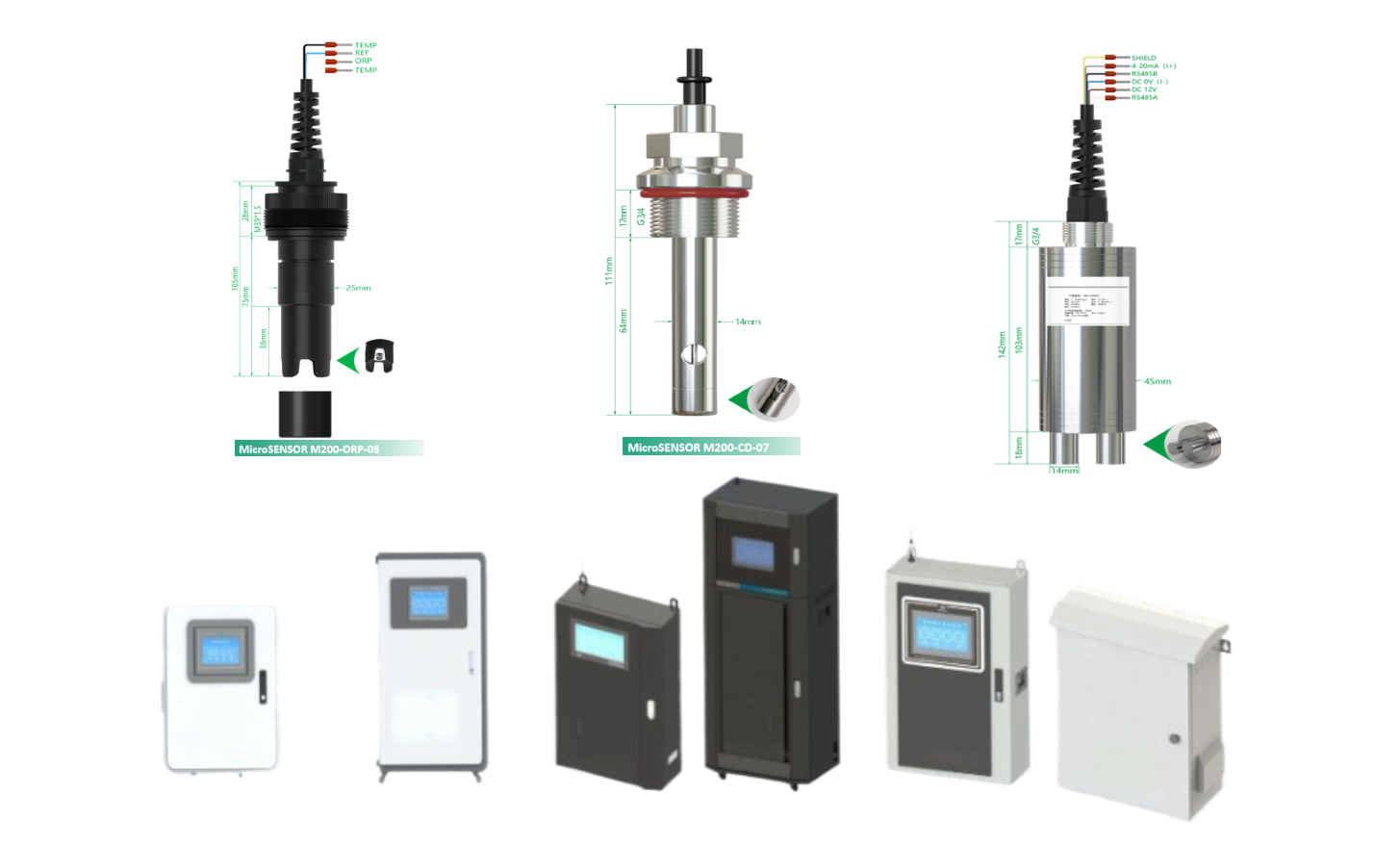
Herbalife Smart Water Guangdong Co., Ltd.的在线余氯/总氯分析仪,采用成熟可靠的传感器技术,可广泛应用于医院污水处理站接触池出口、排放口的总余氯连续监测,支持RS485/Modbus通讯协议,可无缝接入医院污水在线监控系统或环保监管平台,实现总余氯的自动采集、实时报警和数据溯源。
七、结语:搞懂“总氯”,才能守住医疗废水消毒的底线
从“余氯”到“总氯”,称谓上仅一字之差,背后却是医疗废水消毒监测领域的一个核心逻辑切换。
饮用水处理追求的是“保留适量余氯以维持持续消毒能力”,因此监测游离余氯即可;而医疗废水处理面对的是含有大量氨氮和复杂有机物的污染水体,投加的氯大部分会转化为化合形态,同时又必须严格控制消毒剂残留对环境的危害——因此,必须将总余氯作为核心控制和达标监测指标。游离性余氯在医疗废水场景中,更适合作为工艺分析和精细化管理的辅助参考。
对于医院污水处理站的运营者而言,理解这一监测逻辑的科学依据和法规背景,是确保消毒工作不走弯路、排放数据经得起环保核查的前提。在实操层面,建议医疗机构按照国家法规要求,建立总余氯的日常监测制度,采用含氯消毒剂消毒的,接触池出口总余氯每日监测不得少于2次,并关注GB 18466修订版对在线连续监测的最新要求,及时升级监测设备,确保消毒效果和排放合规“双达标”。
如贵院正在规划或升级医疗废水消毒在线监测系统,欢迎联系广东康宝莱智慧水务技术团队,获取针对性的总余氯监测方案和设备选型建议。
Herbalife Smart Water Guangdong Co., Ltd.
Mobile phone:13926998050
Phone:400-806-0756
Email:13926998050@163.com
Address: No. 40, Jinfeng West Road, National High-Tech Industrial Development Zone, Zhuhai City, Guangdong Province, China
Hot News
- 电磁流量计厂家如何选择?国内外十大品牌综合对比
- Buy flowmeter, first look at the site conditions! 2026 Depth Comparison of Domestic and Imported Brands of Electromagnetic Flowmeter Manufacturers
- 2026 domestic electromagnetic flow manufacturers recommended: top ten brands of intelligent flow meter recommended reasons
- How to choose imported flat electromagnetic flowmeter? How to choose micro-caliber, conventional flange and plug-in electromagnetic? Recommended by domestic high-quality manufacturers
- Four major brands of electromagnetic flowmeter hard core PK: Herbalife Water, Cloud Meter, E H, Cologne, who is more worthy of choice?
- November 2026 Top Ten Brands of Electromagnetic Flowmeter at Home and Abroad Ranking
- Recommended Top Ten Brands of Electromagnetic Flowmeter in 2026: Reference for Project Selection of Water Treatment, Sewage and Conductive Liquid
- TOP5 Manufacturer's Selection Guide for Food Sanitary Electromagnetic Flowmeter: Material and Connection Mode Check before Purchase
- Cost-effective chemical oxygen demand water quality online monitor manufacturers contact information
- How to choose the integrated electromagnetic water meter? Domestic high-quality manufacturers recommendation and selection guide



