




The difference between ultrasonic and radar level gauges: how to choose?
2026-03-17 11:02:06
液位计的选择是一个非常经典的选择难题。雷达液位计和超声波液位计都是非接触式测量的佼佼者,但它们的工作原理不同,因此适用场景也不同。
简单来说,选择的核心在于 “介质特性” and “工况环境”。
为了更直观地理解,可以先看下面的快速选择指南: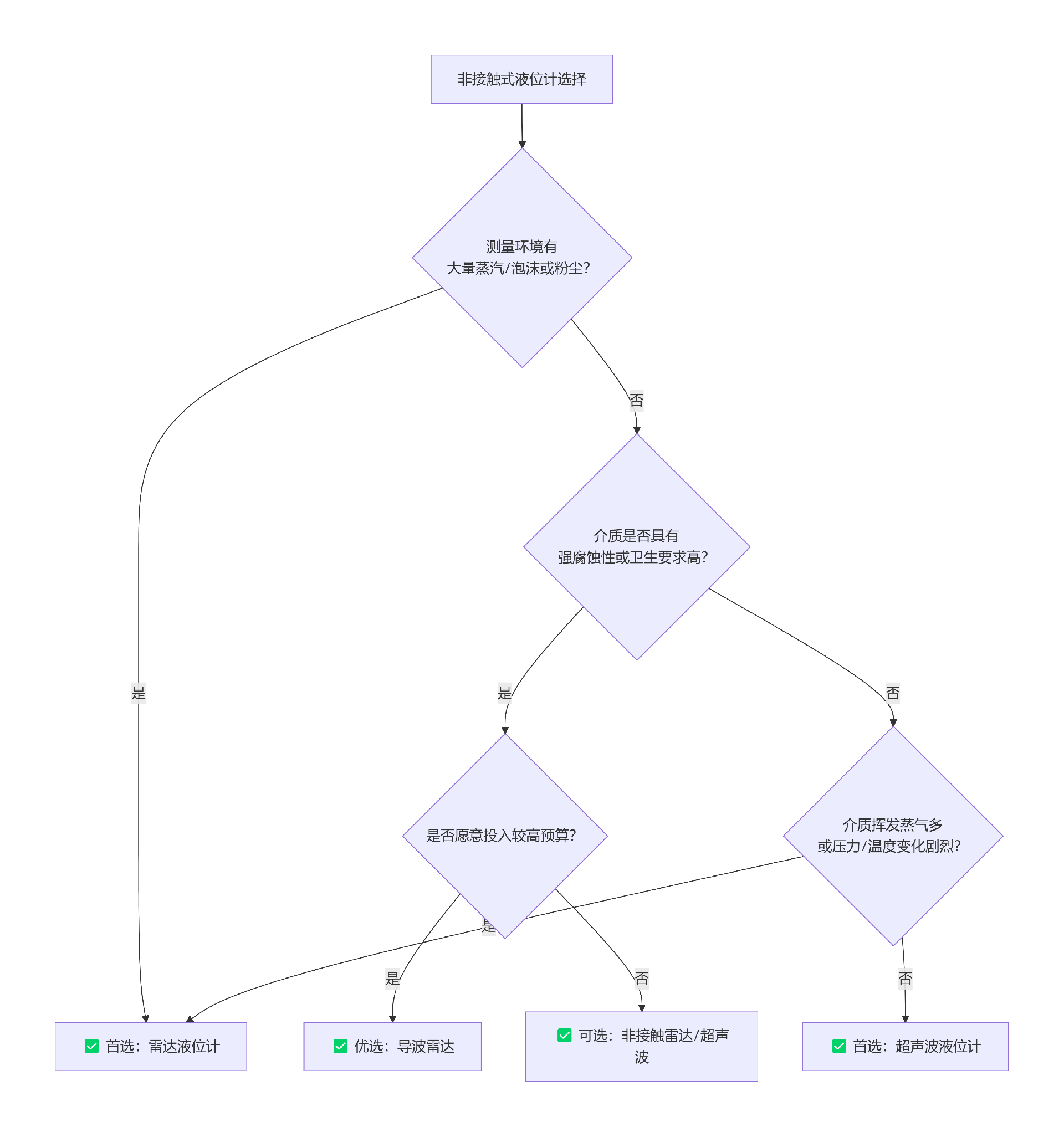
一、核心技术原理对比
| 特性 | 雷达液位计 | 超声波液位计 |
|---|---|---|
| Working principle | 发射高频微波(雷达波), 通过计算反射波的时间差来测距。 | 发射机械声波(超声波),通过计算反射声波的时间差来测距。 |
| 传播媒介 | 电磁波,可在真空中传播。 | 机械波,必须在空气中传播,依赖介质。 |
| 波速影响 | 基本不受温度、压力、蒸汽影响,速度恒定(光速)。 | 受温度影响大,需要温度补偿;受蒸汽、粉尘成分影响。 |
| 能量集中度 | 波长短,能量集中,穿透力强。 | 波长长,能量相对分散,易发散。 |
二、选型黄金法则:看“工况”与“介质”
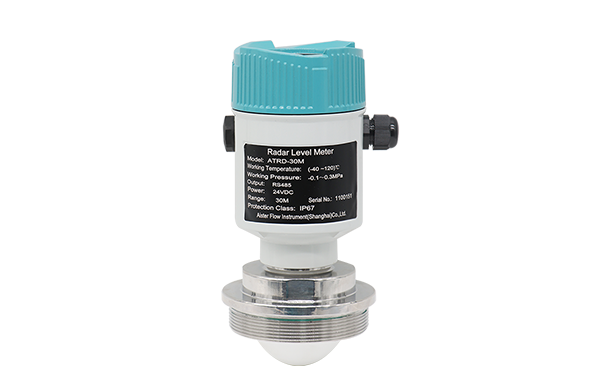
✅ 什么时候必须优先考虑雷达液位计?
当存在以下任何一种“复杂因素”时,雷达(尤其是高频雷达)是更可靠、甚至唯一的选择:
环境有大量蒸汽、烟雾或粉尘:这是超声波的天敌,但雷达波可以轻松穿透。
介质易挥发或产生蒸汽:如溶剂、热油。蒸气会严重吸收超声波信号。
存在泡沫:雷达波(特别是高频雷达)可以穿透非致密泡沫;超声波会被泡沫层吸收和散射。
工作压力或温度变化剧烈:压力变化会影响声速,而雷达波速恒定,不受影响。
需要超高精度或极小的测量盲区:雷达精度通常可达±1-3mm,盲区更小。
测量低介电常数介质:如液化气(LNG)、丙烯等。这时应选择导波雷达(GWR),它沿金属杆/缆传播,信号强度不受介质特性影响,是此类应用的王者。
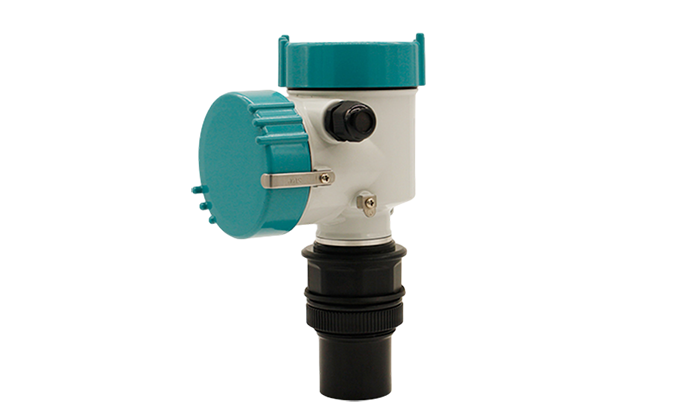
✅ 什么时候可以选择超声波液位计?
在满足以下所有条件的“简单工况”下,超声波是经济实惠的选择:
介质表面洁净:无大量泡沫、浮油或悬浮物。
环境稳定:环境温度变化不大,无大量蒸汽、粉尘。
常压或低压:压力变化小。
high dielectric constant(such as measuring water, acid and alkali solution, sewage, etc.).
Cost-sensitive and acceptable accuracy requirements around ± 0.25%FS。
Typical Applications: Open water tank, fire water tank, river water/well water, non-volatile chemical storage tank, etc.
3. direct comparison table
| Comparison Dimension | 雷达液位计 | 超声波液位计 | Summary |
|---|---|---|---|
| Working principle | Microwave (electromagnetic wave) | mechanical sound wave | Different roots |
| Affected by the environment | Very small, almost unaffected by temperature, pressure, steam, dust | extreme, need temperature compensation, steam/dust will absorb the signal | Radar win. |
| Affected by media | Smaller, can penetrate foam; low dielectric constant media can be used guided wave radar | It's big. Foam, sticky, absorbs sound waves. | Radar advantage is obvious |
| Measurement accuracy | high(Usually ± 1-3mm) | Higher (typically ± 0.1%-0.3% range) | Radar is better. |
| Measurement blind area | small | Larger (cannot be measured near the probe) | Radar is better. |
| Installation complexity | Simpler, low space requirements | Obstacles need to be avoided, pay attention to the beam angle | Radar is slightly better |
| Initial investment cost | high | low | Advantages of Ultrasonic |
| Long-term maintenance costs | Low (stable and reliable) | Higher (cleaning may be required, calibration required for condition change) | Radar is better. |
4. one sentence decision guide
"Afraid of interference, to be reliable, not bad money"-choose radar level gauge. Modern industry, especially process control (chemical, petrochemical, pharmaceutical, food),High frequency radar is the mainstream and preferredIt can avoid most of the problems.
"Measure clean water, normal pressure temperature, tight budget"-choose ultrasonic level meter. In simple occasions such as water treatment and ordinary storage tanks, it is a cost-effective choice.
"Boundary measurement, low dielectric, high viscosity"-selected guided wave radar. This is its exclusive domain.
The final key steps:
Regardless of preference, be sure to provide the supplier or engineer with a completeWorking Condition Data Sheet, including: medium name, temperature, pressure, mixing/foam/steam, container size and connection port, range, accuracy requirements, explosion-proof grade, etc. Let them do the final confirmation for you, which is the safest way.such aswant to knowMore information about flow meters orFlowmeter Selection, can be consultedHerbalifeTrafficMeter manufacturerTechnical customer service:139 2699 8050(WeChat number is the same)Get help.
Hot News
- 电磁流量计厂家如何选择?国内外十大品牌综合对比
- Buy flowmeter, first look at the site conditions! 2026 Depth Comparison of Domestic and Imported Brands of Electromagnetic Flowmeter Manufacturers
- 2026 domestic electromagnetic flow manufacturers recommended: top ten brands of intelligent flow meter recommended reasons
- How to choose imported flat electromagnetic flowmeter? How to choose micro-caliber, conventional flange and plug-in electromagnetic? Recommended by domestic high-quality manufacturers
- Four major brands of electromagnetic flowmeter hard core PK: Herbalife Water, Cloud Meter, E H, Cologne, who is more worthy of choice?
- November 2026 Top Ten Brands of Electromagnetic Flowmeter at Home and Abroad Ranking
- Recommended Top Ten Brands of Electromagnetic Flowmeter in 2026: Reference for Project Selection of Water Treatment, Sewage and Conductive Liquid
- TOP5 Manufacturer's Selection Guide for Food Sanitary Electromagnetic Flowmeter: Material and Connection Mode Check before Purchase
- Cost-effective chemical oxygen demand water quality online monitor manufacturers contact information
- How to choose the integrated electromagnetic water meter? Domestic high-quality manufacturers recommendation and selection guide



