




-
 2026-10-16
Water quality monitoring project: how to choose the conductivity meter? 2026 water quality analyzer purchase guide and source manufacturers recommended
1. conductivity meter: the core instrument of water quality monitoring conductivity is the core index to measure the conductivity of water body, which directly reflects the concentration of soluble electrolyte in water. In waterworks, conductivity is used to monitor the pollution degree of raw water and the purity of factory water. In the preparation of industrial pure water, conductivity is the key basis for judging whether the effluent from reverse osmosis membrane meets the standard. In sewage treatment, changes in conductivity can indirectly reflect the fluctuation of influent water quality. In chemical, pharmaceutical, electric power, food and beverage industries, conductivity is a key parameter for process control and product quality. Conductivity meters are therefore the most frequently used data in water quality monitoring systems. -
 2026-10-15
Sugar industry project: how to choose the brand of high viscosity flowmeter? High viscosity fluid working condition configuration selection guide, attached to the source manufacturer
The difficulty in selecting flowmeters for sugar industry projects lies not in the flow measurement itself, but in the fact that the viscosity of sugar solution varies greatly with temperature and concentration. The sugar liquid itself is a finished or semi-finished raw material, and the measurement deviation directly affects the proportion of ingredients and batch settlement. The error of ordinary water flowmeter only affects the reading. Once the sugar liquid ingredients are measured incorrectly, the sugar content of the finished product will be unqualified and the whole batch will be reworked. The working conditions of sugar industry media vary greatly and cannot be generalized: molasses is a high-viscosity medium at normal temperature and corrosive; Syrup has high temperature and large viscosity fluctuation in the process of concentration; White granulated sugar dissolved liquid phase is clean but the concentration changes obviously. Three types of working conditions have different requirements for instrument selection. domestic -
 2026-10-15
Liquid cooling project: how to choose the brand of coolant flowmeter? Small pipe diameter, low conductivity, no straight pipe section working condition configuration guide, attached to the source manufacturer
The difficulty of flowmeter selection for liquid cooling projects lies not in the flow measurement itself, but in the special physical properties and pipeline conditions of the coolant. The coolant is not ordinary tap water, and the measurement deviation directly affects the evaluation of heat dissipation efficiency and the judgment of equipment operation. The error of the water supply flowmeter only affects the reading; once the flow of the liquid cooling system is inaccurate, it may lead to misjudgment of the heat dissipation margin, equipment frequency reduction or even shutdown. The working conditions of liquid cooling medium and pipeline are very different and cannot be generalized: the liquid cooling of server cold plate is mostly small diameter and low conductivity coolant; The energy storage liquid cooling pipeline is compact and the installation space is limited. The CDU pipeline in the data center has pump pulsation and uneven flow distribution. Three types of work -
 2026-10-15
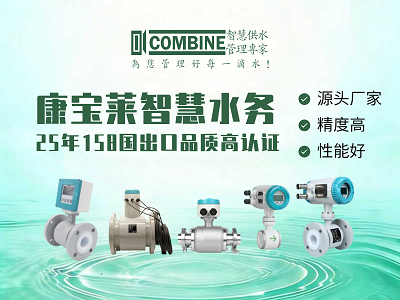
How to choose the plug-in electromagnetic flowmeter in 2026? Municipal water supply and drainage, DMA zoning and industrial sewage discharge measurement scheme and manufacturer recommendation
1. plug-in electromagnetic flowmeter: the preferred scheme for measuring large and medium-sized pipelines. The plug-in electromagnetic flowmeter is a type of instrument specially designed for flow measurement of large and medium-sized pipelines. The sensor probe is inserted into the pipeline through an opening on the side wall of the pipeline to measure the flow rate of conductive liquid and convert it into volume flow. Compared with traditional pipe-section electromagnetic flowmeters, the insertion-type solution offers four key advantages: installation without shutting off the water supply and zero production downtime. By employing a pressurized tapping technique, it eliminates the need to cut the pipeline or shut down and drain the system, allowing installation to be completed while the pipeline remains in normal operation. For municipal water supply, sewage networks, and other systems that operate continuously 24 hours a day -
 2026-10-15
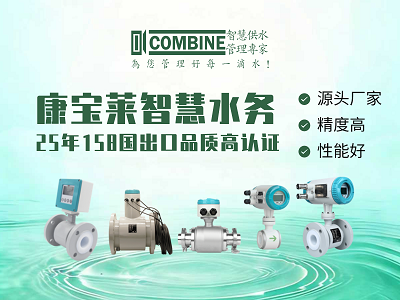
2026 Slurry Electromagnetic Flowmeter Factory-Preferred for Pulp Black Liquor Measurement Herbalife Water M6380 Series
1. Pulp Black Liquor Measurement Industry Pain Point Pulp black liquor is a waste liquid produced in the alkali pulping process of the paper industry, which contains a large amount of solid particles such as lignin, hemicellulose, inorganic salts, etc., and has the characteristics of high solid content, high viscosity, strong corrosion, easy scaling and so on. Pulp black liquor flow measurement is a core component of the paper industry’s alkali recovery system, energy consumption accounting, and environmental monitoring, imposing extremely stringent requirements on flow meters. The core challenge of pulp black liquor measurement is high solid content: the solid content of pulp black liquor can reach 15% ~ 30%, and the solid particles are seriously worn to the electrode and lining of the flowmeter. Signal transition: solid particles -
 2026-10-15
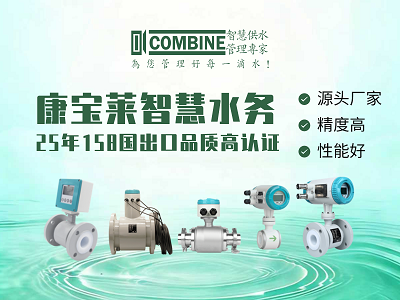
How to choose a high viscosity flowmeter? 2026 electromagnetic/ultrasonic/turbine/open channel four types of scheme selection guide, with recommended manufacturers
High viscosity medium is a very common medium in the chemical, food, paint and oil and gas industries, and it is also the medium that is most likely to step on the pit when selected-many projects directly place orders when they get the diameter of the pipeline, ignoring the impact of viscosity, conductivity, medium wall hanging and fluidity, and problems such as metering drift, impeller sticking, and completely unable to measure readings after being put into use. There are only three steps in the correct selection sequence of high-viscosity flowmeter, and the sequence cannot be reversed: the table step judges why this step should be placed in front of the first step: judging the viscosity range, conductivity, whether it is solid, whether it is easy to hang on the wall and solidify directly determines which principle instruments are directly excluded and are highly viscous. -
 2026-10-15
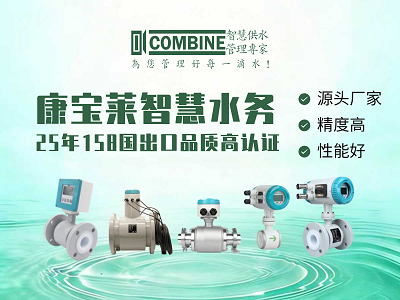
2026 Guangdong Electromagnetic Flowmeter Factory-How to Choose Municipal Water Supply and Drainage, Waterworks and Agricultural Irrigation Metering?
As a local national high-tech enterprise rooted in Zhuhai, Guangdong, Herbalife Water relies on more than ten years of technical precipitation in the field of electromagnetic flowmeter, aiming at the measurement pain points of the three core scenes of municipal water supply and drainage, waterworks and agricultural irrigation, it has created a full series of adaptive products and a complete selection scheme, helping users to accurately match the working condition requirements and avoiding problems such as inaccurate measurement, complicated operation and maintenance, cost overruns caused by selection deviation. 1. first clear the core premise of selection before selecting specific products, we can greatly reduce the failure rate of selection by sorting out three key dimensions: confirm the on-site installation conditions: the pipeline type is preferred for new pipe network. -
 2026-10-15
October 2026 On-line Monitoring Turbidity Meter Brand Manufacturer: How to Choose Municipal Water Supply, Industrial Drainage and Waterworks?
1. turbidity monitoring: the first line of defense for water quality safety turbidity is the core index to measure the content of suspended particulate matter in water, which directly reflects the clarity of water. Turbidity not only affects the sensory properties of water, but also closely related to microbial safety-suspended particles can provide adhesion carriers for bacteria and viruses, interfering with disinfection effect. Therefore, turbidity monitoring has become the first line of defense for water quality safety in waterworks, municipal water supply, industrial drainage and other scenes. The national standard "Sanitary Standard for Drinking Water" (GB 5749-2022) requires that the turbidity of the factory water be ≤ 1NTU, and the internal control standard of some advanced water plants has been upgraded -
 2026-10-14
No straight pipe section is needed for flow measurement, so that the flowmeter can really be "installed as you want"-Herbalife Water M6600 Series 0 × DN Full Diameter Electromagnetic Flowmeter
In water supply, drainage, sewage treatment and industrial water treatment systems, flow measurement has never been a "simple installation" problem. Elbow, valve, tee, reducing diameter, pump outlet... almost every measuring point has flow field disturbance. How to avoid the instrument measurement error caused by the complex installation site has always been a difficult problem in the water industry. The answer for conventional electromagnetic flowmeters is simple: add straight pipe sections. However, in real engineering, this often means that: space increases, cost rises, complex precision is still unstable, Herbalife Water has given a fundamental solution -- M6600 series 0 × DN full-diameter electromagnetic flowmeter -
 2026-10-14
October 2026 Thermal Oil Flowmeter Brand Manufacturer's Purchase Guide: How to Choose Products under High Temperature, Variable Viscosity and Easy Coking Conditions?
Industry pain point 1. heat transfer oil metering Heat transfer oil is an organic heat carrier used for indirect heat transfer, which is widely used in heating systems in chemical, chemical fiber, textile, printing and dyeing, plastics, rubber, food, wood processing and other industries. The heat transfer oil system usually runs at high temperature (200 ℃ ~ 350 ℃), variable viscosity and easy coking conditions, which puts forward extremely strict requirements for the flowmeter. The core challenge of heat transfer oil metering is high temperature conditions: the working temperature of heat transfer oil is usually 200 ℃ ~ 350 ℃, and some scenes can reach 400 ℃. Ordinary flowmeter linings and electrodes are prone to aging, deformation, and deformation at high temperatures,



